



Nvidia funds its own GPU buyers, raising red flags over circular AI financing
Nov 10, 2026, 05:20 pm


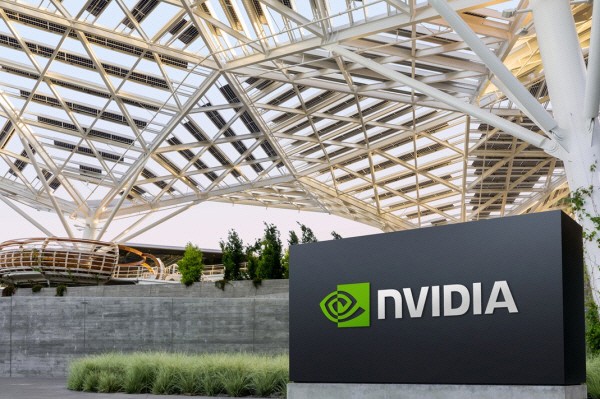 |
| Nvidia's headquarters in Santa Clara, California, United States. /Courtesy of Nvidia Newsroom |
Growing management uncertainty surrounding Nvidia CEO Jensen Huang amid a scandal has renewed concerns about the circular investment structure of the artificial intelligence (AI) industry, which has developed around Nvidia.
Nvidia has expanded its influence in the AI ecosystem by investing revenue from graphics processing unit (GPU) sales in major AI companies such as OpenAI and Anthropic, which in turn become major customers for Nvidia's GPUs. While these circular investments have supported the rapid growth of the AI industry, concerns have also been raised that interconnected companies could be affected together if growth slows or investments become difficult to recover. Huang dismissed such concerns at the company's annual developer conference, GTC 2026, in March, saying, "We fund companies that we believe will succeed."
A prime example is AI cloud provider CoreWeave. CoreWeave has acquired large numbers of Nvidia GPUs to build data centers and provides computing services to companies such as Microsoft and OpenAI. In addition to investing in CoreWeave, Nvidia has agreed to purchase up to $6.3 billion worth of unsold computing capacity through 2032. This arrangement supports the customer's business expansion while also sustaining demand for Nvidia GPUs. In August this year, Nvidia also announced an AI infrastructure financing platform with financial firms including BlackRock, Blackstone, Apollo, Goldman Sachs and KKR, aimed at attracting more than $500 billion in third-party capital. The initiative is designed to support infrastructure expansion by drawing large-scale investment from financial institutions into AI data centers.
However, caution is also growing in the financial sector. Reuters reported in October that banks were questioning the long-term collateral value of GPUs and demanding additional guarantees. As technological advances can quickly make even the latest GPUs obsolete, financial institutions are placing greater importance on long-term purchase agreements and stable cash flows than on the value of the GPUs themselves.
Against this backdrop, another layer of uncertainty has emerged as Huang, who has wielded considerable influence over Nvidia's investment decisions and overall management, faces a board investigation over allegations surrounding a "spy scandal." This has raised concerns that uncertainty over Huang's future at the company could also affect Nvidia's investment strategy.
Wall Street is also discussing the potential market impact of Huang's departure. Gary Black, a partner at the Future Fund, predicted that uncertainty over a successor CEO could lead some portfolio managers to reduce their Nvidia holdings over the coming weeks. Technology analyst Dan Ives expects Huang to remain in his position for the time being but said he could be removed depending on the outcome of the investigation.
However, with the allegations surrounding Huang still unverified, it is too early to conclude that the situation will directly lead to a crisis in the AI industry's circular investment structure.
Cheon Hyun-bin
Most Read
-
1
Ukraine halts strikes on Russian oil refineries un..

-
2
China's fifth plenum to conclude amid expectations..

-
3
Southeast Asian auto parts makers hit hard by Chin..

-
4
U.S. links Myanmar peace efforts to rare earth acc..

-
5
Hegseth rejects calls for impeachment over Iran wa..

-
6
Democrats flip U.S. Congress in historic midterm s..

-
7
USFK commander cites interoperability gaps, urges..

PEOPLE







-
Address : In-Young Bldg., 34, Uisadang-daero 1-gil, Yeongdeungpo-gu, Seoul
Copyright by ASIATODAY CO., LTD. All rights resereved