



China extends suspension of 24% tariffs on U.S. goods and rare earth export curbs
Nov 10, 2026, 09:22 am


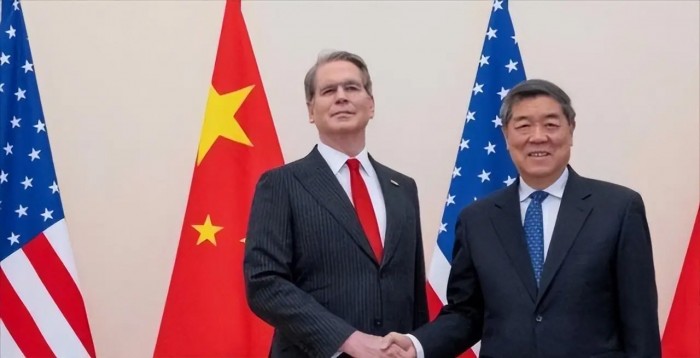 |
| U.S. Treasury Secretary Scott Bessent and Chinese Vice Premier He Lifeng during their meeting in Washington on Sept. 23, 2026. /Beijing Youth Daily |
According to Beijing-based sources familiar with bilateral relations on Tuesday, the Customs Tariff Commission of China's State Council announced Monday that it would extend the suspension of the additional 24% tariff on U.S. imports for another two months, effective at 1:01 p.m. China time on Nov. 10.
However, the existing additional 10% tariff will remain in place.
China explained that the extension was intended to implement the agreement reached between U.S. President Donald Trump and Chinese President Xi Jinping at their summit at the White House in Washington, D.C.
Earlier, U.S. Treasury Secretary Scott Bessent said that following his meeting with Chinese Vice Premier He Lifeng in Washington on Sept. 23, the two countries had agreed to extend their trade truce, originally scheduled to expire on Nov. 10, by two months until Jan. 10 next year.
China's Ministry of Commerce also announced that it would extend until Jan. 10 the suspension of tighter export controls covering superhard materials such as synthetic diamonds, certain rare-earth equipment and raw materials, heavy rare-earth metals and alloys, lithium and synthetic graphite materials used in battery manufacturing, and rare-earth-related technologies.
At the same time, Beijing decided to extend by another two months the suspension of sanctions prohibiting five U.S. subsidiaries of Hanwha Ocean from doing business with Chinese companies.
The sanctions had been imposed because the subsidiaries allegedly cooperated with an investigation by the Office of the United States Trade Representative (USTR) under Section 301 of the Trade Act, targeting China's shipping, logistics and shipbuilding industries. Their implementation had subsequently been suspended.
China also extended the suspension of retaliatory sanctions imposed on a number of U.S. defense companies during the tariff dispute.
The series of measures suggests that Beijing is seeking to ease tensions with Washington as much as possible.
At the same time, China appears to be signaling that it expects reciprocal steps from the United States before fully withdrawing its retaliatory measures.
Indeed, Beijing has remained cautious about possible changes to U.S. tariff policy.
On Tuesday, the State Council's Customs Tariff Commission said it was closely watching U.S. plans to replace tariffs imposed under the International Emergency Economic Powers Act (IEEPA), which had been invalidated by court rulings, with tariffs under Section 301 of the Trade Act.
The commission stressed that China would closely monitor subsequent U.S. measures and adjust its retaliatory tariffs at an appropriate time depending on developments.
The statement underscores Beijing's position that further progress in easing bilateral trade tensions will also depend on Washington's actions.
Hong Soon-do
Most Read
-
1
Ukraine halts strikes on Russian oil refineries un..

-
2
China's fifth plenum to conclude amid expectations..

-
3
Southeast Asian auto parts makers hit hard by Chin..

-
4
U.S. links Myanmar peace efforts to rare earth acc..

-
5
Hegseth rejects calls for impeachment over Iran wa..

-
6
Democrats flip U.S. Congress in historic midterm s..

-
7
USFK commander cites interoperability gaps, urges..

PEOPLE







-
Address : In-Young Bldg., 34, Uisadang-daero 1-gil, Yeongdeungpo-gu, Seoul
Copyright by ASIATODAY CO., LTD. All rights resereved