



Lee calls for close cooperation with both U.S. administration and Congress
Nov 10, 2026, 03:54 pm


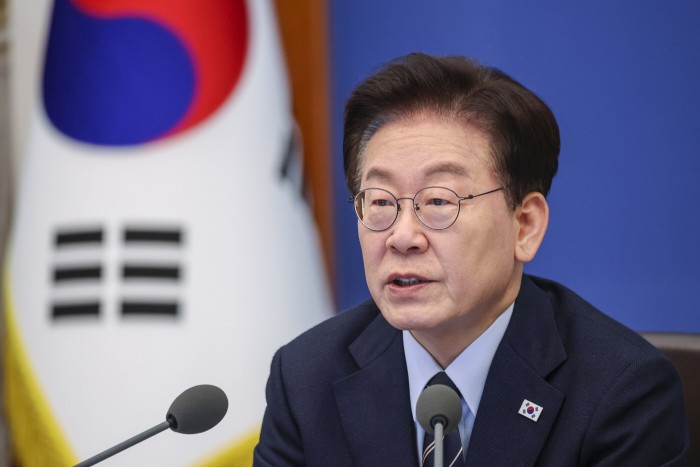 |
| South Korean President Lee Jae Myung speaks during a Cabinet meeting at Cheong Wa Dae on Nov. 10, 2026. /Yonhap |
South Korean President Lee Jae Myung on Tuesday warned of possible changes in the international environment following the U.S. midterm elections and called for continued close cooperation with the U.S. administration, as well as stronger bipartisan ties with Congress.
Speaking at a Cabinet meeting at Cheong Wa Dae on Tuesday morning, Lee said, "Relevant ministries and agencies should carefully analyze potential developments and prepare response plans for different scenarios."
In particular, Lee emphasized the need to minimize the economic impact of external uncertainty.
"We must do everything possible to minimize the impact of external uncertainty on the economy, both at home and abroad," he said. "We should closely monitor economic conditions in the United States and around the world and establish a rapid response system to prevent financial market instability."
Lee also stressed the importance of strengthening South Korea's economic fundamentals.
"To avoid being swayed by external pressures, we need to strengthen our economic fundamentals," he said. "We must carefully strengthen the competitiveness of key industries such as semiconductors and artificial intelligence and maintain the momentum of our growth industries."
Turning to relations with Washington, Lee called for diplomatic efforts to build mutual trust and protect South Korea's economic interests.
"We must focus our diplomatic efforts on strengthening and expanding trust between South Korea and the United States based on mutual benefit," he said.
"We need to firmly protect our national interests and corporate investments and work together to ensure that agreements between our two countries in diplomacy and security are implemented."
He added, "We must continue working closely with the U.S. administration, establish a framework for bipartisan cooperation in Congress, and expand communication with state governments and the business community."
Lee also emphasized the need for both consistency and flexibility amid growing global uncertainty.
"The greater the uncertainty in international affairs, the more we need to respond consistently and flexibly," he said.
"We will not be swayed by every development. Instead, we will devote all our efforts to pragmatic diplomacy and governing with people's livelihoods as our top priority."
Hong Sun-mi
Most Read
-
1
Ukraine halts strikes on Russian oil refineries un..

-
2
China's fifth plenum to conclude amid expectations..

-
3
Southeast Asian auto parts makers hit hard by Chin..

-
4
U.S. links Myanmar peace efforts to rare earth acc..

-
5
Hegseth rejects calls for impeachment over Iran wa..

-
6
Democrats flip U.S. Congress in historic midterm s..

-
7
USFK commander cites interoperability gaps, urges..

PEOPLE





-
Address : In-Young Bldg., 34, Uisadang-daero 1-gil, Yeongdeungpo-gu, Seoul
Copyright by ASIATODAY CO., LTD. All rights resereved