



S. Korean businesses brace for continued U.S. trade pressure
Nov 10, 2026, 01:21 pm


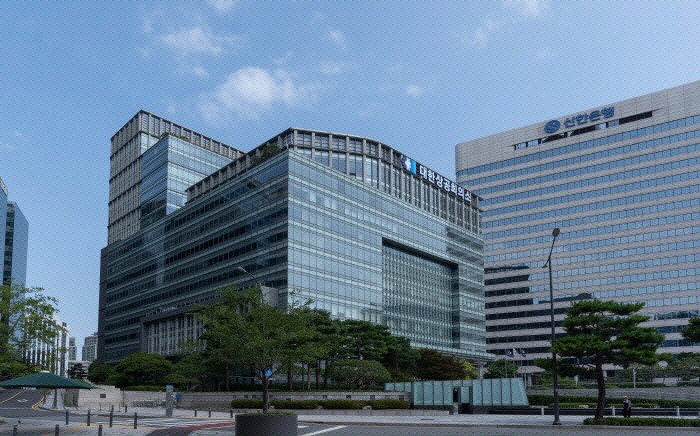 |
| A view of the Korea Chamber of Commerce and Industry (KCCI) headquarters in Jung-gu, Seoul. /Courtesy of KCCI |
South Korean companies are expected to face continued U.S. trade pressure despite changes in Washington's political landscape following the midterm elections, according to a new report.
While the United States is expected to maintain its policy of encouraging domestic manufacturing and investment, Korean companies may face growing challenges beyond tariffs, including implementing investment commitments and demonstrating their results.
In particular, with the U.S. administration and Congress potentially making different demands, analysts say South Korea needs a coordinated strategy linking tariff negotiations, investment in the United States and industry-specific legislation.
According to a report titled U.S. Trade Policy Outlook After the Midterm Elections, released by the Korea Chamber of Commerce and Industry (KCCI) on Wednesday, U.S. trade policy is expected to revolve around three key factors: tariffs, investment and legislation.
The report said the basic policy direction of promoting U.S. manufacturing and attracting investment is likely to remain unchanged after the midterm elections.
However, the burden on companies could vary depending on how the administration implements policies and how Congress exercises oversight.
In the area of tariffs, the report warned that Washington could continue exerting pressure through Section 301 of the Trade Act of 1974 and Section 232 of the Trade Expansion Act of 1962.
In March, the United States launched a Section 301 investigation into structural overcapacity involving 16 economies, including South Korea.
The investigation identified 21 manufacturing sectors as examples, including steel, chemicals, automobiles, batteries, semiconductors and shipbuilding.
However, additional tariffs on these industries have not yet been finalized.
KCCI recommended that companies adopt different response strategies depending on whether U.S. trade measures are at the investigation, negotiation or implementation stage.
During investigations, companies should demonstrate how Korean intermediate goods and equipment contribute to U.S. manufacturing.
During negotiations, they should clarify the conditions for tariff exemptions or reductions and develop concrete proposals linking them to local investment.
If tariffs are implemented, companies should carefully examine product classifications, rules of origin, effective dates and whether the new duties overlap with existing tariffs.
Section 232, which allows the United States to restrict imports on national security grounds, was also identified as an important risk.
Washington has recently adopted an approach of setting negotiation periods for certain products, including robots and industrial machinery, rather than immediately imposing additional tariffs.
KCCI said companies should determine their negotiating priorities by considering not only tariff rates but also the share of exports to the United States for each product and their local investment plans.
Regarding investment in the United States, companies could face pressure from both the administration's demands for rapid implementation and Congress's potentially stronger scrutiny of investment results.
While the Trump administration is demanding that investment commitments be implemented quickly, the new Democratic-led Congress could examine more closely whether investments are actually being made, how many jobs they create in the United States and how they contribute to local communities.
In June, Democratic lawmakers introduced the Foreign Investment Review and Monitoring (FIRM) Act, which calls for an independent body to oversee the implementation of investment commitments made by foreign companies and governments.
The bill also refers to South Korea's $350 billion investment commitment to the United States.
However, it remains uncertain whether the legislation will ultimately pass.
KCCI therefore recommended reviewing the priorities of Korean investment projects in the United States and examining how invested funds can be recovered, as well as the extent to which Korean companies can participate in operating the projects.
The report also proposed expanding opportunities for South Korean small and medium-sized enterprises and mid-sized suppliers by using a provision in the Korea-U.S. Strategic Investment Memorandum of Understanding (MOU) that gives priority to Korean suppliers.
Changes in U.S. congressional legislation were also identified as a major factor.
Although Democrats are discussing stronger congressional oversight of tariff measures, the report noted that turning such proposals into law may prove difficult.
This is because ending debate on ordinary legislation in the Senate generally requires 60 votes, while overriding a presidential veto requires the support of at least two-thirds of members present and voting in both the House and Senate.
Instead, KCCI warned that industry-specific regulations could have a more direct impact on South Korean companies.
Examples include exemptions from restrictions on shipyard construction, export controls on advanced semiconductors and manufacturing equipment, and procurement requirements involving critical minerals, robotics and solar power.
These measures are being discussed as part of negotiations over the year-end National Defense Authorization Act (NDAA).
The report emphasized the need for Korean companies to monitor legislative developments and prepare responses before the relevant provisions are finalized.
KCCI also stressed that South Korea should expand its communication channels beyond the U.S. administration to include Congress and state governments.
With the political landscape changing in some U.S. states following the midterm elections, cooperation with state governments has become increasingly important.
These governments hold practical authority over matters such as permits and approvals for local manufacturing facilities and data centers.
"Trade policy responses after the midterm elections should not focus on simply waiting for policy changes," said Lee Si-wook, head of economic research at KCCI.
"Instead, the focus should be on negotiations that protect our economic interests, strategic investment and broader channels of cooperation."
He added, "We need to determine which projects Korean companies will participate in, under what conditions, and how they will recover their investments. By developing these plans in detail, we must turn investment in the United States into real opportunities for Korean industries and their suppliers."
Lee Seo-yeon
Most Read
-
1
Ukraine halts strikes on Russian oil refineries un..

-
2
China's fifth plenum to conclude amid expectations..

-
3
Southeast Asian auto parts makers hit hard by Chin..

-
4
U.S. links Myanmar peace efforts to rare earth acc..

-
5
Hegseth rejects calls for impeachment over Iran wa..

-
6
Democrats flip U.S. Congress in historic midterm s..

-
7
USFK commander cites interoperability gaps, urges..

PEOPLE







-
Address : In-Young Bldg., 34, Uisadang-daero 1-gil, Yeongdeungpo-gu, Seoul
Copyright by ASIATODAY CO., LTD. All rights resereved