



Tech leak indictments surge as prosecution overhaul nears
Dec 15, 2025, 10:10 am


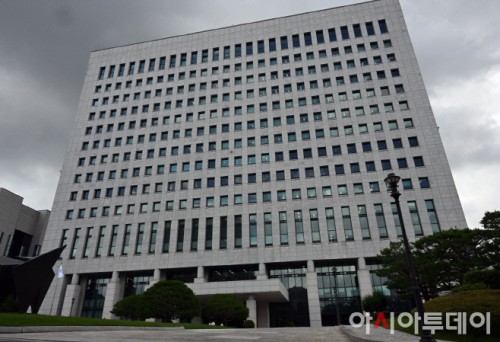 |
| The Supreme Prosecutors’ Office in Seoul. / Source: Song Ui-joo |
The People Power Party (PPP) and the New Reform Party are showing rare coordination over the introduction of a special prosecutor to investigate alleged political lobbying and illicit donations linked to the Unification Church, raising questions about whether broader cooperation could emerge ahead of next June’s local elections.
According to political sources on Dec. 14, the two parties’ floor leaderships are expected to hold formal talks on a special prosecutor bill aimed at uncovering the truth behind allegations involving Unification Church political funding and lobbying. Once a draft bill being prepared by New Reform Party floor leader Chun Ha-ram takes shape, the two sides plan to exchange views on the scope and structure of the legislation. It marks the first time since the New Reform Party’s launch that the leaderships of the two parties have aligned publicly on the same issue.
Both parties share concerns that the Unification Church allegations could extend beyond isolated cases and ripple across the political establishment. With ongoing controversy surrounding the independence and fairness of existing investigations, the PPP argues that a parliamentary-level institutional response has become unavoidable.
Within the PPP, some lawmakers have begun referring to the case as a potential “Unification Church gate,” warning that further revelations about ties between the church and political figures could significantly affect the broader political landscape. The New Reform Party has likewise maintained that police investigations alone are insufficient to uncover the full truth, repeatedly calling for the appointment of an independent special prosecutor.
The PPP has also raised concerns about the impartiality of the current probe. At a press briefing, PPP floor leader Song Eon-seok said that Special Prosecutor Min Joong-ki had delayed investigating allegations involving current and former Democratic Party lawmakers and government officials, despite being aware of them. He argued that not only the Unification Church allegations but also the fairness of the special prosecutor’s investigation itself should be examined.
Song added that PPP-affiliated figures should not be exempt from scrutiny, a remark widely seen as an attempt to preempt accusations of pushing a “shielding probe” designed to protect its own members.
The emerging cooperation has drawn attention given the two parties’ historically uneasy relationship. Differences over former President Yoon Suk Yeol and other key political issues have often kept them at arm’s length. Recently, however, overlapping criticism of the current administration appears to have created common ground, with the Unification Church probe serving as a key point of convergence.
With the abolition of prosecutors’ offices set for next year, concerns are growing over a potential investigative vacuum in technology-leak cases. While regulations to protect national core technologies are tightening, critics warn that specialized manpower and know-how could be lost during the transition to the Major Crimes Investigation Agency (MCIA), undermining enforcement capacity. Prosecutors have built expertise through dedicated units and active participation in trials.
On Dec. 15, the Supreme Prosecutors’ Office said 92 people were indicted from January through November this year for violations of the Act on Prevention of Divulgence and Protection of Industrial Technology. That is more than five times the 17 suspects indicted in 2020. Data submitted to the National Assembly by the Ministry of Trade, Industry and Energy in September showed 33 cases involving national core technologies and 110 cases involving industrial technologies were leaked overseas between 2020 and June this year, with estimated damages totaling 23.27 trillion won.
The National Assembly is moving to toughen penalties, treating technology-leak crimes as a national security issue. A Criminal Act amendment bill that passed the Legislation and Judiciary Committee on Dec. 3 expands the scope of espionage from “enemy states” to foreign countries or equivalent entities. It also allows the espionage charge to apply when “national core technologies” are leaked at the direction or instigation of a foreign party, paving the way for harsher punishment for industrial spies targeting semiconductors and defense technologies.
The concern is that investigative capacity could weaken as the system shifts to the MCIA and a separate prosecution office. Prosecutors have operated specialized units for years—such as the SPO’s Scientific Investigation Division, the Seoul Central District Prosecutors Office’s Information Technology Crime Investigation Division, the Suwon office’s Industrial Technology Crime Investigation Division, and the Daejeon office’s Patent Crime Investigation Division—staffing them long-term with patent attorneys and experts in communications, computing and engineering.
A prosecutor currently handling technology-leak cases said such investigations “are fundamentally team-based,” adding that “the heart of the probe is the accumulated organizational experience built by reviewing everything from National Intelligence Service intelligence leads to corporate process structures and patent disputes.”
Prosecutors in these cases typically continue on to handle trial proceedings after indictment, presenting in court the evidence and legal reasoning developed during the investigation. That process, officials say, helps build know-how on what evidence is needed and how laws should be interpreted and applied.
In a case involving a former Samsung Electronics executive who was indicted in detention in October for allegedly leaking DRAM manufacturing technology to a Chinese firm, one prosecutor, three investigators and one staff member are in charge of maintaining the prosecution. A Seoul Central District Prosecutors Office official said new comparison technologies are often introduced during trials, and core issues such as whether information qualifies as a trade secret or advanced technology are frequently contested. “For effective courtroom responses and solid maintenance of the indictment, the investigative prosecutor’s on-the-ground judgment is necessary,” the official said.
A lawyer specializing in technology-leak cases warned that because such cases require long-term analysis of large volumes of highly technical evidence, separating investigation and trial work could create a major risk of losing continuity in understanding the case. To minimize investigative gaps during institutional reforms, the lawyer added, cases involving technology leaks should be handled consistently by specialized units under a unified structure.
#technology leak #industrial espionage #Industrial Technology Protection Act #Major Crimes Investigation Agency
Copyright by Asiatoday
Most Read
-
1
Celltrion’s Omlyclo gains ground in major European..

-
2
Trump demands rates fall below 1% as Fed hikes for..

-
3
Trump makes $1 trillion bet ahead of midterm elect..

-
4
Iran resumes ballistic missile production, assembl..

-
5
Trump warns countries not helping U.S. must pay re..

-
6
Apple launches first foldable, 1 million won prici..

-
7
Turkish Airlines named main club partner of Liverp..

PEOPLE







-
Address : In-Young Bldg., 34, Uisadang-daero 1-gil, Yeongdeungpo-gu, Seoul
Copyright by ASIATODAY CO., LTD. All rights resereved