



Electrical, mechanical faults cause 81 percent of boiler fires over five years
Oct 30, 2026, 03:29 pm


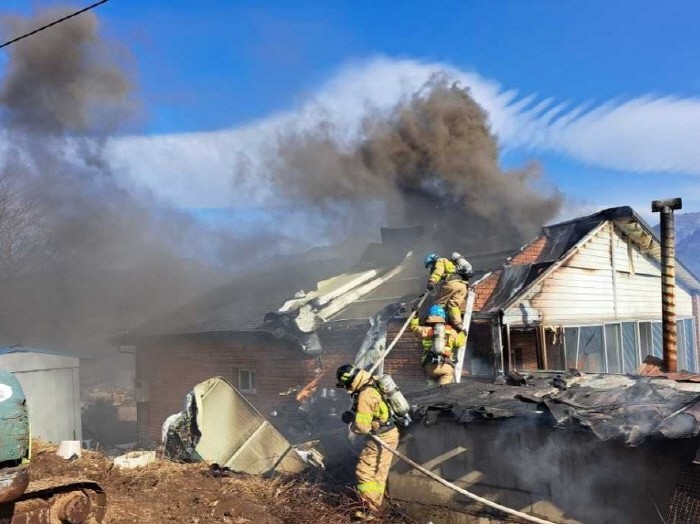 |
| Firefighters work to extinguish a fire that broke out in a wood-fired boiler at a house in Cheondo-ri, Seohwa-myeon, Inje County, Gangwon Province, on Feb. 22, 2023. / Yonhap News Agency |
A total of 790 residential boiler fires occurred over the past five years, resulting in 31 casualties. Electrical and mechanical factors, including faulty electrical connections, boiler overheating and aging, accounted for 81% of all fires.
The Ministry of the Interior and Safety (MOIS) on Oct. 30 urged households to inspect boiler exhaust pipes and other piping ahead of the heating season and take precautions to prevent fires and carbon monoxide poisoning.
According to the National Fire Data System operated by the National Fire Agency (NFA), a total of 790 residential boiler fires were reported between 2021 and 2025. The fires resulted in 31 casualties, including those caused by smoke and toxic gas inhalation and burns.
The fires tended to occur most frequently between November and January of the following year. In particular, 87 fires occurred in November over the five-year period, when boiler use typically begins in earnest. That was approximately 1.3 times the monthly average of 66 fires during the same period.
By cause, electrical factors, such as faulty electrical connections, accounted for the largest share, with 351 cases (44%). Mechanical factors, including boiler overheating and aging, followed with 290 cases (37%), while carelessness during use or installation accounted for 75 cases (9%) and gas leaks for 14 cases (2%).
In addition to fires, boilers also pose a risk of carbon monoxide poisoning if exhaust gases enter indoor spaces.
According to the 2020 Population and Housing Census, 82% of households in Korea used individual heating boilers powered by city gas, oil, electricity or other energy sources. As these systems are installed and maintained by individual households, problems with exhaust pipes or other piping can prevent toxic gases from being properly discharged or allow them to enter indoor spaces.
Before operating a boiler, households should remove nearby combustible materials, such as paper, and check that the exhaust pipe is neither blocked nor disconnected. Pipes should also be inspected for corrosion or deformation.
Ventilation openings in boiler rooms should always be kept open, and carbon monoxide detectors should be installed indoors.
If smoke or flames are visible or hot air is emitted while a boiler is operating, it should be inspected by a professional. The same applies if indicator lights flicker or fail to turn on, or if unusual noises, vibrations or odors occur.
Heating appliances used inside tents during late-autumn camping can also cause carbon monoxide poisoning.
Campers are advised to avoid using charcoal and similar materials inside tents and instead maintain body warmth with sleeping bags or hot water bottles.
When using heating appliances, campers should ventilate their tents frequently and have portable carbon monoxide detectors available.
If symptoms suggesting carbon monoxide poisoning, such as headaches, dizziness, vomiting or weakness, occur, individuals should immediately move outdoors or to another well-ventilated area, breathe fresh air and seek medical attention.
"Before operating boilers, people should carefully check for abnormalities such as overheating or unusual noises, and pay particular attention to ventilation when using heating appliances in enclosed spaces so they can enjoy a warm and safe winter," said Lee Chi-seon, director of the Prevention and Safety System Division at MOIS.
Kim Nam-hyung
Most Read
-
1
Putin proposes trilateral U.S.-China-Russia summit..

-
2
Attention centers on APEC for possible Trump-Xi-Pu..

-
3
U.S., Israel plan to resume strikes on Iran after..

-
4
China tightens grip on boosting domestic demand an..

-
5
China's fifth plenum to conclude amid expectations..

-
6
Amid health rumors, Chinese President Xi Jinping i..

-
7
ASEAN to discuss Myanmar's return next month

PEOPLE







-
Address : In-Young Bldg., 34, Uisadang-daero 1-gil, Yeongdeungpo-gu, Seoul
Copyright by ASIATODAY CO., LTD. All rights resereved