



Japan openly opposes U.S. sanctions on ICC, fueling tensions with Washington over rule of law
Oct 12, 2026, 09:35 am


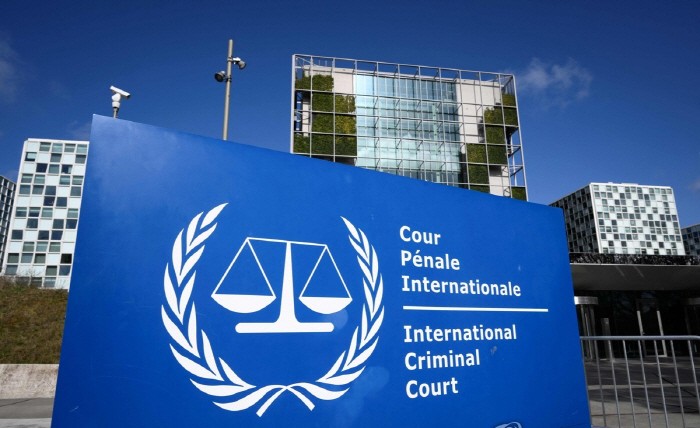 |
| International Criminal Court (ICC) headquarters in The Hague, Netherlands. / Yonhap News |
A new point of friction has emerged in U.S.–Japan relations as Japan publicly pushed back against U.S. sanctions targeting the International Criminal Court (ICC). While Tokyo is demanding the withdrawal of the measures alongside European partners and others, it is also maintaining dialogue with Washington.
However, with the United States pressing its allies to join the sanctions regime, the divergence in their positions threatens to spill over into diplomatic friction as Japan's concrete support for the court takes shape.
According to reports by Japanese media on the 11th, the Bureau of the Assembly of States Parties to the ICC—of which Japan is a member—urged Washington on the 10th to immediately rescind the sanctions. The 21-nation Bureau explicitly designated both the institution itself and individual judges, including ICC President Tomoko Akane, as subjects for whom sanctions must be lifted.
Japan had already registered clear opposition to the U.S. sanctions in an eight-nation joint statement issued on the 9th alongside Britain, France, Germany, and other allies. The joint statement warned that the sanctions would severely disrupt the court's operations and staff, reaffirming continuous support for the ICC's independence and mandates. Allies of the United States effectively mounted a united front to challenge Washington on matters of international justice.
Foreign Minister Toshimitsu Motegi engaged in direct diplomatic outreach. According to Japanese media reports, Motegi held separate telephone discussions on the night of the 10th, first speaking with President Akane and subsequently with U.S. Secretary of State Marco Rubio. With Akane, he discussed the operational impact of the sanctions and measures of support, while conveying Tokyo's continued backing of the ICC directly to Rubio.
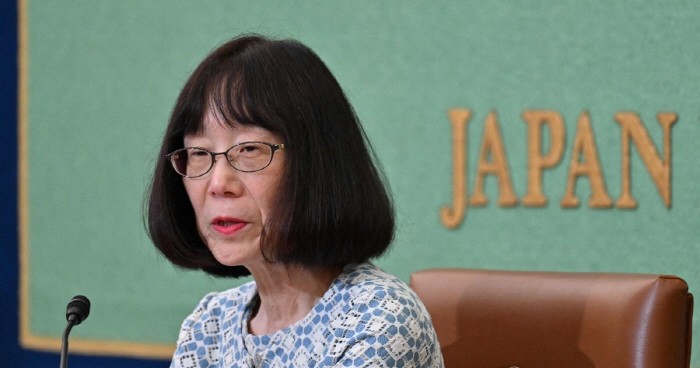 |
| Tomoko Akane, President of the International Criminal Court (ICC). As Japan calls for the withdrawal of U.S. sanctions against the ICC and steps forward to support the tribunal, the likelihood of diplomatic friction is growing with Washington, which demands its allies participate in the sanctions regime. / Yonhap News |
The gravity of the issue lies in the fact that the United States expanded the scope of sanctions from individuals to the institution as a whole. According to an AP report on the 9th, the sanctions block the ICC from accessing U.S. financial services, technology, and related infrastructure. U.S. Secretary of State Marco Rubio also urged allies to join the effort. This means that the more Japan moves to support the tribunal's operations, the greater the likelihood of colliding with Washington's policy of exerting pressure.
Backing down is no simple matter for Japan. Beyond defending an institution headed by a Japanese president, Tokyo's self-professed diplomatic cornerstone of the "rule of law" is at stake. In an official statement on the 9th, Foreign Minister Motegi voiced deep concern, emphasizing that the U.S. action is incompatible with Japan’s consistent position—making it unmistakably clear that even as an ally's decision, it remains difficult to accept.
At the same time, Tokyo left room to avert an outright collision. In the same message, Motegi stressed that the ICC must address operational challenges to maintain the confidence of the international community.
The Yomiuri Shimbun similarly reported that during his call with Akane, Motegi appears to have discussed operational improvements and issues within the ICC that the U.S. has called into question. This is viewed as an approach that opposes the sanctions while using internal institutional reforms as common ground for diplomatic dialogue.
The coming watershed moment hinges on what specific support measures Japan brings to the table. If Tokyo limits itself to diplomatic rhetoric, room remains to manage friction with Washington. However, should it take concrete steps to help the court sustain operations and bypass financing blocked by the sanctions, the potential for friction with the U.S. will rise substantially.
For now, the two allies have not reached the stage of trading retaliatory or counter-measures. The Takaichi administration faces a diplomatic test of delivering on its pledged backing for the ICC while concurrently managing its alliance with the United States.
Choi Young-jae
Most Read
-
1
Trump shares map on social media labeling Strait o..

-
2
Kia Sportage outperforms Mazda CX-5 in German auto..

-
3
Houthis launch successive attacks on Saudi airport..

-
4
U.S. deploys carrier, 10,000 more troops to Middle..

-
5
Japan tracks Ukraine fiber-optic drones, bolsters..

-
6
Putin's ally visits China on the 8th ahead of APEC..

-
7
Chinese military support and training center opens..

PEOPLE






HEADLINE NEWS
- Trump slams Nobel Peace Prize snub, claiming he is 'preventing war' between the two Koreas
- China makes tactical retreat following fierce pushback from EU
- Japan openly opposes U.S. sanctions on ICC, fueling tensions with Washingto..
- Military service exemptions for artists and athletes under scrutiny at parl..

-
Address : In-Young Bldg., 34, Uisadang-daero 1-gil, Yeongdeungpo-gu, Seoul
Copyright by ASIATODAY CO., LTD. All rights resereved