



New Iraq-Syria pipeline bypassing the Strait of Hormuz will take at least 4 years to complete
Aug 18, 2026, 01:07 pm


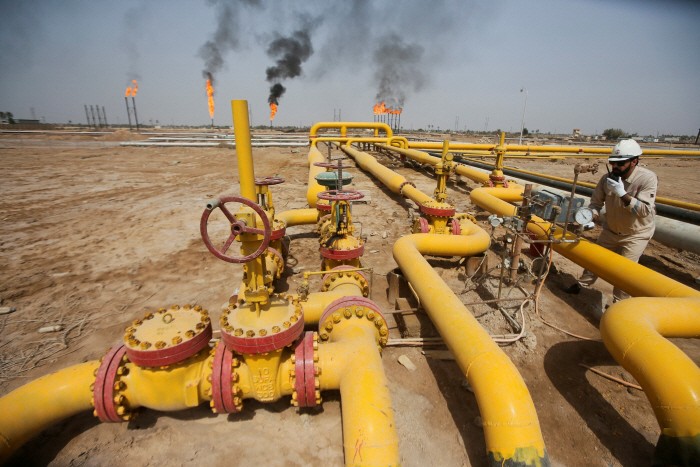 |
| A worker inspects an oil pipeline at the Nahr Bin Umar oil field in northern Basra, Iraq, on March 22, 2022 (local time). / Reuters-Yonhap |
A new pipeline project to bypass the Strait of Hormuz, connecting Iraq and Syria, is projected to cost at least $15 billion (about 21.1 trillion won) and take roughly four years to build.
According to Reuters on the 17th (local time), Iraq and Syria each signed separate memoranda of understanding (MOU) with a consortium made up of U.S.-based Chevron, TI Capital, and Qatar's UCC Holding, aimed at conducting technical and financial feasibility studies for the project.
An existing pipeline connecting Kirkuk in northern Iraq with the port of Baniyas on Syria's Mediterranean coast has been effectively out of operation since the 1980s, severely damaged by repeated civil conflict. According to multiple sources, while parts of the new pipeline's route would largely follow the existing corridor, the old piping cannot be reused since it doesn't meet current technical specifications. The sources said the project centers on building a new "integrated crude oil pipeline system," consolidating output from Iraq's northern and southern oil fields at a central hub in Haditha in the west before connecting to Baniyas.
U.S. Treasury Secretary Scott Bessent had earlier said that more than 50-70% of the cargo volume that had been passing through the Strait of Hormuz would shift to overland pipelines within two years, but sources involved in the project said that given the practical requirements of building new infrastructure, completion would take at least four years.
Iraq has faced major disruptions to its crude oil exports amid the blockade of the Strait of Hormuz caused by the war with Iran. According to Iran's state oil marketing company SOMO, exports that had run at about 3.6 million barrels per day before the war fell to just 3.55 million barrels for the entire month of July.
The U.S. government expects the pipeline to have an initial transport capacity of 2 million barrels per day upon completion — an increase from the roughly 300,000 barrels per day carried by the existing pipeline, but still less than one-tenth the volume Iraq had been exporting through the Strait of Hormuz before the war with Iran.
Chevron said the project could open a new export route to the Mediterranean, pointing to the need to link it with major southern Iraqi oil fields such as the ongoing West Qurna 2 project.
The final transport capacity and specific design of the project are expected to be finalized once the ongoing technical assessment is complete.
Lee Jeong-eun
Most Read
-
1
Trump shares map on social media labeling Strait o..

-
2
Kia Sportage outperforms Mazda CX-5 in German auto..

-
3
Houthis launch successive attacks on Saudi airport..

-
4
U.S. deploys carrier, 10,000 more troops to Middle..

-
5
Trump rejects Iran's offer to open Strait of Hormu..

-
6
N. Korea conducts first swarm attack drill with dr..

-
7
U.S.-China summit falls short on substance as Trum..

PEOPLE






HEADLINE NEWS
- Seoul dismisses Ukraine's claim of 'S. Korean support for Russia' as "inaccurate and inappropriate"
- S. Korea, Japan race to develop nuclear-powered submarines
- Henri Kagan, Kenso Soai win Nobel Prize in Chemistry for uncovering how mol..
- Vance says Alaska LNG cooperation will move forward with Seoul's current or..

-
Address : In-Young Bldg., 34, Uisadang-daero 1-gil, Yeongdeungpo-gu, Seoul
Copyright by ASIATODAY CO., LTD. All rights resereved