



Trump rejects Iran's offer to open Strait of Hormuz, saying negotiations will continue
Sep 28, 2026, 10:37 am


 |
| / Yonhap |
U.S. President Donald Trump on the 26th local time rejected Iran's proposal for a seven-day truce and the reopening of the Strait of Hormuz, which was conditioned on lifting the U.S. naval blockade and granting exemptions on crude oil sanctions.
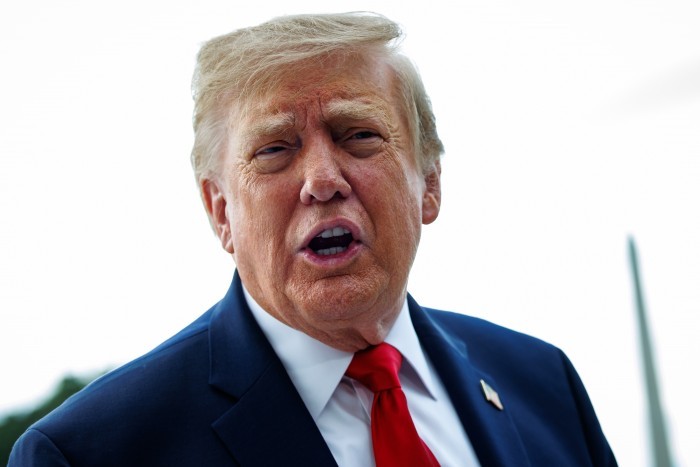
Departing the White House that day, President Trump told reporters, "They want to make a deal, and I like making deals," but added, "However, that deal is not going to be acceptable." President Trump asserted that Iran wants an agreement to immediately reopen the Strait of Hormuz because they are "losing so badly." Prior to rejecting the proposal, President Trump posted a map image on the social media platform Truth Social labeling the Strait of Hormuz as the "Trump Strait."
While stating that the current proposal is unacceptable, President Trump noted that he remains open to negotiations with Iran. However, he hinted at the possibility of resuming bombings against Iran. The Wall Street Journal (WSJ) reported that President Trump told aides he expects to resume bombing Iran following the November midterm elections. The scale of the strikes under consideration has not been confirmed.
Earlier on the 24th, Iranian Foreign Minister Abbas Araghchi told reporters in New York during the UN General Assembly that a "seven-day plan" had been conveyed to the U.S. through an intermediary. According to Minister Araghchi, hostilities across all fronts, including Lebanon, would cease for seven days, while the U.S. would unfreeze Iranian assets estimated at a minimum of 12 billion dollars (16.308 trillion won), waive sanctions on Iranian crude oil exports, and lift the naval blockade. Once these conditions were met, the Strait of Hormuz would be opened on the final seventh day, after which comprehensive negotiations on the nuclear program would commence immediately. Minister Araghchi explained that this proposal closely aligns with the commitments in the memorandum of understanding (MOU) signed between the U.S. and Iran in June, which collapsed shortly thereafter.
Regarding this, U.S. officials stated that President Trump's current stance could shift as the conflict continues over the coming weeks and may be influenced by the outcome of the midterm elections. The WSJ analyzed that political pressure on President Trump stemming from soaring domestic oil prices could tip the current balance between war and peace back toward active hostilities.
Ha Man-ju
Most Read
-
1
Trump demands rates fall below 1% as Fed hikes for..

-
2
Celltrion seeks rheumatoid arthritis indication ex..

-
3
Chinese e-commerce giants AliExpress, Temu and She..

-
4
Trump warns countries not helping U.S. must pay re..

-
5
China expels No. 2 military official Zhang Youxia..

-
6
Houthi rebels release video claiming downing of Sa..

-
7
Trump rejects Iran's offer to open Strait of Hormu..

PEOPLE







-
Address : In-Young Bldg., 34, Uisadang-daero 1-gil, Yeongdeungpo-gu, Seoul
Copyright by ASIATODAY CO., LTD. All rights resereved