



Middle East tensions continue affecting China's economy, prices keep rising
Aug 11, 2026, 10:19 am


Both producer and consumer prices in China continued rising last month, largely driven by Middle East tensions and energy market instability. However, the pace of increase slowed compared to June, suggesting deflation — the persistent economic disorder marked by falling prices amid stagnation — is no longer a major cause for concern in China's economy.
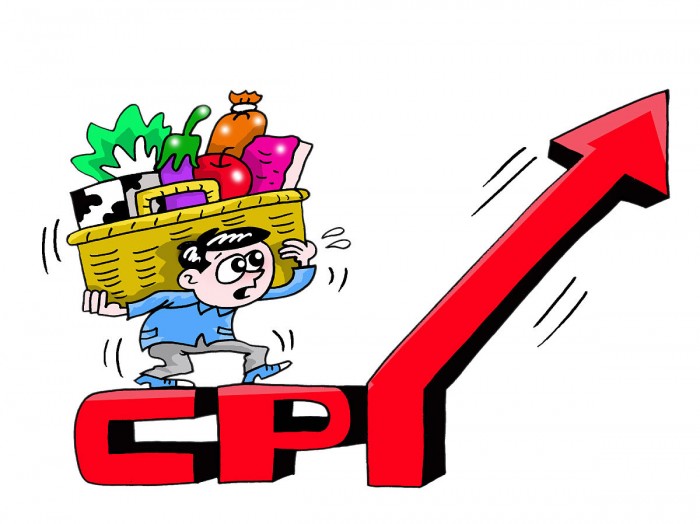 |
| A cartoon reflecting the steady rise in Chinese prices, attributed in part to Middle East tensions. / Xinjing Bao |
According to reports on the 9th by Xinjing Bao and other outlets, citing data released that day by China's National Bureau of Statistics, China's producer price index (PPI) for July rose 3.5% year-on-year — lower than June's 4.1% increase, which had marked a 47-month high, and below the 3.8% forecast compiled by Reuters.
China's monthly PPI growth had remained negative for more than three years since October 2022, during the COVID-19 pandemic, posing a significant deflationary threat to the economy. That streak of 41 consecutive months of decline broke in March this year with a reading of 0.5%, and the pace of increase has since expanded month by month, jumping sharply to 3.9% in May and 4.1% in June.
By sector, energy-related prices continued rising, with oil and natural gas extraction up 3.2%, oil, coal, and other fuel processing up 8.2%, and chemical raw materials and products manufacturing up 9.1%. In contrast, electricity and heat production and supply, automobile manufacturing, non-metallic mineral products, pharmaceutical manufacturing, and beverage and refined tea manufacturing all saw prices fall 2.3-5.7% year-on-year — suggesting deflationary risk hasn't entirely disappeared.
July's consumer price index (CPI) rose 0.5% year-on-year, also coming in somewhat below the market forecast of 0.8% and June's reading of 1.0%. A similar pattern is expected to continue going forward.
China's CPI had remained negative through the third quarter of last year amid deflation concerns, before turning positive at 0.2% in October and maintaining an upward trend for 10 consecutive months since.
Regarding the somewhat softer CPI growth in July compared to June, China's National Bureau of Statistics explained that a smaller increase in gasoline prices was the biggest factor — gasoline prices rose 1.0%, but the pace of increase slowed by 16 percentage points from the previous month, reducing its contribution to CPI growth by 0.45 percentage points. It seems reasonable to say that the most severe fears over deflation can now be set aside.
Hong Soon-do
Most Read
-
1
Trump shares map on social media labeling Strait o..

-
2
Kia Sportage outperforms Mazda CX-5 in German auto..

-
3
Houthis launch successive attacks on Saudi airport..

-
4
U.S. deploys carrier, 10,000 more troops to Middle..

-
5
Trump rejects Iran's offer to open Strait of Hormu..

-
6
N. Korea conducts first swarm attack drill with dr..

-
7
U.S.-China summit falls short on substance as Trum..

PEOPLE






HEADLINE NEWS
- Seoul dismisses Ukraine's claim of 'S. Korean support for Russia' as "inaccurate and inappropriate"
- S. Korea, Japan race to develop nuclear-powered submarines
- Henri Kagan, Kenso Soai win Nobel Prize in Chemistry for uncovering how mol..
- Vance says Alaska LNG cooperation will move forward with Seoul's current or..

-
Address : In-Young Bldg., 34, Uisadang-daero 1-gil, Yeongdeungpo-gu, Seoul
Copyright by ASIATODAY CO., LTD. All rights resereved