



Apple’s price hike warning clouds smartphone shipment outlook
Jun 21, 2026, 09:43 am


 |
| / Counterpoint Research |
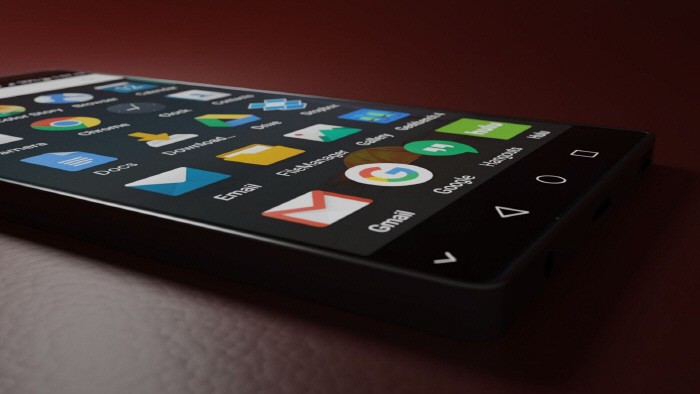
The aftermath of rising memory semiconductor prices is spreading across the overall smartphone market. Facing the burden of significantly heightened manufacturing costs, major smartphone manufacturers including Samsung Electronics and Apple are all hinting at the possibility of raising factory prices for new products. Coupled with the slowdown in IT device demand due to high inflation, concerns are being raised that a decrease in global smartphone shipments could become pronounced this year.
According to the industry on the 19th, Apple CEO Tim Cook said in an interview with The Wall Street Journal (WSJ) on the 17th (local time), "Regrettably, a price increase is inevitable," adding, "We did our best to protect consumers and minimize the massive increase passed on to us, but it has reached a level we can no longer bear." While CEO Cook did not specifically mention the products subject to the price hike or the exact timing, the industry views his remarks as having the 'iPhone 18' series, to be unveiled in the second half of the year, in mind.
The primary background behind the price hike is the surging price of memory semiconductors, a core component of smartphones. With the expansion of AI infrastructure investment trends centered on global Big Tech firms, difficulties are being experienced in supply and demand. Market research firm Counterpoint Research projected that this year's memory semiconductor market will reach a scale of 1,500 trillion won, growing fourfold compared to the previous year. Counterpoint Research forecast that this growth trend will continue until the first half of next year. In connection with this, the WSJ mentioned the possibility that the factory price of the 'iPhone 18 Pro' could be set at around 1,299 to 1,399 dollars. This is 200 to 300 dollars higher than its predecessor. CEO Cook said, "Consumers want devices but supply is reduced, and memory companies are passing on tremendous price increases," adding, "The key is the return of reasonable memory pricing and supply to consumer products."
Samsung Electronics, which is ahead of releasing its new foldable phones next month, is also highly expected to take price hike measures. In the case of Samsung Electronics, it raised the factory prices of the 'Galaxy S26' series in the first half of this year by up to around 300,000 won. This marks the first time in three years since 2023 that Samsung Electronics has raised the factory price of the Galaxy S series. TM Roh, President and Head of the DX Division at Samsung Electronics, stated at 'CES 2026' held in Las Vegas, USA, in January this year, "Among various business environments this year, we are concerned about the rising costs of major components, including memory," adding, "An increase in component prices inevitably affects finished product prices and the market in one form or another."
As price hikes are directly linked to a drop in demand, many view that the smartphone market will shrink significantly this year. According to Counterpoint Research, smartphone shipments in the first quarter of this year fell by around 3% compared to the same period last year. This is the result of a combination of difficulties in component supply and demand, such as memory semiconductors, and the slowdown in demand for IT devices. Previously, Counterpoint Research also projected that smartphone shipments this year would fall below 1.1 billion units, the lowest level since 2013. An industry official stated, "Price hikes are taking place across all lineups, from flagship to low-and-mid-end smartphones, so the decline in replacement demand will become more distinct," adding, "Major manufacturers also seem to be shifting their strategy toward actively targeting the high-value market to ease the cost burden."
Yeon Chan-mo
Most Read
-
1
Kia Sportage outperforms Mazda CX-5 in German auto..

-
2
Houthis launch successive attacks on Saudi airport..

-
3
Saudi Arabia, Iran hold first diplomatic talks to..

-
4
U.S. deploys carrier, 10,000 more troops to Middle..

-
5
Saudi airport in Riyadh struck again, leaving at l..

-
6
Putin's ally visits China on the 8th ahead of APEC..

-
7
Chinese military support and training center opens..

PEOPLE






HEADLINE NEWS

-
Address : In-Young Bldg., 34, Uisadang-daero 1-gil, Yeongdeungpo-gu, Seoul
Copyright by ASIATODAY CO., LTD. All rights resereved