



The notorious King Sejo and his Buddhist devotion on Mt. Odaesan
Jun 18, 2026, 11:08 am


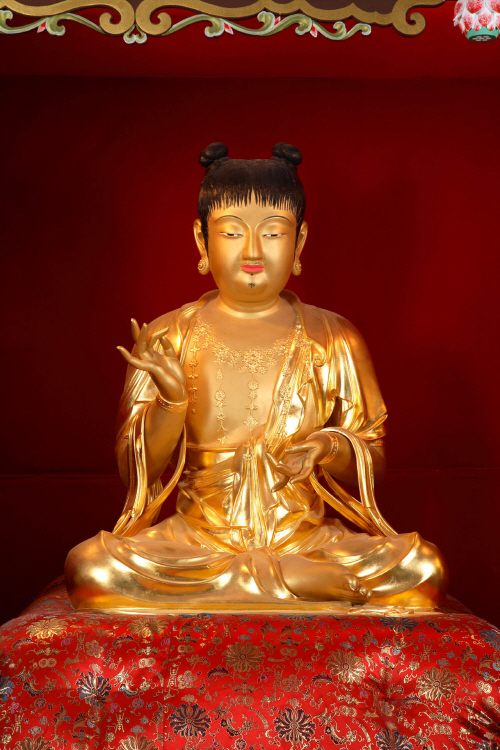 |
| The wooden seated Manjusri Child Statue of Sangwonsa Temple on Mt. Odaesan in Gangwon Province, crafted in 1466 during the 12th year of King Sejo's reign. According to legend, King Sejo visited Sangwonsa Temple, encountered the Manjusri Child, and was cured of his disease. / Photo courtesy of the National Heritage Administration |
Sejo, the seventh monarch of the Joseon Dynasty, falls into the category of unpopular rulers. With the recent popularity of the film "The Man Who Lives with the King," the king's notoriety has been rising in tandem. On portal sites, reviews for Gwangneung—Sejo's tomb located in Namyangju, Gyeonggi Province—are flooded with raw, derogatory comments such as "I want to exhume his grave." From an ethical standpoint, it is indeed difficult for Sejo to receive a favorable evaluation.
From the perspective of the Buddhist community, however, the assessment of Sejo shifts slightly. He was a protector of the faith, a "Dharma-protecting monarch" who helped Buddhism survive amid Joseon's state policy of suppressing Buddhism and promoting Confucianism. National treasures such as the Ten-Story Stone Pagoda of Wongaksa Temple Site in Jongno-gu, Seoul, and the Haetalmun Gate of Dogapsa Temple in Yeongam, as well as treasures like the Seokbosangjeol (Episodes from the Life of Buddha)—a biography of Sakyamuni compiled and translated into Korean—were all created during Sejo's reign. Sejo established the Gangyeongdogam, a state agency dedicated to translating Buddhist scriptures, and produced Korean (Hunminjeongeum) editions of the Diamond Sutra, the Lotus Sutra, and the Shurangama Sutra so that ordinary people could read them.
In particular, Mt. Odaesan in Gangwon Province shares a deep connection with Sejo. Home to Woljeongsa Temple, the head temple of the fourth district of the Jogye Order of Korean Buddhism, this mountain enshrines the parietal bone sarira (sacred relics) of the Buddha, which the Silla monk Jajang brought from Mt. Wutai in China in the 10th year of Queen Seondeok's reign (636). Sejo sponsored the remodeling project of Sangwonsa Temple (founded in the Silla Dynasty in 705), a branch temple of Woljeongsa, in 1465, and even penned a Gwonseonmun (a document encouraging Buddhist donations) himself. The document reflects his deep respect and gratitude toward Ven. Shinmi (Hyeogak Jonja), with whom he had compiled the Seokbosangjeol during his days as Grand Prince Suyang. Sejo went so far as to refer to himself in the document as "Lee, King of Joseon and a disciple of the Buddha."
Upon Ven. Shinmi’s recommendation, Sejo visited Sangwonsa Temple to treat his illness. According to legend, Sejo encountered the Manjusri Child (the Bodhisattva of Wisdom) while bathing in a valley of Mt. Odaesan. Perhaps because of this legend, Sangwonsa Temple enshrines the Wooden Seated Manjusri Child Statue, a National Treasure. The vow document discovered inside the statue's cavity notes that Princess Uisuk, Sejo's second daughter, and her husband commissioned and enshrined this statue in 1466, the 12th year of Sejo's reign. This demonstrates that Sejo and the faith in the Manjusri Bodhisattva were intimately linked.
Sejo's veneration of the Manjusri Bodhisattva can also be viewed through a political lens. As the symbol of wisdom, the Manjusri Bodhisattva serves as a "code" signifying a benevolent sage-king. For Sejo, whose legitimacy remained a lifelong vulnerability, the Manjusri faith likely served a public relations purpose that went beyond mere personal devotion. The reason both his father, King Sejong, and Sejo maintained a conciliatory stance toward Buddhism was that during the early Joseon period, Buddhism held a much greater sway over the general public than Confucianism.
Utilizing the Manjusri faith as a ruling ideology was a strategy employed by other nations as well. Emperors Kangxi and Qianlong of the Qing Dynasty frequently made pilgrimages to Mt. Wutai in China to associate the emperor with the Manjusri Bodhisattva. Their logic was to seek unification among the Han, Manchu, and Mongol ethnic identities through the common denominator of Buddhism, placing the emperor at the pinnacle as the incarnation of the Manjusri Bodhisattva.
We cannot know for certain what was truly in Sejo's heart when he pursued these Buddhist projects. However, the Buddhist cultural heritage he left behind undeniably enriched the culture of the Republic of Korea. It might now be time to grant King Sejo some mitigating circumstances.
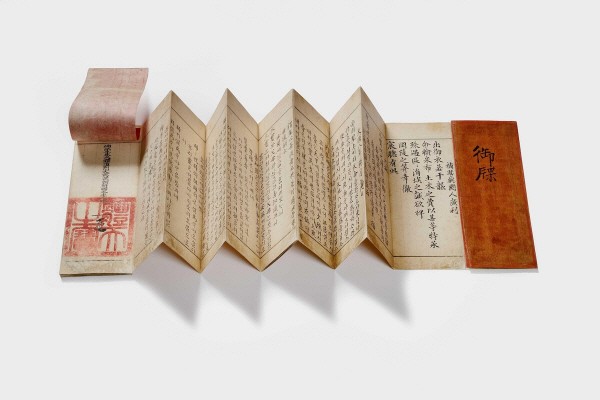 |
| The Gwonseonmun (a document encouraging Buddhist donations) containing the vow of King Sejo of the Joseon Dynasty to remodel Sangwonsa Temple in 1464. / Photo courtesy of the Woljeongsa Museum of Buddhist Art |
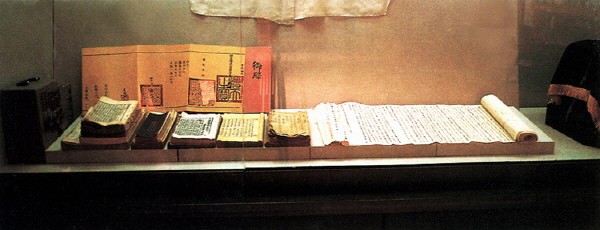 |
| The enshrouded relics found inside the cavity of the Wooden Seated Manjusri Child Statue of Sangwonsa Temple. A total of 23 artifacts were discovered inside the statue, including two vow documents (gwonseonmun) that reveal the origins of the Buddhist figure, early Joseon Dynasty textiles, and classical books. / Photo courtesy of the National Heritage Administration |
Most Read
-
1
Celltrion nears additional contract with major U.S..

-
2
Putin proposes trilateral U.S.-China-Russia summit..

-
3
U.S. weighs dropping MOAB, world's most powerful n..

-
4
"Aren't those foreigners on welfare?": M..

-
5
Attention centers on APEC for possible Trump-Xi-Pu..

-
6
Saudi Arabia, Iran hold first diplomatic talks to..

-
7
China tightens grip on boosting domestic demand an..

PEOPLE






-
Address : In-Young Bldg., 34, Uisadang-daero 1-gil, Yeongdeungpo-gu, Seoul
Copyright by ASIATODAY CO., LTD. All rights resereved