



US 30-year Treasury yield hits 5.19%, highest since 2007
May 20, 2026, 08:29 am


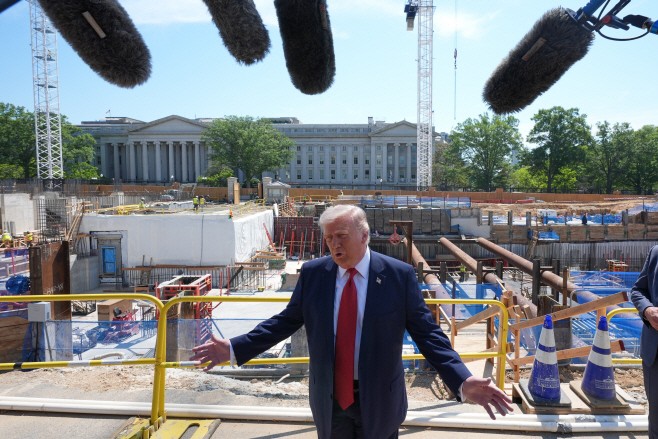 |
| U.S. President Donald Trump answers reporters’ questions while touring the construction site of a new ballroom on the White House grounds on May 19. /AP-Yonhap |
The yield on the 30-year U.S. Treasury bond surged to 5.19% intraday on May 19, marking its highest level since just before the 2007 global financial crisis, as investors reacted to mounting inflation concerns tied to the Iran war and expanding U.S. fiscal deficits.
According to reports from Bloomberg, the benchmark long-term yield rose as much as 7 basis points during trading, triggering a broad selloff across global bond markets. The yield later closed near 5.18%, close to a 19-year high.
The rise in Treasury yields has accelerated since the outbreak of the Iran conflict in late February. The 10-year Treasury yield climbed to as high as 4.687%, while average 30-year mortgage rates in the United States increased to 6.36%, up from below 6% before the war, according to data cited by Freddie Mac.
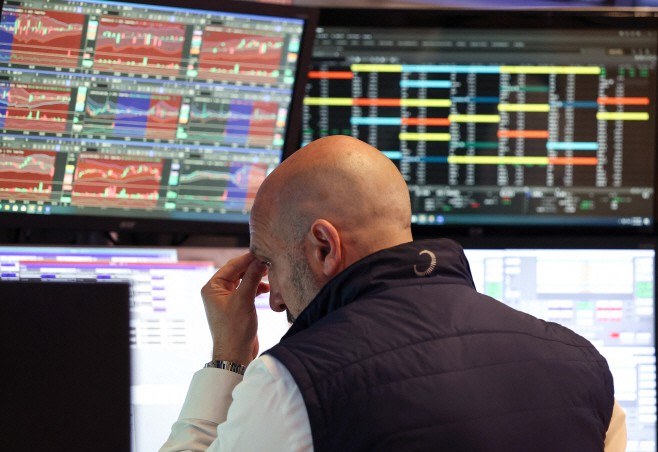 |
| The interior of the New York Stock Exchange (NYSE) is seen in New York on May 14. /AFP-Yonhap |
Analysts pointed to soaring oil prices and worsening inflation expectations as key drivers behind the move. Crude oil prices have remained above $100 per barrel amid continued disruptions around the Strait of Hormuz, a critical global energy shipping route.
Market-based inflation expectations also climbed sharply. The “one-year forward one-year inflation swap,” a closely watched inflation gauge, rose above 4% for the first time since early 2025, the Financial Times reported.
Recent U.S. inflation data added to investor concerns. April consumer prices rose 0.6% from the previous month, while producer prices increased 1.4% month-on-month and 6.0% year-on-year, among the fastest gains in several years.
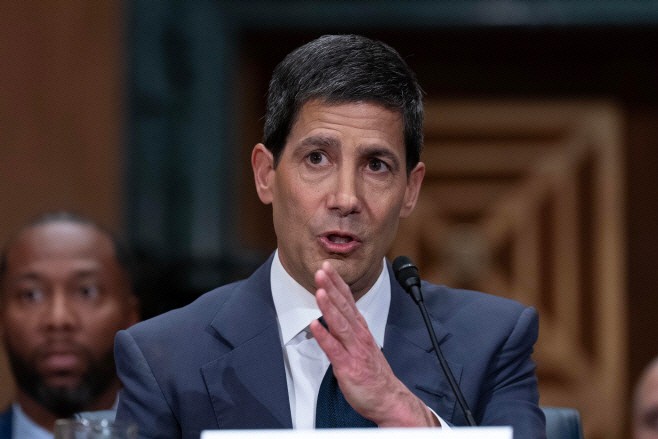 |
| Kevin Warsh, nominee for chair of the U.S. Federal Reserve, testifies during a Senate Banking Committee confirmation hearing at the U.S. Capitol in Washington, D.C. on April 21. /AP-Yonhap |
Growing concerns over the U.S. government’s fiscal position further pressured the bond market. Treasury dealer estimates cited by Bloomberg projected the federal deficit could widen to $1.95 trillion by the end of the current fiscal year and reach $2 trillion in 2027.
Investors have increasingly demanded higher compensation for holding long-term government debt. Earlier this month, a U.S. 30-year Treasury auction cleared above 5% for the first time since 2007, though demand remained relatively weak.
Global bond markets moved in tandem with U.S. Treasurys. Long-term government bond yields in countries including Canada, Germany, France, Spain and Switzerland climbed to 12-month highs. Britain’s 30-year gilt yield approached 6%, its highest level since 1998, while Japan’s 30-year government bond yield reached a record 4.13%.
The sharp jump in yields has also reshaped expectations for monetary policy. According to CME FedWatch data cited by Reuters, markets now assign a 40% probability that the Federal Reserve will raise interest rates by 0.25 percentage points by December. Expectations for a 0.5 percentage-point rate hike also increased sharply over the past week.
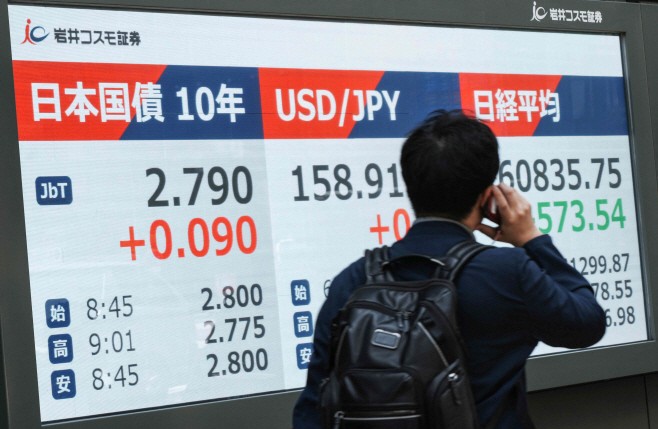 |
| A man walks past an electronic board displaying Japan’s 10-year government bond yield (left), the yen-dollar exchange rate (center), and the Nikkei 225 average in Tokyo on May 18. /AFP-Yonhap |
This marks a dramatic reversal from earlier market expectations that the Fed would cut rates by at least 0.5 percentage points by early 2026.
The changing market environment presents an early challenge for Kevin Warsh, the Federal Reserve chair nominee backed by President Trump. Bloomberg reported that investors are increasingly betting that the Fed’s next move could be a rate hike rather than a cut if energy-driven inflation persists.
Higher yields are already affecting broader financial markets and the economy. Rising mortgage costs threaten the recovery of the U.S. housing market, while elevated borrowing costs could weigh on corporate investment and consumer spending.
U.S. stock markets also weakened on the day. The S&P 500 fell 0.67%, while the tech-heavy NASDAQ Composite dropped 0.84%. The Dow Jones Industrial Average declined 0.65%.
#US Treasury yields #30-year Treasury #bond market #inflation #Iran war
Copyright by Asiatoday
Most Read
-
1
Celltrion’s Omlyclo gains ground in major European..

-
2
Trump demands rates fall below 1% as Fed hikes for..

-
3
Hyundai Motor Group breaks ground on integrated st..

-
4
U.S. strikes 3 Iranian oil tankers, Iran vows reta..

-
5
Trump makes $1 trillion bet ahead of midterm elect..

-
6
Iran resumes ballistic missile production, assembl..

-
7
Samsung Electronics, Mistral AI to jointly develop..

PEOPLE







-
Address : In-Young Bldg., 34, Uisadang-daero 1-gil, Yeongdeungpo-gu, Seoul
Copyright by ASIATODAY CO., LTD. All rights resereved