



[Exclusive] Police bulk up international cooperation: Continued capacity building needed
May 19, 2026, 05:17 pm


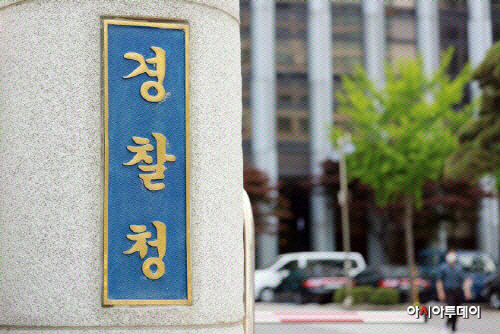 |
| The National Police Agency. / Photo by Park Sung-il |
The South Korean National Police Agency has elevated the status of its international cooperation division to counter transnational crimes such as drug trafficking, voice phishing, and romance scams. However, concerns are mounting over the practical capabilities of the newly expanded division, with critics pointing out that the vetting process for the selected personnel's specialized expertise remains inadequate. Although the police maintaining that staff were selected and deployed based on language proficiency and relevant career backgrounds, personnel on the ground argue that international cooperation and mutual legal assistance cannot be properly assessed solely through standardized foreign language test scores.
According to data submitted by the National Police Agency to the office of Representative Lee Sang-sik of the National Assembly's Public Administration and Security Committee on May 19, the agency expanded and restructured the existing International Cooperation Officer's Bureau—which previously consisted of one officer and two divisions—into the International Policing Cooperation Bureau, comprising one bureau and three divisions. This reorganization elevates the leadership from the rank of Senior Superintendent General to a bureau-level organization led by a Director General (Superintendent General), while also expanding the international mutual assistance function from one division to two.
Additionally, an International Crime Investigation Squad led by a Senior Superintendent has been established at the Seoul Metropolitan Police Agency. International Mutual Assistance Sections have been newly introduced across three provincial police agencies, including Busan. A dedicated 24-hour department for overseas safety policies and situational responses has also been set up to protect South Korean nationals abroad and respond to overseas incidents. The police plan to reinforce mutual assistance investigation personnel by adding 100 officers across both the headquarters and provincial police agencies.
This restructuring comes in response to the proliferation of cross-border crimes—such as online fraud, illegal gambling, and narcotics syndicates—operating out of Southeast Asian hubs. As the number of cases involving South Korean victims overseas continues to rise, there is a growing urgency to strengthen joint operations with local foreign police agencies, protect expatriates, and enhance international investigative cooperation.
Nevertheless, assessments are divided on whether a sufficient pool of hands-on experts has been secured to match the organizational expansion. International cooperation duties extend far beyond simple interpretation or document translation; they demand a comprehensive skill set, including negotiations with foreign law enforcement, drafting formal mutual assistance requests, writing English reports, handling international conferences, and understanding the distinct criminal justice procedures of different nations.
"Even if someone scores over 700 on the TOEIC, there can be a significant gap when it comes to the actual English proficiency required for field operations," a police official remarked. "International mutual assistance documents require strict adherence to specific formats and legal procedures, so a lack of relevant experience inevitably compromises the quality of the work." Another police source agreed that while expanding the organization to tackle transnational crime is a step in the right direction, "we need to scrutinize whether sufficient field experience and expertise were properly verified in the process of rapidly increasing personnel."
The National Police Agency maintains that it already has a robust verification system for foreign language proficiency and specialized expertise. For domestic postings, the agency mandated language proficiency as a prerequisite for personnel transferred through open position postings in the first half of this year, conducting interviews before final placement. The newly deployed personnel possess language skills equivalent to a TOEIC score of 700 or higher. Overseas police cooperation officers are also required by relevant regulations to meet specific language benchmarks.
"The personnel working at the International Policing Cooperation Bureau are divided into domestic staff and overseas police cooperation officers, and we have established a foreign language expertise verification framework for each selection stage," the National Police Agency stated. "Through the creation of the International Policing Cooperation Bureau, we plan to fortify our international policing cooperation network and run our mutual assistance functions more systematically. We will continue to enhance our response capabilities against transnational crimes by combining manpower reinforcement with specialized training."
Most Read
-
1
Celltrion’s Omlyclo gains ground in major European..

-
2
Trump demands rates fall below 1% as Fed hikes for..

-
3
Hyundai Motor Group breaks ground on integrated st..

-
4
U.S. strikes 3 Iranian oil tankers, Iran vows reta..

-
5
Trump makes $1 trillion bet ahead of midterm elect..

-
6
Iran resumes ballistic missile production, assembl..

-
7
Samsung Electronics, Mistral AI to jointly develop..

PEOPLE







-
Address : In-Young Bldg., 34, Uisadang-daero 1-gil, Yeongdeungpo-gu, Seoul
Copyright by ASIATODAY CO., LTD. All rights resereved