



Trump ally: "Likelihood of China invading Taiwan within 5 years has grown"
May 18, 2026, 03:00 pm


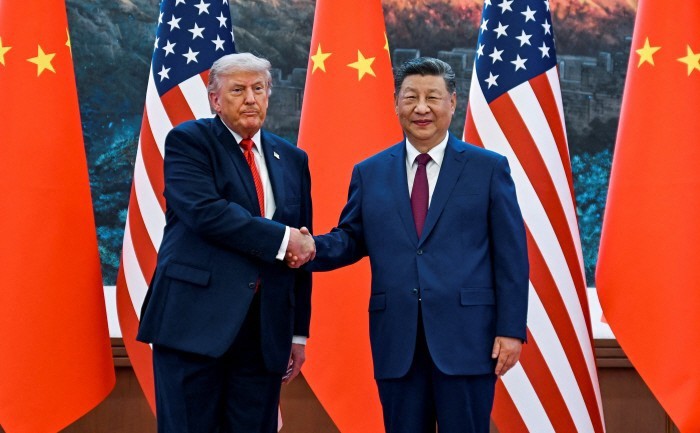 |
| U.S. President Donald Trump (left) and Chinese President Xi Jinping shake hands ahead of their summit at the Great Hall of the People on May 14. /Reuters via Yonhap News |
U.S. President Donald Trump's allies expressed concern that the risk of China invading Taiwan within the next five years has grown following the U.S.-China summit, which could cut off the supply of semiconductors needed by American companies, U.S. political news outlet Axios reported on May 17, local time.
According to Axios, Trump's close advisors said that while President Trump was satisfied with the lavish protocol and special hospitality provided by Chinese President Xi Jinping, Xi's actual remarks stood in stark contrast to the welcoming atmosphere.
"Xi no longer positions China as a rising power, but places it on an equal footing with the United States," one Trump ally assessed. "He is trying to state that Taiwan belongs to China."
The ally noted, "This U.S.-China summit has significantly increased the likelihood that the Taiwan issue will be brought squarely onto the negotiating table within the next five years.
The source also emphasized, "There is no way for us to be economically prepared. The semiconductor supply chain is nowhere near self-sufficiency. The most pressing issue for corporate CEOs and the broader economy is the semiconductor supply chain."
The United States heavily relies on Taiwan's TSMC for the semiconductors required for artificial intelligence (AI) and advanced industries. Experts point out that if China invades Taiwan, the collapse of the American semiconductor supply chain could deal a fatal blow to the U.S. AI industry and the national economy.
As the possibility of a Chinese invasion of Taiwan emerges as the biggest risk factor in U.S.-China relations, voices within the Trump camp suggest that the recent summit has heightened the potential for crisis rather than yielding diplomatic achievements.
#Trump #China #Taiwan #TSMC
Copyright by Asiatoday
Most Read
-
1
Celltrion’s Omlyclo gains ground in major European..

-
2
Trump demands rates fall below 1% as Fed hikes for..

-
3
Trump makes $1 trillion bet ahead of midterm elect..

-
4
Iran resumes ballistic missile production, assembl..

-
5
Samsung Electronics, Mistral AI to jointly develop..

-
6
Trump warns countries not helping U.S. must pay re..

-
7
Apple launches first foldable, 1 million won prici..

PEOPLE






HEADLINE NEWS
- Trump to roll out ‘unprecedented welcome’ for Xi with B-2 bombers, F-22 fighters
- S. Korea, U.S., and Japan form united front on Taiwan and economic coercion..
- Trump administration moves to impose sweeping sanctions on International Cr..
- Xi to make state visit to U.S. Sept. 23-25, dispelling rumors over his heal..

-
Address : In-Young Bldg., 34, Uisadang-daero 1-gil, Yeongdeungpo-gu, Seoul
Copyright by ASIATODAY CO., LTD. All rights resereved