



Review of the opera “Don Giovanni” conducted by Riccardo Muti, April 29, 2026, Tokyo Bunka Kaikan Grand Hall
May 05, 2026, 02:22 pm


Mozart with a Transparent Tone and Sincere Tension - Opera ‘Don Giovanni’ Conducted by maestro Riccardo Muti
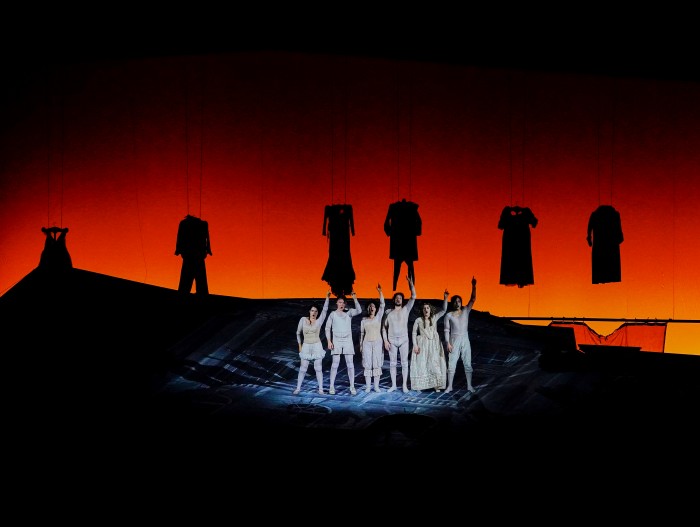 |
| A scene from the opera Don Giovanni. ⓒShinji Hosono |
Designed by Japanese modernist architecture master Kunio Maekawa, the Tokyo Bunka Kaikan in Ueno opened in April 1961. It was built in response to the demand for a proper concert hall in Tokyo capable of hosting opera and ballet performances. Boasting exceptional acoustics, the Tokyo Bunka Kaikan has served as a world-renowned hub of Japanese performing arts and continues to host opera, ballet, and classical concerts. After undergoing major repairs in 1999 and partial renovations in 2014, the Tokyo Bunka Kaikan will begin a three-year period of extensive renovations following a ballet performance in early May. Before this extended renovation period begins, Mozart’s “Don Giovanni” will be performed as the final opera, conducted by maestro Riccardo Muti.
This opera, organized by the Tokyo Harusai Festival, NBS, the Executive Committee, and Nikkei Inc., also served as a performance commemorating the 160th anniversary of diplomatic relations between Japan and Italy. The Tokyo Harusai Festival (hereinafter, "Tokyo Harusai"), celebrating its 22nd anniversary as Japan’s largest classical music festival, successfully concluded this year's festival from March 13 to April 19. Tokyo Harusai participated as the organizer of this opera.
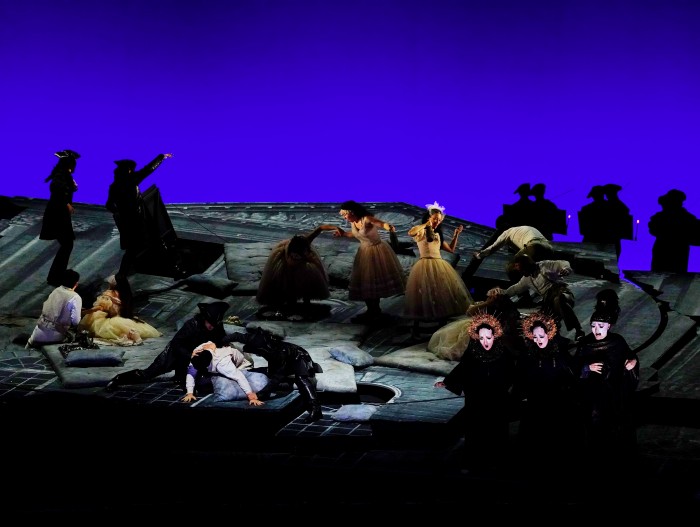 |
| A scene from the opera Don Giovanni. ⓒShinji Hosono |
Riccardo Muti has conducted a wide variety of works at the Tokyo Harusai Festival for many years, including operas and concerts. Thanks to his long-standing connection to the festival, the Harusai Festival Orchestra and the Tokyo Opera Singers joined this opera production. Muti previously conducted the operas “Così fan tutte” and “Le nozze di Figaro” in Japan. This performance marks his first time conducting “Don Giovanni”, completing his conductorship of all three works of the Mozart-Da Ponte trilogy in Japan.
Born in 1941, Muti's decision to conduct a full-length opera drew attention not only in Japan, but also throughout the global classical music world. Perhaps because of this, tickets for the April 24, 29, and May 1 performances reportedly sold out well in advance. Furthermore, the production was directed by Muti’s daughter, Chiara Muti, which added to the excitement. The opera is a co-production between the Teatro Regio in Turin, Italy and the Teatro Massimo in Palermo. It is a revival of the production that premiered to a sold-out audience at the Teatro Regio in Turin in 2022.
Muti’s score-oriented approach to opera conducting was evident once again. His structuralist tendency, which is extremely wary of any drift toward Romanticism in Mozart’s operas, was particularly evident in this production of “Don Giovanni”. From the overture onward, his meticulous style, focused on the essentials, revealed his intention to capture the essence of Classicism.
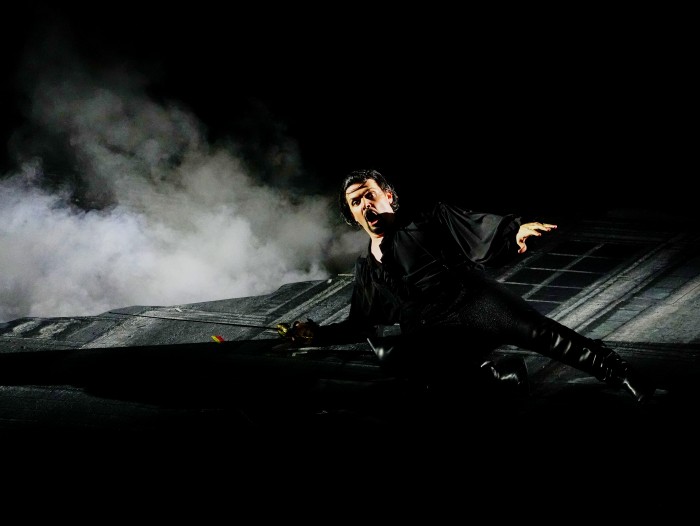 |
| A scene from the opera Don Giovanni. ⓒShinji Hosono |
The sound retained its crystalline clarity. The strings and winds sounded clear and distinct, rendering a watercolor painting. Muti’s signature style remained intact: meticulous fine-tuning of the timbre and maintenance of a tension-filled atmosphere. The only difference was the relatively relaxed tempo. With a more generous sense of rhythm than strict precision, the texture of Mozart’s music came to life even more vividly. The conductor's vision truly shone through in his collaboration with the polished Tokyo Harusai Festival Orchestra.
Actress and writer Chiara Muti chose to envelop the entire production in a dark and heavy atmosphere, rather than expressing the opera’s characteristic ‘dramma giocoso’. Alessandro Camera’s set design utilized an abstract and ambiguous space as a backdrop, depicting the stage as a hellish, ruined landscape caused by Don Giovanni’s immorality and depravity.
The staging, in particular, seemed to suggest that the characters were being manipulated or bewitched by the protagonist. Most of them appeared in their underwear, then donned costumes appropriate for their roles, only to strip again once Don Giovanni vanished into hell. While innovative in many ways, the production felt somewhat scattered due to its attempt to incorporate too many symbols and philosophical messages. However, this serious interpretation harmonized very well with Muti’s musical interpretation, which excluded romantic elements and humor.
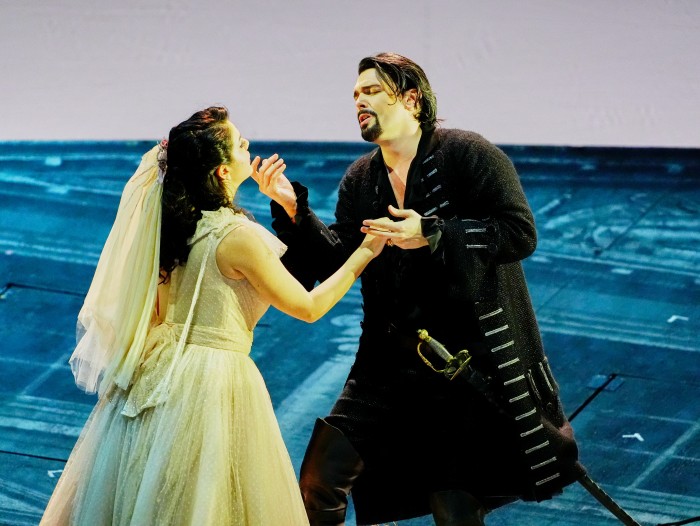 |
| A scene from the opera Don Giovanni. ⓒShinji Hosono |
I felt that this performance emphasized the Mozartian music crafted by Riccardo Muti more than the stage production itself. The singers' exceptional vocal talent and acting skills reinforced this impression. Baritones Luca Micheletti (Don Giovanni) and Alessandro Luongo (Leporello) effectively conveyed the work’s heavy themes through steady singing, superb acting, and seamless connection to the music. Luca Micheletti, an active actor and director, particularly stood out in his portrayal of the gloomy Don Giovanni, depicted as the embodiment of evil.
Over the next three years, while the Tokyo Bunka Kaikan is closed, the Japanese classical performing arts scene, including opera and ballet, will be busy searching for alternative venues. Next year, the Tokyo Harusai Festival will meet its audience in a different part of Tokyo rather than Ueno. Although Ueno is not currently covered in cherry blossoms, my excitement to experience high-quality concerts throughout downtown Tokyo remains unchanged.
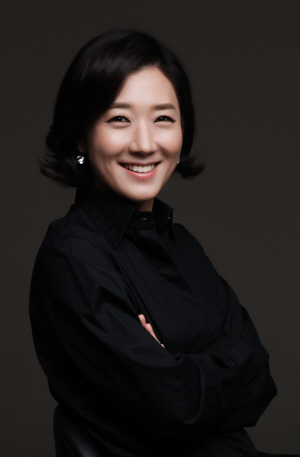
Sooyeoun Sohn (Opera Critic / Professor at Dankook University)
 |
#Don Giovanni #Riccardo Muti #Tokyo Bunka Kaikan #Mozart opera #Tokyo Harusai Festival
Copyright by Asiatoday
Most Read
-
1
Alteogen secures European patent for Keytruda SC,..

-
2
Trump shares map on social media labeling Strait o..

-
3
Celltrion seeks rheumatoid arthritis indication ex..

-
4
Chinese e-commerce giants AliExpress, Temu and She..

-
5
China expels No. 2 military official Zhang Youxia..

-
6
Houthi rebels release video claiming downing of Sa..

-
7
Trump rejects Iran's offer to open Strait of Hormu..

PEOPLE





-
Address : In-Young Bldg., 34, Uisadang-daero 1-gil, Yeongdeungpo-gu, Seoul
Copyright by ASIATODAY CO., LTD. All rights resereved