



Hyundai pivots to EVs in China with Ioniq push
Apr 23, 2026, 08:47 am


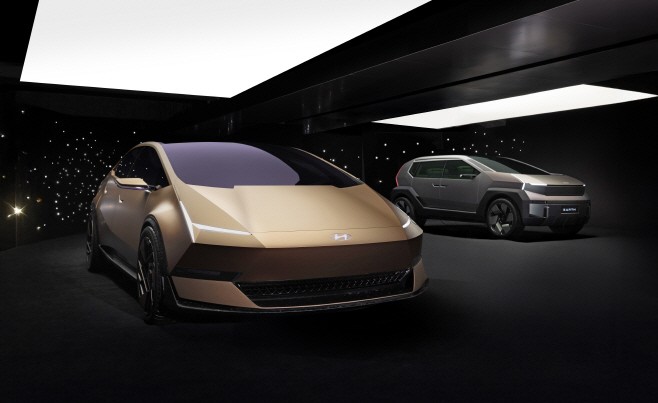 |
| Venus Concept and Earth Concept on display at Hyundai Motorstudio Beijing. / Hyundai Motor Company |
Hyundai Motor Company is overhauling its strategy in China for the first time in 24 years, shifting fully toward electric vehicles (EVs) in a bid to stage a comeback in the world’s largest auto market.
Marking the Auto China 2026, the company plans to unveil the first mass-produced China model under its Ioniq brand while transforming its joint venture, Beijing Hyundai, into a new energy vehicle (NEV) brand.
Founded in 2002 as a 50-50 joint venture with Beijing Automotive Group, Beijing Hyundai once experienced rapid growth strong enough to earn the nickname “Hyundai Speed” in China. Hyundai now aims to replicate that success with EVs as it seeks to regain momentum in the sluggish Chinese market.
According to the company, it will debut the new Ioniq production model at Auto China 2026, which opens on April 24. At the same event, Beijing Hyundai is expected to officially announce its transition to a NEV-focused brand, covering EVs, plug-in hybrids and other eco-friendly vehicles.
This marks Hyundai’s most significant strategic shift in China since entering the market. The company aims to move away from its previous image centered on affordable internal combustion engine vehicles and reposition itself as a leader in electrified mobility.
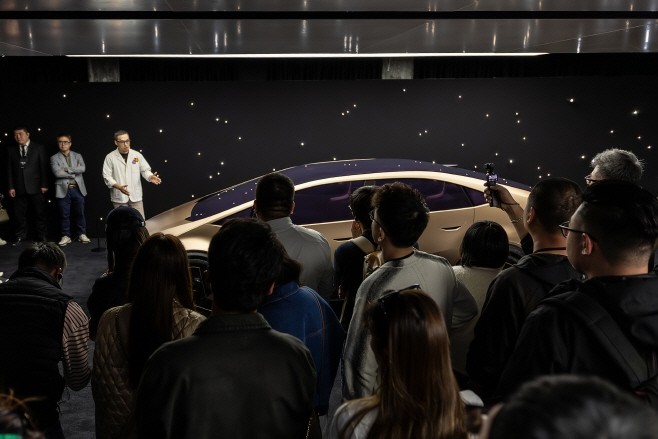 |
| Wonjari, Chief Designer of the Hyundai Design Team at AVP China, explains the Venus Concept. / Hyundai Motor Company |
Hyundai’s push comes as China’s auto market has rapidly evolved toward NEVs. Domestic players such as BYD and Geely have taken the lead, while tech giant Huawei has also entered the automotive sector through electronics and semiconductor integration.
NEVs accounted for 54% of new car sales in China last year, reflecting strong consumer preference for EVs and advanced technologies such as autonomous driving.
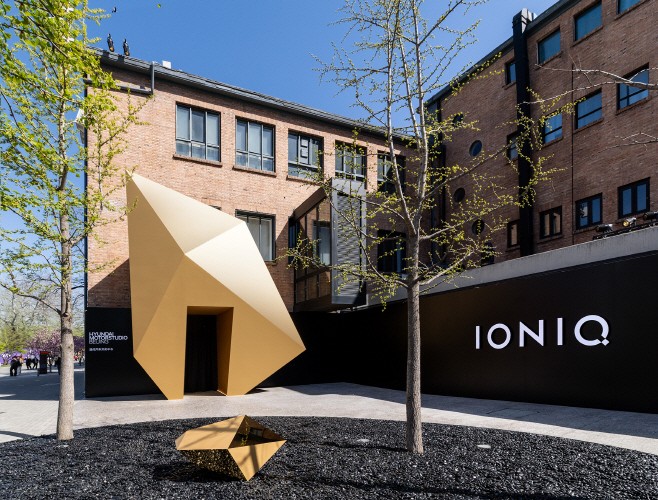 |
| Golden Gate installation at Hyundai Motorstudio Beijing, inspired by “The Origin,” symbolizing the design direction of the Ioniq brand in China. / Hyundai Motor Company |
To compete, Hyundai is prioritizing localization. It plans to incorporate autonomous driving technology developed by Chinese firm Momenta into its new vehicles.
Beyond launching EVs, the company aims to build a full “Ioniq ecosystem” combining vehicles, services and charging infrastructure tailored to local consumer preferences.
Hyundai also plans to introduce extended-range electric vehicles (EREVs) in China next year, targeting long-distance driving needs in regions with limited charging infrastructure.
Industry observers say shifting policy conditions in China could favor Hyundai. The government’s upcoming five-year plan for 2026–2030 emphasizes “intelligent connected NEVs,” focusing support on high-value vehicles integrating autonomous driving and artificial intelligence.
Subsidy policies are also evolving. Incentives for replacing old vehicles with NEVs are being adjusted to favor higher-priced models, potentially benefiting companies with stronger technology and brand competitiveness.
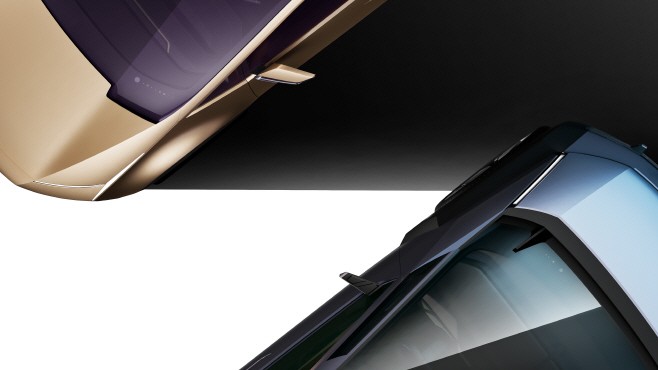 |
| Exterior of the Venus Concept and Earth Concept. / Hyundai Motor Company |
Hyundai sees this as a more favorable environment compared to the past, offering a window to compete more effectively against local players.
The company has also been expanding partnerships in China across batteries and energy. In January, it held talks with CATL, Sinopec and Yueda Group on cooperation in battery technology, energy and mobility.
“China’s auto market has already moved beyond electrification to competition in technology and ecosystems,” an industry official said. “If Hyundai secures localized technological capabilities, it could create a different kind of comeback opportunity.”
#Hyundai Motor #China EV market #Ioniq #Beijing Hyundai #NEV
Copyright by Asiatoday
Most Read
-
1
Kia Sportage outperforms Mazda CX-5 in German auto..

-
2
Houthis launch successive attacks on Saudi airport..

-
3
Saudi Arabia, Iran hold first diplomatic talks to..

-
4
U.S. deploys carrier, 10,000 more troops to Middle..

-
5
Saudi airport in Riyadh struck again, leaving at l..

-
6
Putin's ally visits China on the 8th ahead of APEC..

-
7
Chinese military support and training center opens..

PEOPLE





HEADLINE NEWS

-
Address : In-Young Bldg., 34, Uisadang-daero 1-gil, Yeongdeungpo-gu, Seoul
Copyright by ASIATODAY CO., LTD. All rights resereved