



Gulf states rush for Korean air defense systems
Apr 14, 2026, 09:07 am


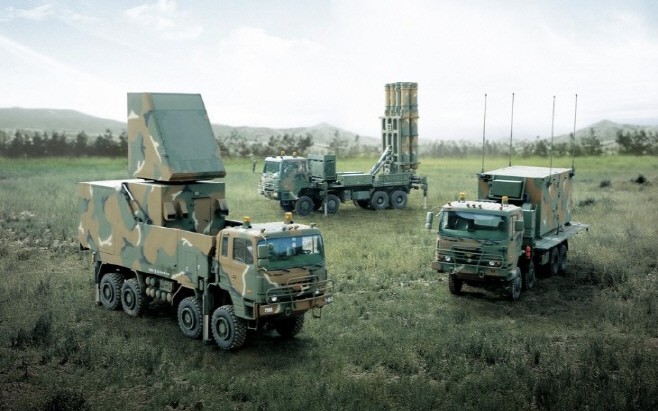 |
| The Cheongung II (M-SAM) system is jointly produced by LIG Nex1 and Hanwha Aerospace. LIG Nex1 serves as the main contractor for guided missiles and system integration, Hanwha Aerospace manufactures launchers and vehicles, and Hanwha Systems produces the multifunction radar (MFR). LIG Nex1 also leads overseas export contracts and system integration. / Defense Acquisition Program Administration |
Demand for South Korean missile defense systems is rapidly rising across the Middle East following large-scale missile attacks linked to Iran, with Gulf nations urgently seeking faster deliveries of Korean-made interceptors.
Countries including Saudi Arabia, the United Arab Emirates, and Qatar are pushing to secure early deployment of the Cheongung II (M-SAM) system, widely regarded as a key component of Korea’s “K-defense” exports. According to reports, these nations have been making repeated inquiries to LIG Nex1 and Hanwha Aerospace about accelerating delivery schedules.
A report by The Wall Street Journal said Gulf states are increasingly turning to South Korea as a primary alternative supplier, moving away from traditional reliance on U.S. defense systems. The UAE signed a $3.5 billion deal for Cheongung II in 2022 and has already deployed it operationally, while Saudi Arabia secured a $3.2 billion contract in 2024 and is seeking to expedite its acquisition.
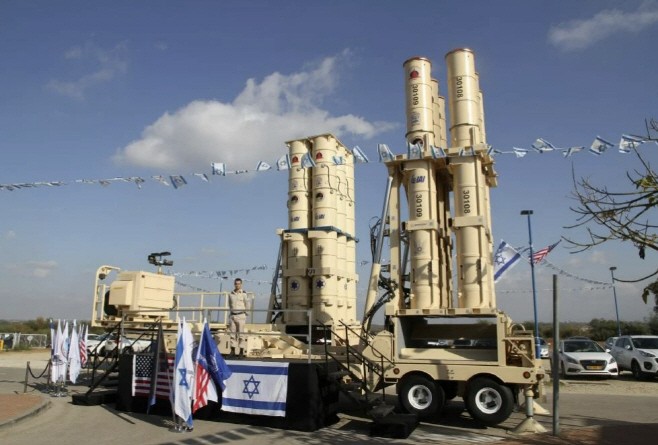 |
| The Arrow 3 missile system, delivered to the Israeli Air Force on Jan. 18, 2017. / Israeli Ministry of Defense |
At the same time, Israel is ramping up production of its own interceptor missiles. The Israeli Ministry of Defense said Israel Aerospace Industries has significantly increased monthly output of the Arrow missile system to counter ongoing threats from Iran and Yemen’s Houthi forces. The surge comes as interceptor stockpiles have fallen to critical levels amid repeated large-scale attacks.
Israeli Defense Minister Israel Katz emphasized that “overwhelming defensive capability is the only guarantee of peace,” underscoring the urgency of strengthening missile defense systems. Israel is also diversifying its supply chain in cooperation with U.S. partners such as Stark Aerospace to prevent shortages.
Experts warn that the situation offers a stark lesson for South Korea, which faces similar risks from North Korea’s potential “swarm attacks” using a mix of low-cost missiles and artillery. In such scenarios, expensive interceptors could be rapidly depleted.
Industry officials stressed the need for South Korea to expand stockpiles of key systems, including Cheongung II and the long-range L-SAM, while maintaining a balance between exports and domestic reserves. They also called for accelerating development of next-generation systems such as a Korean-style “Iron Beam,” a laser-based defense platform aimed at significantly reducing interception costs.
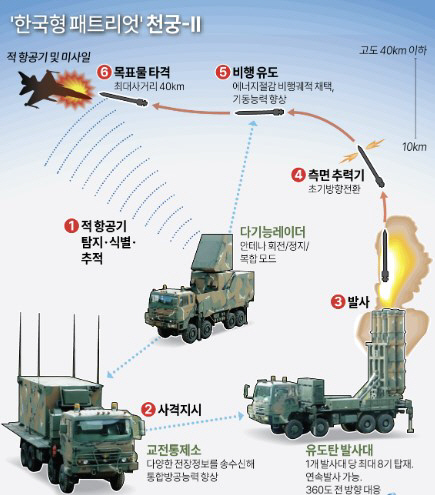 |
| The process of target detection and interception by the “Korean-style Patriot,” Cheongung II (M-SAM). / Yonhap News |
#Middle East #K-missile #Cheongung II #Arrow missile #air defense
Copyright by Asiatoday
Most Read
-
1
Celltrion’s Omlyclo gains ground in major European..

-
2
Trump demands rates fall below 1% as Fed hikes for..

-
3
Trump makes $1 trillion bet ahead of midterm elect..

-
4
Iran resumes ballistic missile production, assembl..

-
5
Samsung Electronics, Mistral AI to jointly develop..

-
6
Trump warns countries not helping U.S. must pay re..

-
7
Apple launches first foldable, 1 million won prici..

PEOPLE






HEADLINE NEWS
- Trump to roll out ‘unprecedented welcome’ for Xi with B-2 bombers, F-22 fighters
- S. Korea, U.S., and Japan form united front on Taiwan and economic coercion..
- Trump administration moves to impose sweeping sanctions on International Cr..
- Xi to make state visit to U.S. Sept. 23-25, dispelling rumors over his heal..

-
Address : In-Young Bldg., 34, Uisadang-daero 1-gil, Yeongdeungpo-gu, Seoul
Copyright by ASIATODAY CO., LTD. All rights resereved