



Samsung Heavy rides FLNG boom as offshore backlog jumps 43%
May 28, 2026, 02:41 pm


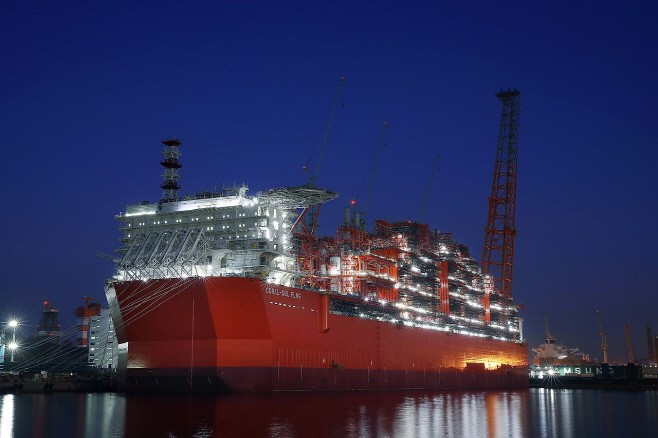 |
| Samsung Heavy Industries’ Coral Sul FLNG built for the Mozambique project. /Samsung Heavy Industries |
Samsung Heavy Industries is accelerating the expansion of its offshore plant business on the back of strong demand for floating liquefied natural gas facilities (FLNGs). The shipbuilder is currently constructing three FLNG units simultaneously amid growing global orders, boosting production performance and raising expectations for achieving its annual sales growth target.
According to Samsung Heavy Industries on May 27, its offshore production facility order backlog reached $4.3 billion in the first quarter, up 43% from $3 billion a year earlier. At its Geoje shipyard, the company is currently building three FLNG units at the same time for Malaysia’s ZLNG project, Canada’s Cedar LNG project and Mozambique’s Coral project.
Industry observers attribute the rapid increase in FLNG demand to the global energy transition and expanding deepwater gas field development. Market research firm Mordor Intelligence projected the global FLNG market to grow from $28.2 billion this year to $44.72 billion by 2031, representing a compound annual growth rate of 9.66% between 2026 and 2031.
Samsung Heavy Industries is regarded as one of the leading shipbuilders in the FLNG market. Unlike conventional commercial vessels, FLNG projects require customized specifications, advanced offshore plant engineering capabilities and sophisticated process management. Flexible production capacity adjustment depending on project volumes is also considered a key competitive advantage.
The company raised offshore division production to 7,800 tons in the first quarter, up more than 70% from 4,400 tons a year earlier.
With FLNG construction ramping up, revenue growth is also expected to gain momentum. Samsung Heavy Industries has set this year’s sales target at 12.8 trillion won, up 20% from last year. FLNG units are known as high-value-added facilities priced between $1.5 billion and $2.5 billion each, roughly six to 10 times more expensive than conventional LNG carriers. Revenue recognition also increases as project construction progresses.
The market is closely watching whether Samsung Heavy Industries can secure additional FLNG orders this year, which could determine the long-term growth trajectory of its offshore plant business.
Bae Sung-jo, an analyst at Hanwha Investment & Securities, said in a recent report, “Samsung Heavy Industries could fully achieve its offshore order target of $8.2 billion this year if it wins the Delfin FLNG vessel No. 1 within the first half and additionally secures orders for vessel No. 2 and Canada’s Western FLNG project by year-end.”
#Samsung Heavy Industries #FLNG #floating LNG facility #Coral Sul #Mozambique
Copyright by Asiatoday
Most Read
-
1
Kia Sportage outperforms Mazda CX-5 in German auto..

-
2
Houthis launch successive attacks on Saudi airport..

-
3
Saudi Arabia, Iran hold first diplomatic talks to..

-
4
U.S. deploys carrier, 10,000 more troops to Middle..

-
5
Saudi airport in Riyadh struck again, leaving at l..

-
6
Putin's ally visits China on the 8th ahead of APEC..

-
7
Chinese military support and training center opens..

PEOPLE






HEADLINE NEWS

-
Address : In-Young Bldg., 34, Uisadang-daero 1-gil, Yeongdeungpo-gu, Seoul
Copyright by ASIATODAY CO., LTD. All rights resereved