



Japan invests 2 trillion yen in India to shift chip and AI supply chains from China
Jul 02, 2026, 10:21 am


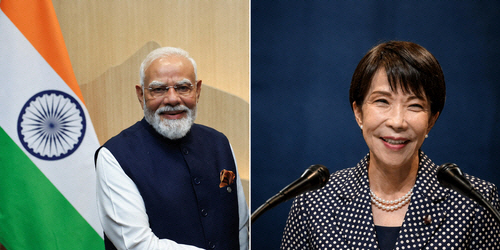 |
Japan is embracing India as a core hub for a "post-China supply chain." Japanese Prime Minister Sanae Takaichi and Indian Prime Minister Narendra Modi will hold a summit in New Delhi on July 2 to discuss extensive economic security cooperation measures covering semiconductor materials, artificial intelligence (AI), biogas, high-speed rail, and energy security.
The Yomiuri Shimbun reported on the same day that private Japanese companies are expected to exchange approximately 120 cooperation documents with the Indian side in line with this summit. The total value of the projects from the Japanese side is around 2 trillion yen. The agreement reportedly includes cooperation on establishing Fujifilm's semiconductor materials factory, Suzuki's biogas plant project, and collaboration between a Japanese AI startup and an Indian domestic AI firm on app development.
This investment is not merely about pioneering an overseas market. It reflects a broader trend where Japan is nurturing India as a strategic hub spanning semiconductors, AI, energy, and infrastructure to reduce its dependence on China. At last year's summit, Japan and India set a target for Japanese private investment in India at 10 trillion yen over the next decade. This 2 trillion yen cooperation package strongly serves as the first major initiative to put that goal into action.
Around 1,400 Japanese companies have already established a presence in India. The bilateral trade volume reached 27.5 billion dollars for the 2025–2026 fiscal year, making Japan one of India's major investors. Japan has deeply integrated into the Indian market through large-scale infrastructure projects, such as the Mumbai–Ahmedabad high-speed rail, and intends to broaden the scope of cooperation into manufacturing and advanced technology sectors through this summit.
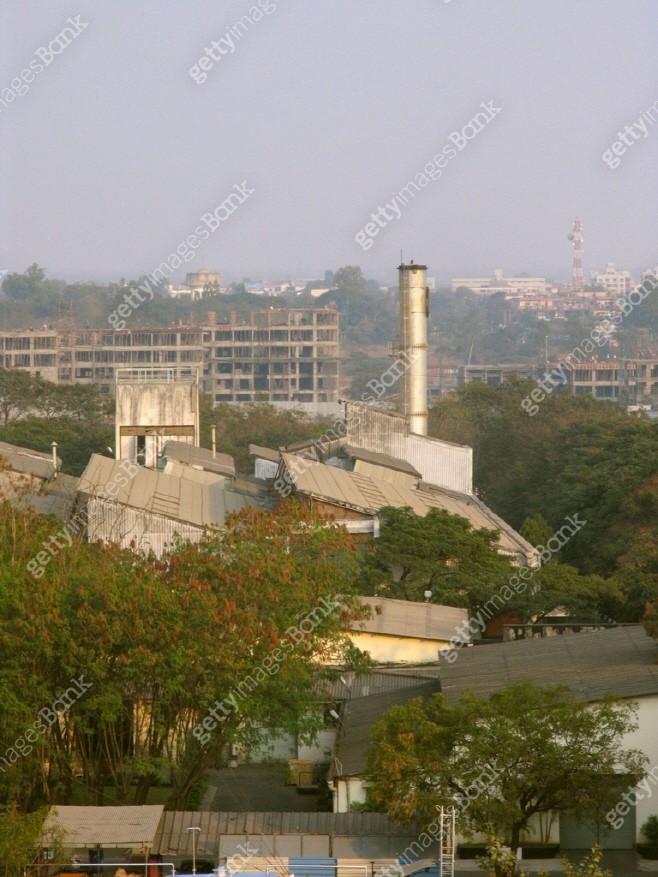 |
| A manufacturing factory in India / Getty Images Bank |
Japan boosts ties with India to mitigate China risks
The draft joint summit statement also carries heavy undertones of economic security. It includes advancing maritime security cooperation, strengthening energy supply capabilities, stabilizing supply chains for critical minerals like rare earths, and expressing serious concerns over economic coercion and non-market policies. These expressions are aimed directly at China, which weaponizes rare earth export controls.
In the security sector, the statement includes the Indian side's positive assessment of Japan's review of its Three Principles on Transfer of Defense Equipment and Technology and their implementation guidelines. The two nations will also include a plan in the joint statement to hold a "2+2 meeting" involving their foreign and defense ministers within this year. With China's military and economic influence growing in the Indo-Pacific region, Japan and India have begun to address economy and security as a single package.
AI cooperation serves as another core pillar. During Prime Minister Modi's visit to Japan last year, the Japanese Ministry of Foreign Affairs launched the "Japan-India AI Cooperation Initiative" and the "Japan-India Digital Partnership 2.0." Japan brings strength in AI semiconductors, application services, and startup collaboration, while India offers its vast digital talent pool and domestic market. This summit is expected to serve as a catalyst for translating this framework into actual corporate partnerships.
Before departing from Haneda Airport on July 1, Prime Minister Takaichi told reporters, "I hope to broaden the scope of Japan-India cooperation through a concerted public-private effort, aiming to realize a strong economy." Japan's strategy toward India is moving beyond merely seeking a cheap production base toward building a technology, resource, and security alliance to brace for China risks.
For South Korean companies, the tightening alignment between Japan and India is a matter of direct relevance. South Korea is also in a position where it must simultaneously reduce its dependence on China and expand its presence in the Indian market across sectors like semiconductors, batteries, electric vehicles, AI, and rare earths. Japan's move to push a 2 trillion yen cooperation package into India by combining the government and businesses serves as a warning sign regarding supply chain competition for Korean companies as well.
Choi Young-jae
Most Read
-
1
Alteogen secures European patent for Keytruda SC,..

-
2
Trump shares map on social media labeling Strait o..

-
3
Celltrion seeks rheumatoid arthritis indication ex..

-
4
Trump demands rates fall below 1% as Fed hikes for..

-
5
Chinese e-commerce giants AliExpress, Temu and She..

-
6
China expels No. 2 military official Zhang Youxia..

-
7
Houthi rebels release video claiming downing of Sa..

PEOPLE






HEADLINE NEWS
- UNC says N. Korea violated armistice agreement in DMZ landmine explosion
- U.S. 30-year Treasury yield hits 5.613% intraday, highest since 2002 as bon..
- Netanyahu faces political crisis ahead of election over allegations he igno..
- Chinese Foreign Minister Wang Yi demands retraction of Takaichi's remarks o..

-
Address : In-Young Bldg., 34, Uisadang-daero 1-gil, Yeongdeungpo-gu, Seoul
Copyright by ASIATODAY CO., LTD. All rights resereved