



China's Beidaihe conclave opens, current and former top leaders meet
Aug 04, 2026, 02:48 pm


Top Chinese Communist Party and government leadership, including General Secretary and President Xi Jinping, along with party elders, recently opened the Beidaihe conclave to discuss key issues in state governance. The agenda is expected to include the next power structure — including the possibility of Xi securing a fourth term — major party and government personnel appointments, the direction of diplomacy toward the U.S., and the Taiwan issue.
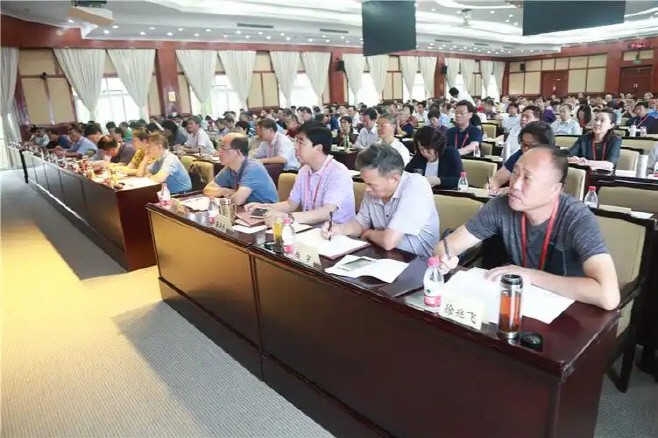 |
| Science and technology and social science experts from across China who recently gathered in Beijing. Cai Qi, member of the Politburo Standing Committee and secretary of the Central Secretariat, who attended the Beidaihe conclave, offered them words of encouragement. / Xinjing Bao (Beijing News) |
There is ample evidence to confirm the meeting has indeed opened. First, there is the roughly 60-year-long tradition of the gathering being held every year from late July through mid-August in Beidaihe, a beach area in Qinhuangdao, Hebei Province, about two hours from Beijing — there is no particular reason this year would be an exception.
It should also be noted that Cai Qi, member of the Politburo Standing Committee and secretary of the Central Secretariat responsible for party administration, is currently on-site. According to reports compiled from state broadcaster CCTV and other outlets, he met locally with experts in science, technology, and social sciences — a clear signal the meeting is underway.
It goes without saying that he was accompanied by Shi Taifeng, head of the Party's Central Organization Department, and Wu Zhenglong, state councilor and secretary-general of the State Council. This strongly suggests that Xi and other current and former top party and government leaders will soon arrive in Beidaihe as well.
The meeting's biggest agenda item will likely be personnel decisions for the next party and government leadership. Since Xi's fourth term is expected to be confirmed at the 21st National Congress (held every five years), slated for around October 2027, that issue should take center stage. In that context, whether Premier Li Qiang will also stay on is certain to be discussed, along with other major party and government appointments.
Since the meeting comes ahead of Xi's planned visit to the U.S. in September, the direction and tone of China's diplomacy toward Washington are also expected to be set. Given continued U.S. tariff and trade pressure, Beijing is likely to reaffirm its resolve not to yield. Beijing-based economic commentator Gu Jinjun's assessment that China now needs to be able to say no to the U.S., and that the meeting will serve as a venue to firm up that resolve, fits naturally with this expectation.
Opposition to Taiwanese independence, reaffirmation of the "One China" principle, and the escalating South China Sea dispute with the Philippines are also sure to be on the agenda, with strong measures and shows of force likely emphasized as the approach to resolving the Taiwan issue and related disputes. Beyond this, measures to revive an economy that has appeared to be in a slump, and the continuation of anti-corruption efforts, could also be addressed. In short, the meeting is expected to touch on nearly every major issue across politics, diplomacy, economics, and society.
Hong Soon-do
Most Read
-
1
Celltrion’s Omlyclo gains ground in major European..

-
2
Trump demands rates fall below 1% as Fed hikes for..

-
3
Trump makes $1 trillion bet ahead of midterm elect..

-
4
Iran resumes ballistic missile production, assembl..

-
5
Samsung Electronics, Mistral AI to jointly develop..

-
6
Trump warns countries not helping U.S. must pay re..

-
7
Apple launches first foldable, 1 million won prici..

PEOPLE






HEADLINE NEWS
- Trump to roll out ‘unprecedented welcome’ for Xi with B-2 bombers, F-22 fighters
- S. Korea, U.S., and Japan form united front on Taiwan and economic coercion..
- Trump administration moves to impose sweeping sanctions on International Cr..
- Xi to make state visit to U.S. Sept. 23-25, dispelling rumors over his heal..

-
Address : In-Young Bldg., 34, Uisadang-daero 1-gil, Yeongdeungpo-gu, Seoul
Copyright by ASIATODAY CO., LTD. All rights resereved