



Korea household debt nears 2 quadrillion won in Q1
May 19, 2026, 02:24 pm


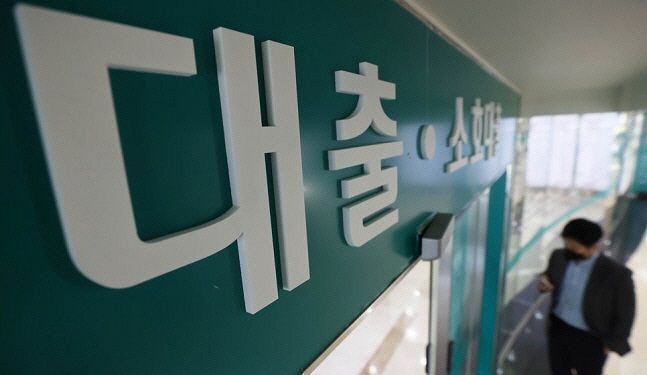 |
| A loan service desk at a commercial bank in Seoul. /Yonhap |
South Korea’s household debt climbed closer to the 2 quadrillion won mark in the first quarter of 2026, driven mainly by a sharp increase in non-bank lending despite a decline in bank household loans for the first time in three years.
According to preliminary household credit data released by the Bank of Korea on May 19, outstanding household credit reached 1,993.1 trillion won at the end of the first quarter, up 14 trillion won from the previous quarter. Although slightly below the 14.3 trillion won increase recorded in the fourth quarter of last year, household debt growth remained elevated.
Household credit is a broad measure that combines household loans from banks and non-bank financial institutions with credit purchases provided by card companies and installment finance firms. It is considered a key indicator of domestic household debt trends.
Outstanding household loans totaled 1,865.8 trillion won, up 12.9 trillion won from the previous quarter. The increase exceeded the 11.3 trillion won rise in the previous quarter. Housing-related loans expanded by 8.1 trillion won, compared with 7.2 trillion won in the fourth quarter, while other loans rose by 4.8 trillion won from 4.1 trillion won previously.
The rise in other loans was attributed partly to increased margin lending by securities firms as more investors borrowed money to invest in financial assets.
Household loans at commercial banks stood at 1,009.6 trillion won, down 200 billion won from the previous quarter. It marked the first quarterly decline since the first quarter of 2023, reflecting slower growth in housing-related lending and a decline in other loans.
In contrast, household loans at non-bank deposit-taking institutions jumped by 8.2 trillion won to 325 trillion won, double the increase seen in the previous quarter. Although other loans declined by 2.5 trillion won, housing-related loans surged by 10.6 trillion won, leading the overall increase.
Among institutions, mutual finance cooperatives posted the largest increase, with household loans rising by 5.1 trillion won during the quarter. Loans at Saemaeul Geumgo increased by 2.4 trillion won, while credit unions recorded a 900 billion won increase. Savings banks, however, saw loans decrease by 200 billion won.
Household loans at other financial institutions, including insurers, credit card and finance companies, and securities firms, also rose by 5 trillion won. While housing-related loans declined by 2.9 trillion won, other loans surged by 7.9 trillion won.
Growth in credit sales slowed during the quarter. Outstanding credit sales reached 127.3 trillion won, increasing by just 1.1 trillion won from the previous quarter, significantly lower than the 3 trillion won increase recorded in the fourth quarter.
Lee Hye-young, head of financial statistics at the central bank, said commercial banks reduced the pace of housing-related lending growth under tighter household debt management policies, while demand shifted toward non-bank institutions before stricter regulations took effect.
She added that household credit rose 3.5% year-on-year in the first quarter, while preliminary real GDP growth stood at 3.6%, suggesting that the ratio of household debt to nominal GDP is likely to decline.
#Korea household debt #household credit #Bank of Korea #non-bank lending #mortgage loans
Copyright by Asiatoday
Most Read
-
1
Celltrion’s Omlyclo gains ground in major European..

-
2
Trump demands rates fall below 1% as Fed hikes for..

-
3
Trump makes $1 trillion bet ahead of midterm elect..

-
4
Iran resumes ballistic missile production, assembl..

-
5
Samsung Electronics, Mistral AI to jointly develop..

-
6
Trump warns countries not helping U.S. must pay re..

-
7
Apple launches first foldable, 1 million won prici..

PEOPLE






HEADLINE NEWS
- Trump to roll out ‘unprecedented welcome’ for Xi with B-2 bombers, F-22 fighters
- S. Korea, U.S., and Japan form united front on Taiwan and economic coercion..
- Trump administration moves to impose sweeping sanctions on International Cr..
- Xi to make state visit to U.S. Sept. 23-25, dispelling rumors over his heal..

-
Address : In-Young Bldg., 34, Uisadang-daero 1-gil, Yeongdeungpo-gu, Seoul
Copyright by ASIATODAY CO., LTD. All rights resereved