



Taiwan parliament rejects Lai Ching-te impeachment motion in 56-50 vote
May 19, 2026, 04:12 pm


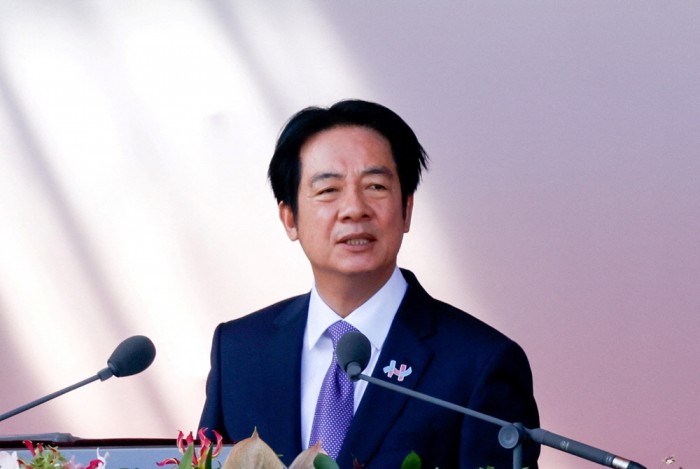 |
| Taiwanese President Lai Ching-te delivers a speech during a National Day celebration in Taipei, Taiwan, on October 10 last year. / Reuters Yonhap |
The first-ever impeachment vote against a sitting president in Taiwan's constitutional history has ended in rejection.
On May 19, the Legislative Yuan (Taiwan's parliament) held a roll-call vote on the impeachment motion against President Lai Ching-te of the Democratic Progressive Party (DPP). According to the Central News Agency (CNA) and other local media, the motion was voted down, with 56 lawmakers from the Kuomintang (KMT) and the Taiwan People's Party (TPP) voting in favor, and 50 DPP lawmakers voting against, out of the 106 members present.
Those who did not participate in the vote included Legislative Yuan President Han Kuo-yu, Vice President Johnny Chiang, KMT Representative Chen Yu-jen, and independent Representative Chen Chao-ming.
Additionally, Representative Kuo Yu-ching of the DPP, Representative Liao Wei-hsiang of the KMT, and Representative Chen Chau-tzu of the TPP were absent due to their visit to Geneva, Switzerland, to attend a non-governmental organization event related to the World Health Assembly (WHA).
Under the Taiwanese Constitution, impeaching a president requires a motion proposed by a majority of all lawmakers and approval from at least a two-thirds majority of the legislature. In this vote, the number of votes in favor fell short of the required two-thirds threshold, which is 76 out of the 113 total seats.
The impeachment proceedings began when KMT and TPP lawmakers filed the motion against President Lai, arguing that Premier Cho Jung-tai’s refusal to sign the Act Governing the Allocation of Government Revenues and Expenditures constituted a breach of constitutional duties.
The Legislative Yuan had previously passed the initial proposal to start the impeachment process during a plenary session on December 26 last year, leveraging the combined legislative majority of the KMT and the TPP.
Following subsequent public hearings, review sessions, and committee hearings, the final roll-call vote was brought to the floor today.
With the motion rejected, the political deadlock between the ruling and opposition blocs is expected to persist. Amid a divided government where the opposition controls the legislature, tensions have been mounting between the opposition-led Legislative Yuan and the Lai Ching-te administration over fiscal allocation and China policies.
Most Read
-
1
Celltrion’s Omlyclo gains ground in major European..

-
2
Trump demands rates fall below 1% as Fed hikes for..

-
3
Trump makes $1 trillion bet ahead of midterm elect..

-
4
Iran resumes ballistic missile production, assembl..

-
5
Samsung Electronics, Mistral AI to jointly develop..

-
6
Trump warns countries not helping U.S. must pay re..

-
7
Apple launches first foldable, 1 million won prici..

PEOPLE






HEADLINE NEWS
- Trump to roll out ‘unprecedented welcome’ for Xi with B-2 bombers, F-22 fighters
- S. Korea, U.S., and Japan form united front on Taiwan and economic coercion..
- Trump administration moves to impose sweeping sanctions on International Cr..
- Xi to make state visit to U.S. Sept. 23-25, dispelling rumors over his heal..

-
Address : In-Young Bldg., 34, Uisadang-daero 1-gil, Yeongdeungpo-gu, Seoul
Copyright by ASIATODAY CO., LTD. All rights resereved