



Gov't to inject 12 billion won into 8 provinces and cities via emergency budget amid Middle East war fallout
May 19, 2026, 03:24 pm


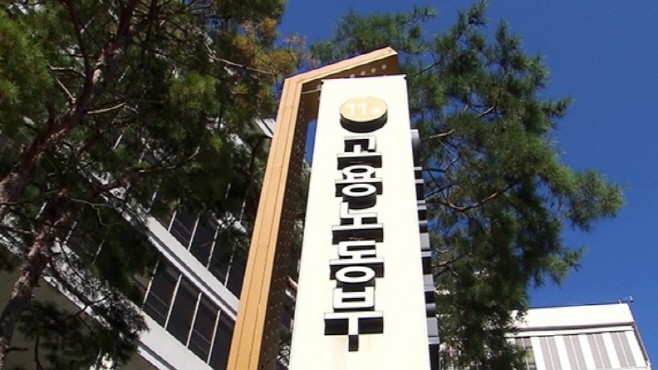 |
| The Ministry of Employment and Labor, Government Complex Sejong |
The government will utilize a supplementary budget to launch regional job initiatives targeting local industrial sites facing potential disruptions from the Middle East war. This initiative is designed to preemptively counter employment crises triggered by sudden changes in the trade environment and major disruptions.
The Ministry of Employment and Labor announced on May 19 that it will expand the "Region-Specific Industrial Job Initiative" across eight provinces and cities where sectors vulnerable to the fallout from the Middle East war are concentrated.
A key feature of this initiative is the emergency injection of a 12 billion won supplementary budget to strengthen responses to employment crises. Earlier this year, the Ministry had already allocated a 450 billion won budget to preemptively address job market risks stemming from abrupt shifts in the international trade landscape and disasters.
Following an expert review of project proposals submitted by nine provincial and municipal governments nationwide, the Ministry selected eight regions in urgent need of assistance and distributed a total of 13 billion won.
By region, 2 billion won each will be allocated to the textile industry in Daegu, the logistics and transportation sector in Daejeon, the plastic injection/extrusion and cosmetics industries in Chungbuk, and the equipment and metal sectors in Gyeongnam. Busan (ports and shipping) and Jeju (tourism transport) will receive 1.5 billion won each, while Gyeonggi (petrochemicals, plastics, and textiles) and Jeonbuk (chemicals and rubber) are set to receive 1 billion won each.
Each local government will run tailored job support packages to match their respective industrial needs. Furthermore, livelihood and housing stabilization support will be extended to workers in freight and tourism transportation, and retention bonuses will be paid to long-term employees.
Additionally, the program will provide living subsidies to employees at companies maintaining their workforce, alongside re-employment allowances for displaced workers or career switchers, aiming to simultaneously encourage job retention and re-entry into the labor market. The core distinction of this initiative lies in taking proactive measures before a major employment shock materializes.
"Through this supplementary budget, we hope that local industrial sites and workers suffering from the aftermath of the Middle East war can swiftly overcome employment challenges," Minister of Employment and Labor Kim Young-hoon said. "We will continue to closely listen to voices on the ground and spare no policy support to foster a job environment tailored to regional economic conditions."
Most Read
-
1
Celltrion’s Omlyclo gains ground in major European..

-
2
Trump demands rates fall below 1% as Fed hikes for..

-
3
Hyundai Motor Group breaks ground on integrated st..

-
4
U.S. strikes 3 Iranian oil tankers, Iran vows reta..

-
5
Trump makes $1 trillion bet ahead of midterm elect..

-
6
Iran resumes ballistic missile production, assembl..

-
7
Samsung Electronics, Mistral AI to jointly develop..

PEOPLE







-
Address : In-Young Bldg., 34, Uisadang-daero 1-gil, Yeongdeungpo-gu, Seoul
Copyright by ASIATODAY CO., LTD. All rights resereved