



Curocell aims to become global CAR-T leader with Rimcato
May 13, 2026, 08:38 pm


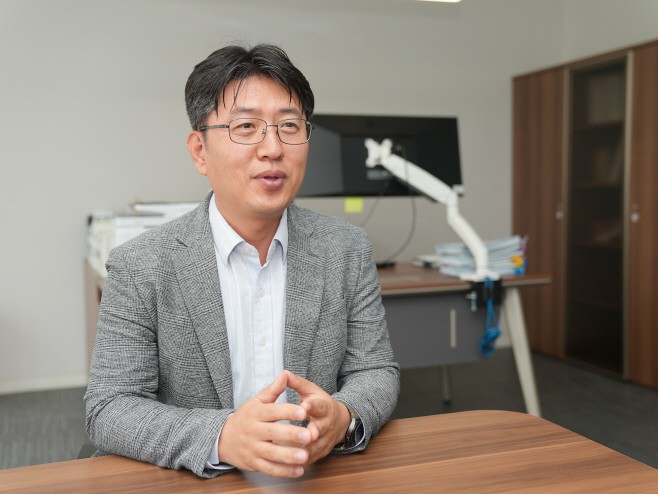 |
| Kim Hyeong-cheol, head of the R&D Center at Curocell./Curocell |
“Unlike conventional chemical or antibody drugs, CAR-T therapies require development, manufacturing, quality control and logistics to operate as a fully connected system. We believe this approval is meaningful because it marks the first time a Korean company has verified such end-to-end capabilities.”
A Korean biotech company has succeeded in developing a CAR-T therapy despite starting in a market with virtually no experience or infrastructure. That company is Daejeon-based Curocell. CAR-T is a personalized therapy in which a patient’s immune T cells are collected, genetically engineered to attack cancer cells, and reinfused into the body. Because a single administration can fundamentally alter abnormal immune responses, it is often called a “one-shot cancer treatment” or “dream cancer therapy.” Last month, Curocell received approval from the Ministry of Food and Drug Safety for Rimcato (anbal-cel), Korea’s first CAR-T therapy.
Kim Hyeong-cheol, head of Curocell’s R&D Center, has been at the forefront of the challenge since the company’s founding stage. After previously working on biosimilar development at LG Chem, Kim joined Curocell in 2017 and has led the development of CAR-T therapies ever since.
“From the early stages, Curocell has built its own platform technologies and development capabilities for the commercialization of CAR-T therapies in Korea,” Kim said. “I wanted to directly participate in that challenge. CAR-T also carries major clinical significance because it can offer complete remission to blood cancer patients who have reached the limits of existing treatments.”
The biggest challenge in commercializing a domestic CAR-T therapy was building an end-to-end system. Since CAR-T therapies are customized for each patient, they cannot be mass-produced and distributed like conventional drugs. Companies must therefore establish the entire process themselves, from cell collection and manufacturing to storage, transportation and administration.
“The biggest difficulty was realizing that commercialization requires far more than good clinical results,” Kim said. “Because there were almost no precedents in Korea, we had to independently establish the entire process, including GMP manufacturing, quality control, release systems and regulatory 대응.”
Those challenges ultimately became a competitive advantage. Through the development of Rimcato, Curocell internalized all key capabilities, including platform technology, process development, analytical methods, clinical trials, regulatory filing and commercial manufacturing.
A major differentiator is the OVIS™ platform technology applied to Rimcato. OVIS is a dual inhibition technology that simultaneously suppresses PD-1 and TIGIT within CAR-T cells.
“One of the key limitations of CAR-T therapies is ‘T-cell exhaustion,’ in which cell function gradually deteriorates within the tumor microenvironment,” Kim explained. “OVIS is a next-generation technology designed to overcome such immunosuppressive environments by simultaneously controlling cancer-cell recognition and immune-suppression signals.”
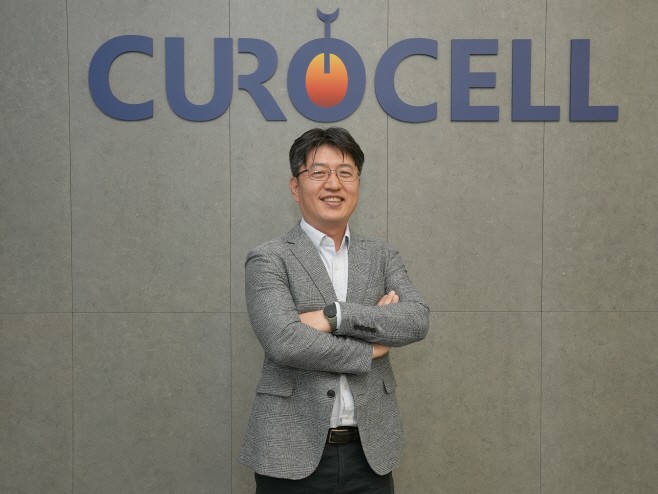 |
| Kim Hyeong-cheol, head of the R&D Center at Curocell./Curocell |
Rimcato, which incorporates the OVIS platform, has demonstrated clinical results comparable to major global CAR-T therapies. In the Phase 2 trial that served as the basis for approval, Rimcato recorded an objective response rate (ORR) of 75.3% and a complete remission (CR) rate of 67.1%.
Although direct comparisons are difficult, Kymriah, the most widely used CAR-T therapy in Korea, reported an ORR of 50% and a CR rate of 32%.
“We believe the results are particularly meaningful because they were confirmed in patients with relapsed or refractory diffuse large B-cell lymphoma (DLBCL), who have limited treatment options,” Kim said.
Curocell initially applied for conditional approval based on a Phase 3 confirmatory trial. However, regulators granted full approval after considering the Phase 2 results and the characteristics of CAR-T therapies, concluding that randomized comparative trials posed practical and ethical limitations for the disease.
“Instead, safety and efficacy after approval will be managed through long-term follow-up studies, risk management plans and submission of final Phase 2 reports,” Kim said. “This is similar to approval approaches used for global CAR-T therapies.”
Curocell’s next goal is the development of CAR-T therapies for solid tumors. All currently commercialized CAR-T therapies target blood cancers, and no company has yet succeeded in commercializing CAR-T treatments for solid tumors. Because solid tumors involve challenges such as complex tumor microenvironments and antigen heterogeneity, the market potential is expected to be significant if successful.
“Based on the OVIS platform, Curocell is focusing on improving CAR-T persistence and infiltration efficiency in solid tumors,” Kim said. “We are advancing the platform in a direction that can maintain CAR-T activity even in highly immunosuppressive tumor environments.”
Another future growth area for the company is in vivo CAR-T technology, which directly induces CAR-T cell generation inside the patient’s body. The approach is expected to overcome the complex manufacturing limitations of existing CAR-T therapies and improve treatment convenience.
“As global big pharma companies are rapidly investing in this field, Curocell is also pursuing development as part of its mid- to long-term growth strategy,” Kim said.
Curocell’s ultimate goal is to evolve beyond Korea into a global cell and gene therapy company. The company plans to secure early clinical and patient data in China, where investigator-led CAR-T trials are active, before expanding into North America and Europe.
“The most important thing is continuously securing competitive clinical data,” Kim said. “Following Rimcato, we aim to prove global-level clinical competitiveness through our next-generation pipeline and grow beyond Korea’s first CAR-T company into a global cell and gene therapy leader.”
#Curocell #Rimcato #CAR-T #anbal-cel #OVIS platform
Copyright by Asiatoday
Most Read
-
1
Kia Sportage outperforms Mazda CX-5 in German auto..

-
2
Houthis launch successive attacks on Saudi airport..

-
3
Saudi Arabia, Iran hold first diplomatic talks to..

-
4
U.S. deploys carrier, 10,000 more troops to Middle..

-
5
Saudi airport in Riyadh struck again, leaving at l..

-
6
Putin's ally visits China on the 8th ahead of APEC..

-
7
Chinese military support and training center opens..

PEOPLE






HEADLINE NEWS

-
Address : In-Young Bldg., 34, Uisadang-daero 1-gil, Yeongdeungpo-gu, Seoul
Copyright by ASIATODAY CO., LTD. All rights resereved