



Trump rejects Iran ceasefire response as talks near collapse
May 11, 2026, 09:17 am


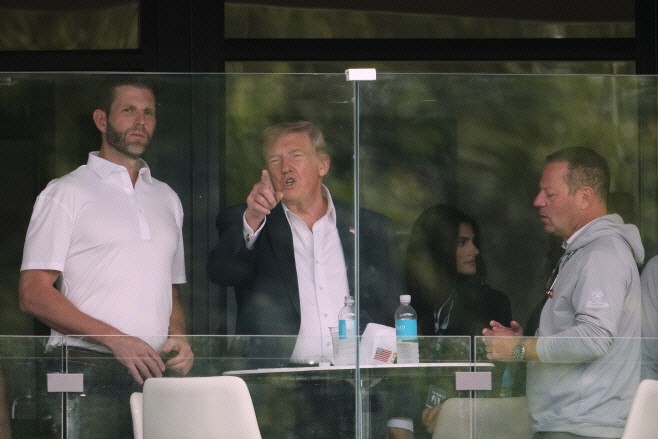 |
| U.S. President Donald Trump (center), his son Eric Trump (left), and Larry Glick, executive vice president of strategic development at the Trump Organization, watch the LIV Golf tournament at Trump National Golf Club in Sterling, Virginia, on May 9. /AP-Yonhap |
US President Donald Trump on Saturday dismissed Iran’s response to a proposed ceasefire framework as “TOTALLY UNACCEPTABLE,” raising fears that negotiations aimed at ending the 10-week conflict could collapse.
The remarks came after Iran, through mediation by Pakistan, delivered its reply to a proposed memorandum of understanding that would have launched 30 days of formal negotiations to end the war.
The United States has demanded prior guarantees from Iran on limiting its nuclear program and ensuring freedom of navigation through the Strait of Hormuz. Iran, however, insisted that an end to the war, the lifting of sanctions and the termination of U.S. maritime restrictions must come first.
The widening gap has pushed both sides into what observers described as a mutual breakdown in negotiations, with disagreements centering on the sequencing of a ceasefire, the handling of Iran’s nuclear materials and control over the Strait of Hormuz.
Trump wrote on his social media platform Truth Social that he had just reviewed the Iranian response and said, “I don’t like it. TOTALLY UNACCEPTABLE.”
Iran’s state-run IRNA news agency earlier reported that Tehran had transmitted its response to Washington through Pakistan. Trump did not specify which parts of the proposal he found unacceptable, but his immediate rejection suggested that indirect negotiations mediated by Pakistan had effectively stalled following earlier face-to-face talks held in Islamabad last month.
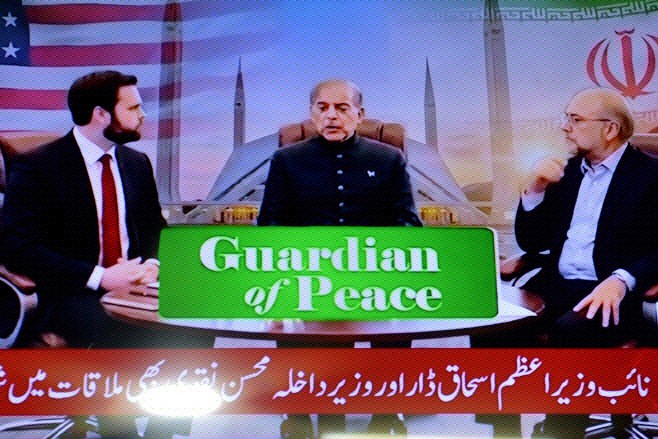 |
| J. D. Vance (left) and Mohammad Bagher Ghalibaf hold ceasefire negotiations under the mediation of Pakistani Prime Minister Shehbaz Sharif at a hotel in Islamabad, Pakistan, on April 11. The image was captured from a television broadcast. /EPA-Yonhap |
According to The Wall Street Journal, Iran rejected demands to dismantle its nuclear facilities. Tehran reportedly proposed diluting part of its highly enriched uranium stockpile and transferring the remainder to a third country, while demanding guarantees that the uranium would be returned if the agreement collapsed or if Washington withdrew from the deal in the future.
The report also said Iran proposed a shorter uranium enrichment suspension period than the 20-year freeze suggested by the United States. Iran’s semi-official Tasnim News Agency denied the accuracy of the WSJ report regarding nuclear material arrangements.
Reuters reported that Iran’s core demands focused less on nuclear issues and more on ending hostilities. Tehran reportedly called for an immediate halt to fighting across all fronts, especially in Lebanon, along with an end to U.S. maritime restrictions, a 30-day suspension of sanctions on Iranian oil sales, the return of frozen overseas assets and the complete lifting of sanctions.
Iran also demanded compensation for war damage and emphasized its sovereignty over the Strait of Hormuz, according to Reuters and Iranian state broadcaster IRIB.
The U.S. proposal reportedly envisioned Iran first agreeing to limits on its nuclear activities and guaranteeing passage through the Strait of Hormuz before broader negotiations could begin.
Meanwhile, Benjamin Netanyahu said the war was “not over,” stressing that dismantling Iran’s uranium enrichment facilities, removing enriched uranium stockpiles and eliminating proxy militant capabilities remained unresolved issues.
Trump intensified his rhetoric earlier in the day, accusing Iran of delaying negotiations for decades.
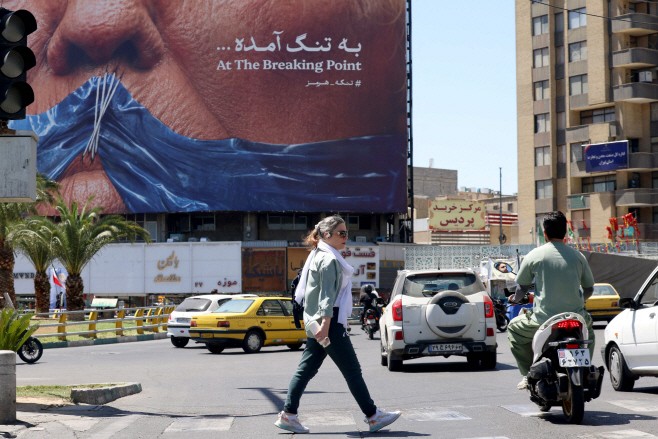 |
| An Iranian woman walks past an anti-U.S. billboard referring to Donald Trump and the Strait of Hormuz installed on a building at Valiasr Square in Tehran on May 10. /AFP-Yonhap |
“They have played the United States and the rest of the world for 47 years. DELAY, DELAY, DELAY!” Trump wrote, adding that Iran would “not be laughing anymore.”
Mike Waltz said in an ABC News interview that Trump was giving diplomacy “every possible opportunity” before any resumption of hostilities, but added that preparations for renewed military action were ready.
Iranian President Masoud Pezeshkian said Tehran would “never surrender to enemies” and would defend its national interests through strength.
Regional tensions also continued despite the fragile ceasefire that began on April 8. Reuters reported renewed drone incidents in the Gulf, including a drone strike on a cargo vessel departing Abu Dhabi near Qatari waters. The UAE and Kuwait also reportedly intercepted Iranian drones.
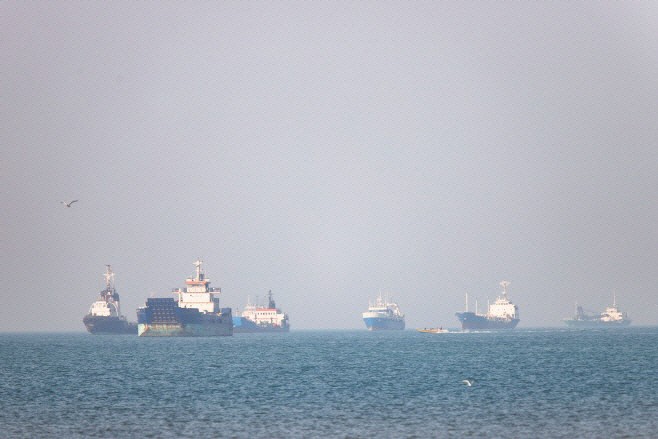 |
| Ships sail through the Strait of Hormuz near Bandar Abbas, Iran, on May 4. /Reuters-Yonhap |
At the same time, a liquefied natural gas carrier operated by QatarEnergy safely passed through the Strait of Hormuz en route to Pakistan, marking the first Qatari LNG transit through the strait since the outbreak of the conflict on Feb. 28.
Oil markets reacted sharply to signs of deadlock in the negotiations. International crude prices surged by about $3 per barrel, while the U.S. dollar strengthened against major currencies.
Saudi Aramco warned that even if the Strait of Hormuz reopened immediately, it could take months for global energy markets to stabilize.
#Donald Trump #Iran #Strait of Hormuz #nuclear talks #ceasefire
Copyright by Asiatoday
Most Read
-
1
Trump shares map on social media labeling Strait o..

-
2
Kia Sportage outperforms Mazda CX-5 in German auto..

-
3
Houthis launch successive attacks on Saudi airport..

-
4
U.S. deploys carrier, 10,000 more troops to Middle..

-
5
Trump rejects Iran's offer to open Strait of Hormu..

-
6
N. Korea conducts first swarm attack drill with dr..

-
7
U.S.-China summit falls short on substance as Trum..

PEOPLE






HEADLINE NEWS
- Seoul dismisses Ukraine's claim of 'S. Korean support for Russia' as "inaccurate and inappropriate"
- S. Korea, Japan race to develop nuclear-powered submarines
- Henri Kagan, Kenso Soai win Nobel Prize in Chemistry for uncovering how mol..
- Vance says Alaska LNG cooperation will move forward with Seoul's current or..

-
Address : In-Young Bldg., 34, Uisadang-daero 1-gil, Yeongdeungpo-gu, Seoul
Copyright by ASIATODAY CO., LTD. All rights resereved