



Nuclear power emerges as key asset in energy crisis
Apr 23, 2026, 08:20 am


 |
As energy security becomes a national survival issue amid escalating risks in the Middle East, the role of Korea Hydro & Nuclear Power is being re-evaluated.
South Korea, surrounded by seas on three sides, cannot import electricity directly. If energy imports were disrupted, nuclear power would effectively become the only available domestic power source. Beyond political debates over nuclear policy, the government is now reshaping its strategy to expand reactor utilization, extend plant lifespans and build new facilities, raising expectations for the sector.
According to industry sources on April 21, the global energy market is showing patterns similar to past oil shocks, highlighting the value of nuclear power. While oil and natural gas prices have surged, nuclear generation costs remain relatively stable.
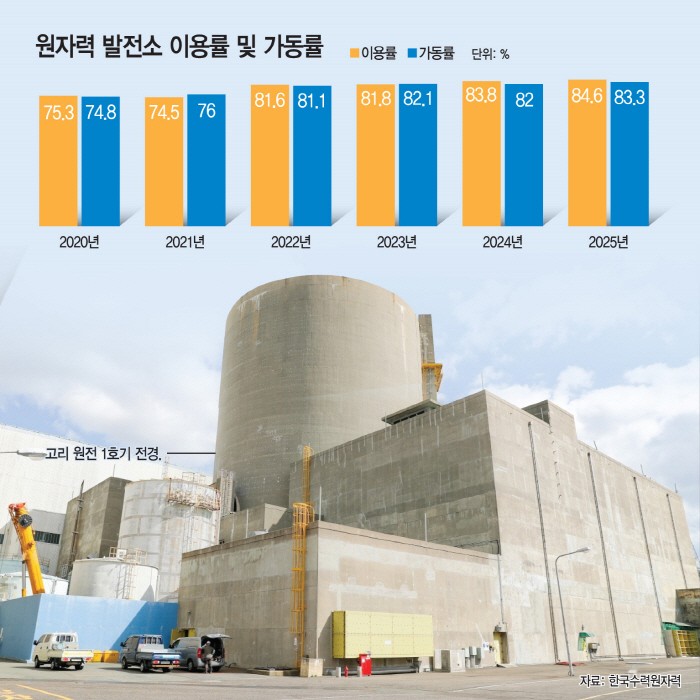
KHNP data shows that nuclear utilization rates have steadily increased in recent years, rising from 74.5% in 2021 to 81.8% in 2023 and reaching 84.6% in 2025. With each reactor typically having a capacity of around 1 gigawatt, even a 1 percentage point increase in utilization translates into billions of kilowatt-hours of additional annual electricity output. As of 2025, Korea operates 26 reactors with a total capacity of 26.1 gigawatts.
Nuclear power is also considered highly resilient in crisis situations due to its fuel characteristics. Korea holds about 2.5 years’ worth of enriched uranium reserves, which can extend to up to 5.5 years when including contracted supplies. In terms of cost, nuclear energy remains competitive. According to the Korea Power Exchange, nuclear generation averaged about 79 won per kilowatt-hour last year, compared with 158.13 won for LNG and 137.83 won for coal. Fuel costs account for only about 10–13% of total generation costs, limiting the impact of price volatility.
These advantages are becoming more significant as electricity demand rises. The government projects peak demand to reach 129 gigawatts by 2038. The 11th Basic Plan for Electricity Supply and Demand outlines the need to secure an additional 10.6 gigawatts of capacity to meet that target.
In this context, KHNP is evolving from a power producer into a core national asset for energy security. It is leading efforts to extend reactor operations and construct new plants to support growing electricity demand and sustain the country’s economic and industrial base. Examples include the restart of Kori Unit 2 and test operations at Shin Hanul Unit 3.
“A stable fuel supply and limited exposure to price volatility make nuclear power the most reliable energy source in times of crisis,” a KHNP official said. “Stable electricity supply itself is directly linked to national competitiveness.”
#Korea Hydro & Nuclear Power #nuclear energy #energy security #Middle East crisis #LNG
Copyright by Asiatoday
Most Read
-
1
Kia Sportage outperforms Mazda CX-5 in German auto..

-
2
Houthis launch successive attacks on Saudi airport..

-
3
Saudi Arabia, Iran hold first diplomatic talks to..

-
4
U.S. deploys carrier, 10,000 more troops to Middle..

-
5
Saudi airport in Riyadh struck again, leaving at l..

-
6
Putin's ally visits China on the 8th ahead of APEC..

-
7
Chinese military support and training center opens..

PEOPLE





HEADLINE NEWS

-
Address : In-Young Bldg., 34, Uisadang-daero 1-gil, Yeongdeungpo-gu, Seoul
Copyright by ASIATODAY CO., LTD. All rights resereved