



Korean American tapped as US ambassador to Seoul
Apr 14, 2026, 09:22 am


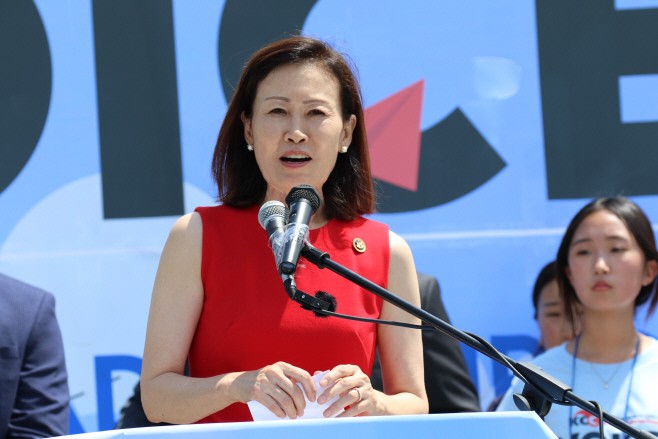 |
| Michelle Park Steel, nominated as U.S. ambassador to South Korea, delivers a speech at the “North Korea Freedom Week” event in front of the U.S. Capitol in Washington, D.C., on July 10, 2024. / Ha Man-joo |
Donald Trump has nominated Michelle Park Steel, a Korean American former lawmaker, as the next U.S. ambassador to South Korea, the White House announced on April 13.
If confirmed by the United States Senate, her appointment would fill a diplomatic vacancy in Seoul that has lasted for more than a year since the departure of former ambassador Philip Goldberg in January 2025.
The White House said it has formally submitted Steel’s nomination for the role of Ambassador Extraordinary and Plenipotentiary to the Republic of Korea, requesting Senate confirmation.
Steel, born in Seoul in 1955, grew up in Japan before moving to the United States in 1975. She built her political career in California, serving as a member of the state’s Board of Equalization and as an Orange County supervisor before being elected to the U.S. House of Representatives, where she served from 2021 to 2025. She narrowly lost her reelection bid in November 2024.
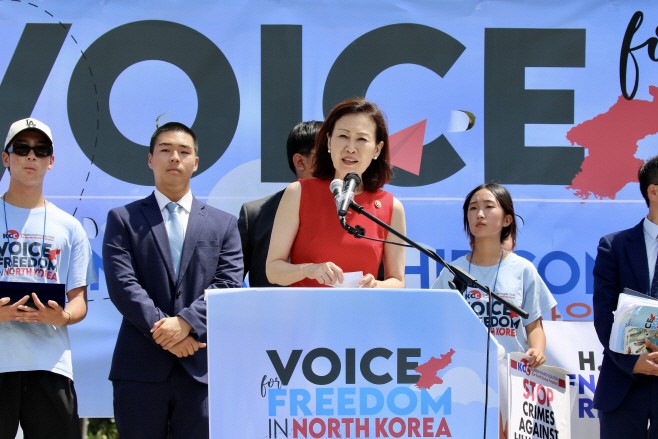 |
| Michelle Park Steel, nominated as U.S. ambassador to South Korea, delivers a speech at the “North Korea Freedom Week” event in front of the U.S. Capitol in Washington, D.C., on July 10, 2024. / Ha Man-joo |
During her time in Congress, Steel was active on issues related to human rights in China and introduced legislation supporting Taiwan’s democracy and restricting federal funding to China-linked universities. She has also been involved in advocacy related to democratic movements in North Korea, Vietnam, and Russia, and has reportedly faced entry bans from those countries.
Following her election loss, Steel said she would pursue other goals, including “standing up to China to defend freedom in Asia.”
She was one of the first three Korean American women elected to the U.S. Congress in 2020, alongside Young Kim and Marilyn Strickland.
Observers say her confirmation could help normalize Korea-U.S. diplomatic engagement while potentially influencing Washington’s stance on China-related issues in the region.
#Donald Trump #Michelle Park Steel #US ambassador to Korea #White House #US Senate
Copyright by Asiatoday
Most Read
-
1
Celltrion’s Omlyclo gains ground in major European..

-
2
Trump demands rates fall below 1% as Fed hikes for..

-
3
Trump makes $1 trillion bet ahead of midterm elect..

-
4
Iran resumes ballistic missile production, assembl..

-
5
Samsung Electronics, Mistral AI to jointly develop..

-
6
Trump warns countries not helping U.S. must pay re..

-
7
Apple launches first foldable, 1 million won prici..

PEOPLE




HEADLINE NEWS
- Trump to roll out ‘unprecedented welcome’ for Xi with B-2 bombers, F-22 fighters
- S. Korea, U.S., and Japan form united front on Taiwan and economic coercion..
- Trump administration moves to impose sweeping sanctions on International Cr..
- Xi to make state visit to U.S. Sept. 23-25, dispelling rumors over his heal..

-
Address : In-Young Bldg., 34, Uisadang-daero 1-gil, Yeongdeungpo-gu, Seoul
Copyright by ASIATODAY CO., LTD. All rights resereved