



Trump pauses Iran strikes for two weeks amid ceasefire push
Apr 08, 2026, 10:18 am


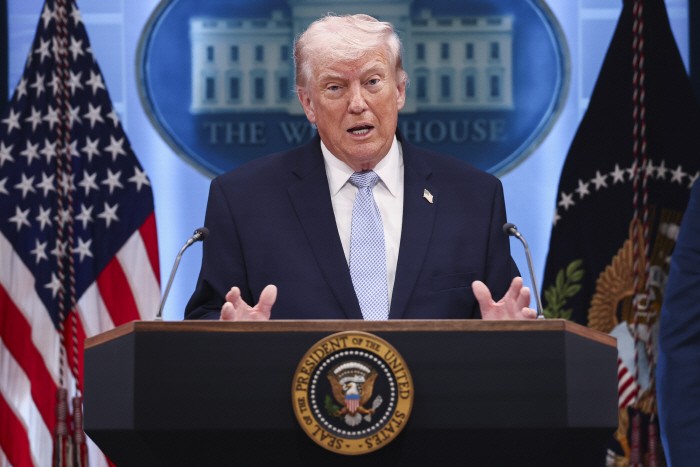 |
| Donald Trump holds a press conference on the Iran conflict at the White House in Washington, D.C., on April 6. / EPA-Yonhap |
Donald Trump announced a two-week suspension of airstrikes against Iran, citing progress toward a broader ceasefire agreement mediated by Pakistan.
In a post on Truth Social on April 7, Trump said he agreed to halt attacks following discussions with Pakistani Prime Minister Shehbaz Sharif and Army Chief Asim Munir, describing the arrangement as a “double sided CEASEFIRE.”
Trump stated that the suspension is conditional on Iran agreeing to the “COMPLETE, IMMEDIATE, and SAFE OPENING” of the Strait of Hormuz.
“We have already achieved and exceeded all military objectives,” he said, adding that the U.S. is close to finalizing a long-term peace agreement with Iran.
He noted that Washington had received a 10-point proposal from Iran and described it as a viable foundation for negotiations, saying that “almost all major issues have been agreed upon.”
Earlier, Sharif urged the U.S. to extend its deadline by two weeks to allow diplomacy to proceed and called on Iran to respond with goodwill by reopening the Strait of Hormuz.
He said negotiations between the U.S. and Iran were progressing “steadily and strongly,” according to international reports.
The White House said Trump was aware of the proposal and would respond, while Trump himself declined to elaborate in a media interview, saying negotiations were ongoing but describing Sharif as “a very respected man.”
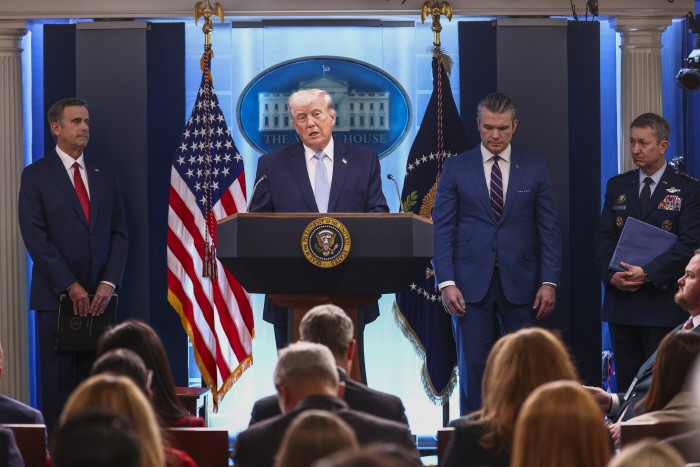 |
| Donald Trump (second from left) attends a briefing on the Iran war at the White House alongside U.S. officials. / UPI-Yonhap |
The two-week pause follows multiple extensions of earlier deadlines. Trump had initially warned Iran to reopen the Strait within 48 hours or face strikes on infrastructure, later extending the timeline to five days, then 10 days, and then an additional day before announcing the latest two-week halt.
The Associated Press noted that Trump had “repeatedly oscillated” between escalating threats and extending deadlines.
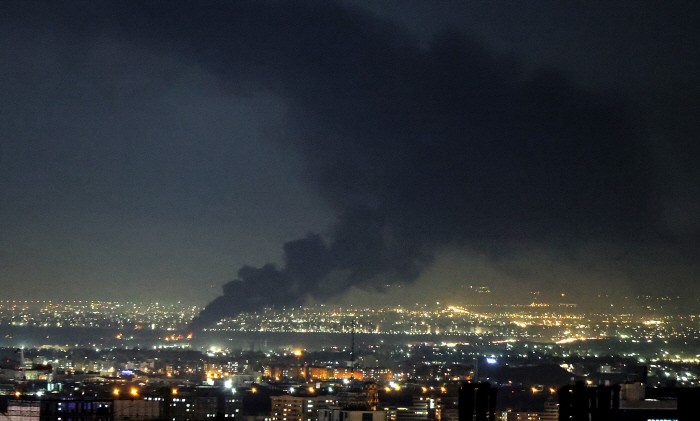 |
| Smoke rises in Tehran, Iran, following airstrikes by U.S. and Israeli forces on April 7. / AFP-Yonhap |
Despite diplomatic efforts, military pressure has persisted. U.S. forces reportedly carried out dozens of strikes on Iran’s Kharg Island, a key oil export hub.
Vice President JD Vance said the U.S. would refrain from targeting energy infrastructure for now but warned that stronger measures could be used if Iran fails to present acceptable proposals.
Iran has reportedly cut direct communication channels with the U.S. and rejected the temporary ceasefire proposal. Iranian officials said meaningful negotiations would require a complete halt to attacks and assurances they would not resume, along with compensation for damages.
Iran also warned of potential retaliation against key regional energy infrastructure, including facilities linked to Saudi Aramco and pipelines in the UAE, cautioning that oil prices could surge to $200 per barrel if conflict escalates further.
At the United Nations, Iran’s ambassador condemned Trump’s threats as “highly irresponsible” and said Iran would exercise its right to self-defense without hesitation.
#Trump #Iran #ceasefire #Middle East crisis #Pakistan mediation
Copyright by Asiatoday
Most Read
-
1
Celltrion’s Omlyclo gains ground in major European..

-
2
Trump demands rates fall below 1% as Fed hikes for..

-
3
Trump makes $1 trillion bet ahead of midterm elect..

-
4
Iran resumes ballistic missile production, assembl..

-
5
Samsung Electronics, Mistral AI to jointly develop..

-
6
Trump warns countries not helping U.S. must pay re..

-
7
Apple launches first foldable, 1 million won prici..

PEOPLE






HEADLINE NEWS
- Trump to roll out ‘unprecedented welcome’ for Xi with B-2 bombers, F-22 fighters
- S. Korea, U.S., and Japan form united front on Taiwan and economic coercion..
- Trump administration moves to impose sweeping sanctions on International Cr..
- Xi to make state visit to U.S. Sept. 23-25, dispelling rumors over his heal..

-
Address : In-Young Bldg., 34, Uisadang-daero 1-gil, Yeongdeungpo-gu, Seoul
Copyright by ASIATODAY CO., LTD. All rights resereved