



Koo Ja-hyun faces backlash amid probe silence
Apr 03, 2026, 08:30 am


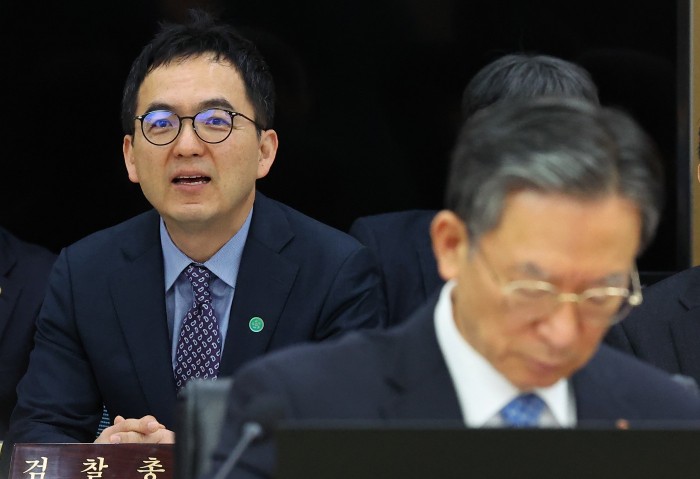 |
| Koo Ja-hyun, acting prosecutor general of South Korea, attends a Cabinet meeting presided over by President Lee Jae-myung at the Sejong Government Complex on March 17. In front of him is Justice Minister Jung Sung-ho. /Yonhap |
Criticism is mounting against Koo Ja-hyun, acting prosecutor general of South Korea, as he remains silent ahead of a parliamentary investigation into politically sensitive cases.
The National Assembly’s special committee investigating alleged prosecutorial misconduct during the Yoon Suk Yeol administration is set to begin hearings on April 3. The probe will cover seven major cases, including the alleged North Korea remittance scandal linked to President Lee Jae-myung.
The case is already partly under trial, raising concerns that confidential state information could be exposed if hearings are broadcast live on television or online. During earlier court proceedings, testimony involving the National Intelligence Service was held behind closed doors due to national security concerns.
The committee has requested key intelligence officials, including former NIS Director Kim Kyu-hyun, to testify at a hearing scheduled for April 21.
Inside the prosecution, frustration is growing over what critics describe as a lack of leadership. Some prosecutors argue that the leadership, including Justice Minister Jung Sung-ho, should clearly state their stance and respond to what they view as an unconstitutional investigation.
Under South Korean law, parliamentary investigations must not interfere with ongoing trials or prosecutions. Prosecutors warn that calling active investigators to testify could disrupt their duties and further strain an already understaffed organization.
Critics also point to previous controversies, noting that Koo has not clarified his position on key cases, including the West Sea official shooting and the Wirye development scandal.
Some legal experts argue that the prosecution leadership is effectively absent at a time when strong direction is needed. One former senior prosecutor said, “It is questionable whether Koo is even interested in the current crisis facing the prosecution. Without leadership speaking out, no one else can.”
Concerns have also been raised over Koo’s attendance at Cabinet meetings since January, breaking with past practice and prompting questions about political neutrality.
As the high-stakes investigation begins, pressure is expected to intensify on the prosecution’s leadership to take a clearer stance.
#prosecution probe #national assembly investigation #Koo Ja-hyun #South Korea prosecutors
Copyright by Asiatoday
Most Read
-
1
Celltrion’s Omlyclo gains ground in major European..

-
2
Trump demands rates fall below 1% as Fed hikes for..

-
3
Hyundai Motor Group breaks ground on integrated st..

-
4
U.S. strikes 3 Iranian oil tankers, Iran vows reta..

-
5
Trump makes $1 trillion bet ahead of midterm elect..

-
6
Iran resumes ballistic missile production, assembl..

-
7
Samsung Electronics, Mistral AI to jointly develop..

PEOPLE





-
Address : In-Young Bldg., 34, Uisadang-daero 1-gil, Yeongdeungpo-gu, Seoul
Copyright by ASIATODAY CO., LTD. All rights resereved