



Fertility nears 1.0, but Korea’s low birth rate crisis remains structural
Mar 31, 2026, 09:36 am


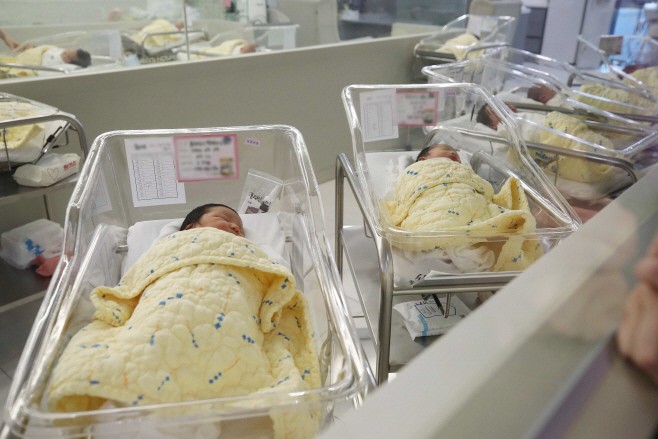 |
| Medical staff care for a newborn. / Yonhap |
South Korea’s fertility rate approached 1.0 in January, raising hopes of a rebound. However, experts warn that the improvement is largely an illusion, as deeper structural demographic problems remain unresolved.
According to government data released on March 30, the total fertility rate stood at 0.99 in January, up from a year earlier. The number of births reached 26,916—the highest level in nearly six years and 10 months—while marriages also hit their highest level since 2018.
As marriage is a leading indicator of childbirth, some expect the upward trend in births to continue over the next two to three years.
“Not a recovery, but a delayed decline”
Despite these positive signals, experts argue that the recent trend reflects not a genuine recovery but a delayed decline. The increase is largely attributed to the so-called “echo boom” generation—those born in the early 1990s—entering peak childbearing age.
Women in their early 30s, the group with the highest birth rates, are currently more numerous than other age groups, temporarily pushing up overall figures.
Government seeks broader population strategy
Amid these concerns, the government plans to overhaul its population policy framework. The Presidential Committee on Aging Society and Population Policy is set to be expanded into a “Population Strategy Committee,” which would oversee not only birth rates but also labor supply, immigration, and regional demographics.
The new body is expected to have authority to coordinate budgets across ministries, aiming to integrate fragmented policies.
While past plans focused on raising birth rates, future strategies are likely to assume continued population decline and focus on adapting to demographic changes rather than reversing them.
Health and Welfare Minister Jung Eun-kyeong previously emphasized the need to transform the committee into a comprehensive control tower addressing all population-related issues.
Structural challenges persist
Despite these plans, key leadership positions remain vacant, and efforts to reorganize the committee have been slow.
Experts stress that the focus should shift from short-term fertility figures to long-term structural issues. Ha Hye-young, a senior researcher at the National Assembly Research Service, pointed to Japan’s regional revitalization policies as a reference, noting that Japan has shifted toward sustainable regional models based on a shrinking population.
Kim Jong-hoon, head of the Korea Future Population Institute, warned that South Korea is facing a distorted demographic structure, with a rapidly shrinking working-age population and increasing dependency burdens.
He added that many current policies resemble a “zero-sum game,” focusing on relocating people between regions rather than addressing the fundamental issue of population decline.
#low birth rate #fertility rate Korea #population decline #aging society #demographic crisis
Copyright by Asiatoday
Most Read
-
1
Celltrion’s Omlyclo gains ground in major European..

-
2
Trump demands rates fall below 1% as Fed hikes for..

-
3
Hyundai Motor Group breaks ground on integrated st..

-
4
U.S. strikes 3 Iranian oil tankers, Iran vows reta..

-
5
Trump makes $1 trillion bet ahead of midterm elect..

-
6
Iran resumes ballistic missile production, assembl..

-
7
Samsung Electronics, Mistral AI to jointly develop..

PEOPLE







-
Address : In-Young Bldg., 34, Uisadang-daero 1-gil, Yeongdeungpo-gu, Seoul
Copyright by ASIATODAY CO., LTD. All rights resereved