



National Assembly investigations plan fuels controversy over indictment withdrawal
Mar 06, 2026, 09:10 am


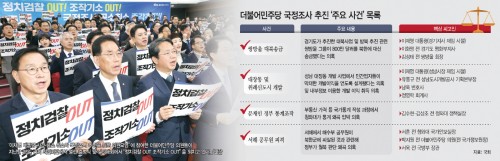 |
The ruling Democratic Party of Korea’s plan to launch parliamentary investigations into seven major cases — including the Daejang-dong development scandal — has sparked controversy, with critics warning the move could pressure prosecutors to withdraw indictments and undermine ongoing trials.
According to political sources on March 5, the Democratic Party plans to submit a request for a parliamentary investigation into what it calls “fabricated indictments by prosecutors” during the National Assembly plenary session on March 12 and aims to complete the investigation by April.
The proposed probe would cover seven cases, including the alleged Ssangbangwool illegal remittance to North Korea case, the Daejang-dong development scandal, the Wirye New Town case, allegations of statistical manipulation during the Moon Jae-in administration, the West Sea civil servant shooting case, a defamation case related to reporting on the Busan Savings Bank scandal, and a political funding case involving former Democratic Research Institute deputy director Kim Yong.
The Democratic Party argues that these cases represent politically motivated prosecutions and says it plans to hold prosecutors accountable through the parliamentary investigation. Many of the cases involve trials in which President Lee Jae-myung is a defendant or include figures aligned with the ruling camp.
In particular, while President Lee’s own trials have been suspended since he took office in June last year, proceedings for other defendants in cases such as the Ssangbangwool remittance case and the Daejang-dong development scandal are still ongoing.
The party has also called on prosecutors to withdraw indictments before courts reach final rulings. If prosecutors cancel the charges, the trials would effectively come to an end.
Critics say such a move could amount to using legislative power to neutralize judicial proceedings.
Legal experts warn that while questioning the legitimacy of investigations is possible, labeling cases as “fabricated prosecutions” while they are already in court could undermine the neutrality and independence of the criminal justice system.
For example, in the Ssangbangwool remittance case, the Supreme Court last June finalized a sentence of seven years and eight months in prison and a fine of 250 million won for Lee Hwa-young, the former vice governor of Gyeonggi Province for peace. The ruling confirmed that Ssangbangwool had paid North Korea on behalf of Gyeonggi Province for expenses related to a planned visit to the North.
In the Daejang-dong development case, courts have also handed down heavy sentences to several defendants, including Kim Man-bae, the major shareholder of Hwacheon Daeyu, and former Seongnam Development Corporation official Yoo Dong-gyu, as well as lawyers Nam Wook and Jeong Min-yong.
Some legal experts also argue that summoning prosecutors to parliamentary hearings could go beyond fact-finding and amount to public humiliation.
A former district prosecutors’ office chief turned lawyer said the investigation could also serve as an indirect warning to other investigative bodies, such as the police and the planned Serious Crimes Investigation Office, which are expected to take over major investigative functions after the prosecution service is abolished in October.
“This investigation ultimately looks like an attempt to embarrass prosecutors and protect certain individuals,” he said. “If such practices continue, investigative agencies may feel compelled to consider political circumstances rather than focusing solely on law and evidence.”
#Daejang-dong scandal #parliamentary investigation #prosecution indictment withdrawal #Democratic Party of Korea
Copyright by Asiatoday
Most Read
-
1
Celltrion nears additional contract with major U.S..

-
2
Putin proposes trilateral U.S.-China-Russia summit..

-
3
U.S. weighs dropping MOAB, world's most powerful n..

-
4
"Aren't those foreigners on welfare?": M..

-
5
Attention centers on APEC for possible Trump-Xi-Pu..

-
6
Saudi Arabia, Iran hold first diplomatic talks to..

-
7
U.S., Israel plan to resume strikes on Iran after..

PEOPLE







-
Address : In-Young Bldg., 34, Uisadang-daero 1-gil, Yeongdeungpo-gu, Seoul
Copyright by ASIATODAY CO., LTD. All rights resereved