



Samsung Biologics under pressure amid labor dispute and failed ADC deal
Feb 23, 2026, 12:25 pm


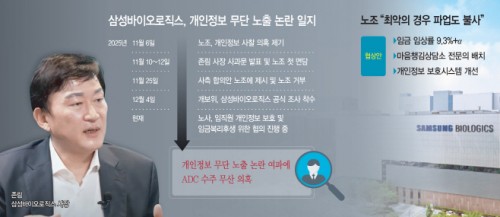 |
Concerns are mounting that last year’s failed antibody-drug conjugate (ADC) order at Samsung Biologics could be repeated this year, as the company faces renewed labor tensions following an internal personal data leak.
President and CEO John Rim has been meeting the labor union every one to two weeks in an effort to break the deadlock. However, key issues — including follow-up measures related to the November data leak and negotiations over wages and benefits — remain unresolved, raising the risk of prolonged conflict.
The situation is drawing attention in part because two ADC contract negotiations with a Japanese partner failed to reach final agreement shortly after the internal data exposure came to light last November. Industry observers warn that if labor talks drag on, the company’s external credibility and ability to secure global contracts could be affected.
The union has left open the possibility of a strike if negotiations collapse. A probe by the Personal Information Protection Commission is also ongoing. Depending on the findings, the company could face administrative measures, including corrective orders or fines.
The data leak occurred when a shared folder used by the HR department was exposed to all employees. The folder reportedly contained lists of employees who had made donations to the labor union, records of union executives’ break times, and sensitive usage details related to the company’s psychological counseling center.
Although Samsung Biologics immediately blocked access and John Rim issued a public apology, negotiations with the union over follow-up measures have shown little visible progress.
A union official said six rounds of wage and collective bargaining talks have been held so far, but overall progress remains around 5 percent. The union is demanding a base salary increase of 9.3 percent plus an additional 3.5 million won, as well as a companywide average performance-based raise of 5 percent — a significant jump from last year’s 3.5 percent plus 1 million won. The demands come against the backdrop of the company surpassing 2 trillion won in operating profit last year.
Market watchers note that the dispute could spill over into Samsung Biologics’ core CDMO business. Global pharmaceutical and biotech firms increasingly assess potential CDMO partners not only on financial stability and production capacity, but also on labor conditions, internal controls and data protection standards under ESG criteria.
An internal source at Samsung Biologics said that final contracts for two Japanese ADC projects were delayed following the internal data exposure and remain unsigned. “Employee data protection is directly linked to global ESG competitiveness and trust,” the source said, suggesting the incident may have had an impact.
Samsung Biologics completed its ADC production facility at the end of 2024 and has been actively pursuing related orders since last year. The company, however, cautioned against linking the failed ADC contracts directly to the data leak, saying multiple factors could have contributed.
The regulatory investigation, which began in early December, typically takes six to nine months. Officials at the commission said the probe is ongoing and no timeline has been set for announcing the results. As the case involves alleged internal unauthorized access rather than external leakage, the level of potential sanctions will depend on the findings.
The dispute is also seen as a test of how Samsung’s labor-management culture has evolved since Lee Jae-yong declared an end to the group’s long-standing no-union policy in 2020.
John Rim’s direct involvement in negotiations has been viewed as a sign of change. However, analysts say the final outcome of both the data leak response and the labor talks could influence not only Samsung Biologics’ global CDMO credibility but also broader perceptions of ESG governance across the Samsung Group.
Some observers note that concerns about labor practices are not new for Samsung. In 2019, the Seoul Central District Court sentenced several Samsung executives to prison for violating labor laws and obstructing union activities, describing their conduct as “anti-constitutional” and explicit. Lee Jae-yong’s subsequent declaration abolishing the no-union policy followed that judicial ruling.
How Samsung Biologics resolves its current labor negotiations may once again serve as a barometer of change within the conglomerate.
#Samsung Biologics #John Rim #ADC #antibody-drug conjugate #CDMO
Copyright by Asiatoday
Most Read
-
1
Kia Sportage outperforms Mazda CX-5 in German auto..

-
2
Houthis launch successive attacks on Saudi airport..

-
3
Saudi Arabia, Iran hold first diplomatic talks to..

-
4
U.S. deploys carrier, 10,000 more troops to Middle..

-
5
Saudi airport in Riyadh struck again, leaving at l..

-
6
Putin's ally visits China on the 8th ahead of APEC..

-
7
Chinese military support and training center opens..

PEOPLE





HEADLINE NEWS

-
Address : In-Young Bldg., 34, Uisadang-daero 1-gil, Yeongdeungpo-gu, Seoul
Copyright by ASIATODAY CO., LTD. All rights resereved