



Democratic win threatens Trump's AI agenda
Nov 05, 2026, 04:24 pm


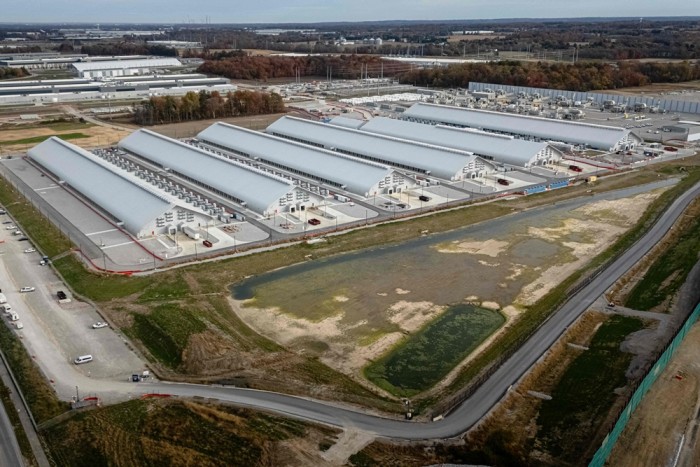 | ||
Part of Meta's gigawatt-scale data center cluster, known as "Prometheus," in New Albany, Ohio, on Nov. 1, 2026. /AFP-Yonhap
The Democratic Party's landslide victory in the U.S. midterm elections could put the brakes on the Trump administration's efforts to ease regulations on artificial intelligence (AI), according to analysts.
Reuters reported Wednesday that Democratic victories in numerous states, including traditionally Republican strongholds and major data center hubs such as Texas and Georgia, had raised the possibility that newly elected state governments and a reshaped Congress would step up oversight of industries that have benefited from the Trump administration.
The Washington Post and other media outlets also noted that several Democratic candidates who campaigned on tougher AI regulations had won their races, raising expectations that the shift in congressional control could lead to greater political scrutiny of Big Tech companies' AI development and data center expansion.
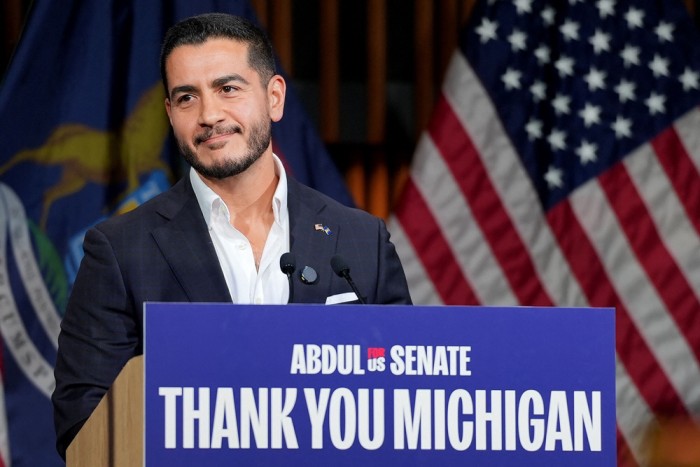
One figure drawing particular attention is Abdul El-Sayed, the Democratic senator-elect from Michigan. He has described AI as an "existential threat" and proposed regulations aimed at controlling the technology.
In particular, El-Sayed has called for a halt to AI development until adequate safeguards are in place, citing a series of cybersecurity incidents involving AI agents and researchers' warnings about the technology's potential impact on humanity.
His proposals include requiring all AI companies to become public benefit corporations, with public institutions holding 50% of their shares and receiving dividends.
He has also called for restrictions on AI applications, including bans on using the technology to deny medical care, independently launch weapons, conduct mass surveillance or make life-or-death decisions.
El-Sayed has also advocated establishing a Cabinet-level agency dedicated to AI safety, making the reporting of security incidents mandatory and imposing criminal penalties on corporate executives who recklessly violate regulations. Following their election victory, Democrats are expected to push not only for tighter AI regulations but also for greater scrutiny of political involvement by leading business figures. Elon Musk, CEO of Tesla, who actively supported Republican candidates in the election, is considered a prominent potential target. Musk spent a total of $446 million (approximately 599 billion won) on the election, the largest amount contributed by an individual who was not running for office. Nearly half of that amount, $200 million (approximately 269 billion won), went toward the U.S. Senate race in Texas, where his company SpaceX is headquartered. For the first time in 38 years, Texas, traditionally regarded as a Republican stronghold, elected a Democratic U.S. senator. In his victory speech, Senator-elect James Talarico said, "We need to get big money out of politics so that no billionaire or trillionaire can buy an election." He also called for dismantling "a rigged economic system that benefits the top 1%." The election results have also created an opportunity for Democrats, who have been pushing for congressional investigations and hearings into Musk and the Department of Government Efficiency (DOGE), which he previously led, to launch formal investigations. Sen. Richard Blumenthal of Connecticut, the ranking Democratic member of the Senate Permanent Subcommittee on Investigations, had previously pledged to investigate Musk and his former agency, DOGE, if Democrats won the midterm elections. Democratic lawmakers in both chambers of Congress who have called for greater oversight of Musk have conducted wide-ranging inquiries into restrictions on satellite communications access used by Ukrainian forces, mass layoffs of federal employees during Musk's tenure at DOGE and billions of dollars in contracts between his companies and the federal government. Wall Street reacted immediately to these risks. Shares of SpaceX and Tesla fell 3.6% and 3.5%, respectively, in premarket trading Wednesday. Kim Hyun-min |
Most Read
-
1
U.S., Israel plan to resume strikes on Iran after..

-
2
Ukraine halts strikes on Russian oil refineries un..

-
3
China's fifth plenum to conclude amid expectations..

-
4
ASEAN to discuss Myanmar's return next month

-
5
Southeast Asian auto parts makers hit hard by Chin..

-
6
U.S.-China-Russia summit increasingly likely to be..

-
7
U.S. links Myanmar peace efforts to rare earth acc..

PEOPLE







-
Address : In-Young Bldg., 34, Uisadang-daero 1-gil, Yeongdeungpo-gu, Seoul
Copyright by ASIATODAY CO., LTD. All rights resereved