



Japan on edge over Trump's midterm rout
Nov 05, 2026, 09:49 am


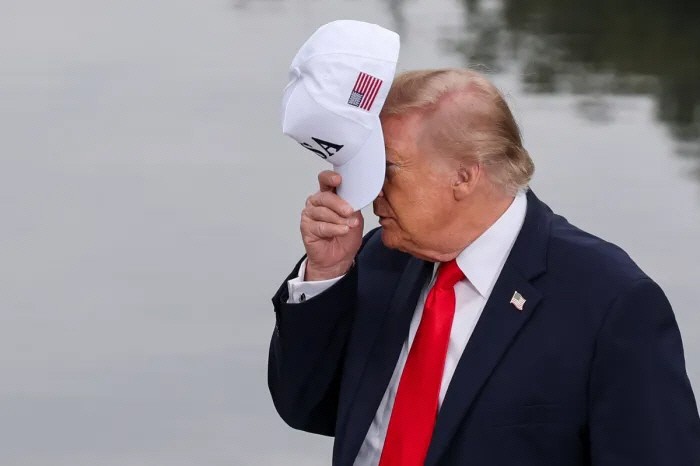 |
| U.S. President Donald Trump briefly removes his hat after delivering a speech at the Reflecting Pool in front of the Lincoln Memorial in Washington, D.C., on Nov. 2, the day before the U.S. midterm elections. /Reuters-Yonhap |
Following the Republican Party's crushing defeat in the U.S. midterm elections, the Japanese government is on edge as it closely watches the direction of President Donald Trump's diplomacy toward China and North Korea. Tokyo is concerned that Trump, facing political difficulties at home, may seek diplomatic achievements by striking deals with China and North Korea without sufficient consultation with Japan.
The Yomiuri Shimbun and the Mainichi Shimbun reported Wednesday that the Japanese government was closely monitoring how Trump's post-election diplomatic moves could affect Japan's security and national interests. Concerns center on the possibility that Trump could negotiate deals involving key Japanese priorities, including the issue of Japanese nationals abducted by North Korea, maintaining deterrence against China and negotiations over defense cost-sharing, without consulting Tokyo.
Officially, however, the Japanese government continues to emphasize the continuity of the alliance. Chief Cabinet Secretary Minoru Kihara said at a press conference Wednesday, "Regardless of the election results, the Japan-U.S. alliance remains the cornerstone of Japan's foreign and security policy." Within the Japanese government, some believe Trump's approach toward Japan is unlikely to change immediately, while others caution that Tokyo must communicate its position more actively.
According to the Associated Press (AP), Democrats secured majorities in both the Senate and the House of Representatives in the elections. What Japan fears is a scenario in which Trump, facing congressional checks that make it difficult to advance his domestic agenda, seeks a breakthrough through diplomacy. Fuji News Network (FNN) reported that concerns were emerging within the Japanese government over the difficulty of predicting Trump's next moves.
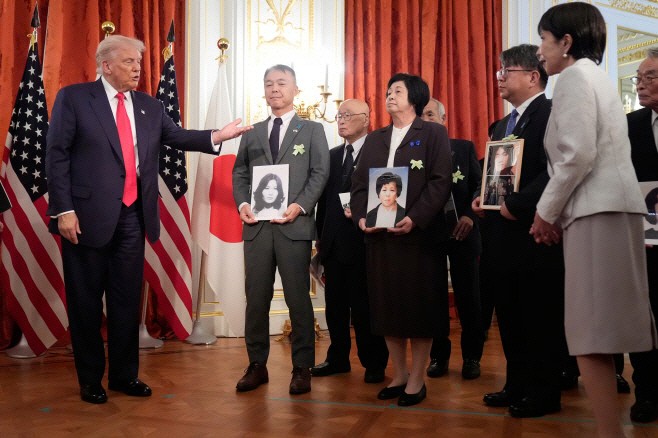 |
| U.S. President Donald Trump meets with families of Japanese nationals abducted by North Korea during his visit to Japan on Oct. 28, 2025. The Japanese government is concerned that Trump, facing political setbacks at home, may seek diplomatic achievements through negotiations with North Korea, potentially pushing the abduction issue to the sidelines. /Yonhap News Agency |
In diplomacy toward North Korea, the issue of Japanese nationals abducted by Pyongyang is the Japanese government's primary concern. Japan maintains that the abduction issue and North Korea's nuclear and missile programs must be resolved comprehensively. However, if Trump seeks to present an agreement with North Korea itself as a diplomatic achievement, Japan's abduction issue could be pushed down the negotiating agenda. The Yomiuri Shimbun reported that a senior Japanese government official had expressed concerns about a possible U.S.-North Korea deal reached without consulting Japan.
Similar concerns are emerging over U.S. diplomacy toward China. Japan is strengthening its defense posture based on the Japan-U.S. alliance to deter Chinese military pressure. Against this backdrop, there are concerns that if Trump becomes focused on securing diplomatic achievements and adopts a conciliatory negotiating approach toward China, Japan's policy of deterring Beijing could clash with Washington's more accommodating stance. The Yomiuri Shimbun reported that the Japanese government was wary of the possibility that a shift in the U.S. position could prompt China to exert even greater pressure on Japan.
The Mainichi Shimbun reported that Japan was also closely watching Trump's proposal for a trilateral summit involving the United States, China and Russia, which he has shown enthusiasm for pursuing. Tokyo fears that the major powers could negotiate the international order among themselves while overlooking the interests of allies such as Japan. Negotiations centered on the United States, China and Russia could narrow Japan's diplomatic room for maneuver.
Such concerns had already emerged before the U.S. midterm elections. Reuters reported Monday, citing Japanese government officials, that Trump might move quickly to improve relations with North Korea and China in an effort to establish a political legacy during the latter half of his term. This could create uncertainty over how far negotiations would go toward resolving the denuclearization of the Korean Peninsula and the abduction issue.
Kazuhiro Maeshima, a professor at Sophia University interviewed by Reuters, also raised the possibility that renewed U.S.-North Korea talks could move in a direction that effectively accepts North Korea's possession of nuclear weapons. His remarks suggested that Japan must prepare for a scenario in which the principle of complete denuclearization is weakened during U.S.-North Korea negotiations, leaving Japanese security concerns unresolved.
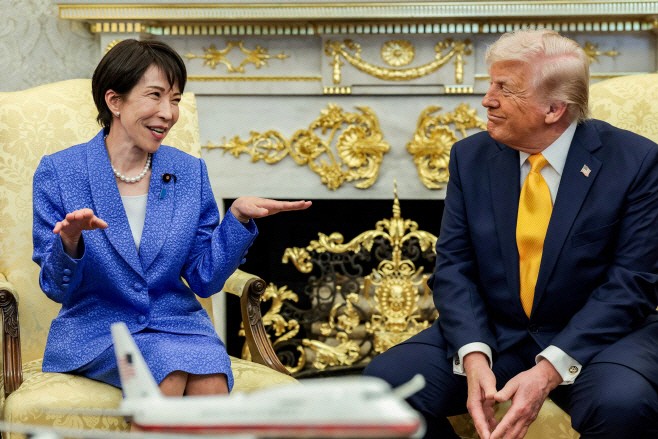 |
| A Japan-U.S. summit held on March 20. Prime Minister Sanae Takaichi plans to visit China for the first time since taking office to attend the Asia-Pacific Economic Cooperation (APEC) leaders' summit in the middle of this month. She is seeking an opportunity to meet with President Trump beforehand to coordinate their views on China. |
Defense costs and U.S. investment demands also loom
The financial burden Japan may have to shoulder is another factor. The Mainichi Shimbun reported that the Japanese government was watching for the possibility that the Trump administration could press Tokyo more strongly to increase defense spending and fulfill its investment commitments in the United States under their tariff agreement. This could create a situation in which Washington rushes to secure negotiated outcomes with China and North Korea while demanding greater contributions from its allies.
In particular, negotiations on a successor to the Special Measures Agreement covering the costs of stationing U.S. forces in Japan, which expires at the end of March next year, could be affected. The current agreement is understood to cover the period from April 1, 2022, to March 31, 2027. The United States may increase pressure on Japan to shoulder a larger share of the costs under the next agreement.
Prime Minister Sanae Takaichi plans to make her first visit to China since taking office to attend the APEC leaders' summit there in the middle of this month. The Japanese government is seeking opportunities for her to meet with Trump during a series of international meetings scheduled through December.
The Yomiuri Shimbun reported that some within the Japanese government were calling for Takaichi to realign her understanding of China with Trump before her visit. Beyond maintaining the alliance itself, ensuring that Japan's specific demands are reflected before Washington enters negotiations with China and North Korea is emerging as a key challenge for Tokyo's diplomacy toward the United States following the midterm elections.
Choi Young-jae
Most Read
-
1
U.S., Israel plan to resume strikes on Iran after..

-
2
Ukraine halts strikes on Russian oil refineries un..

-
3
China's fifth plenum to conclude amid expectations..

-
4
ASEAN to discuss Myanmar's return next month

-
5
AI-discovered PHP flaw triggers global cybersecuri..

-
6
Southeast Asian auto parts makers hit hard by Chin..

-
7
Trump envoy says U.S. no longer guarantees Middle..

PEOPLE







-
Address : In-Young Bldg., 34, Uisadang-daero 1-gil, Yeongdeungpo-gu, Seoul
Copyright by ASIATODAY CO., LTD. All rights resereved