



U.S.-China-Russia summit increasingly likely to become second Yalta Conference
Oct 23, 2026, 10:16 am


A potential summit among the leaders of the United States, China and Russia, the three major powers, being discussed on the sidelines of next month's Asia-Pacific Economic Cooperation (APEC) summit in Shenzhen, Guangdong Province, China, is raising concerns that it could become a second Yalta Conference, where the interests of major powers take precedence regardless of the will of smaller countries. Such a development could fundamentally shake the post-Cold War order that has prevailed for more than four decades since the collapse of the Soviet Union.
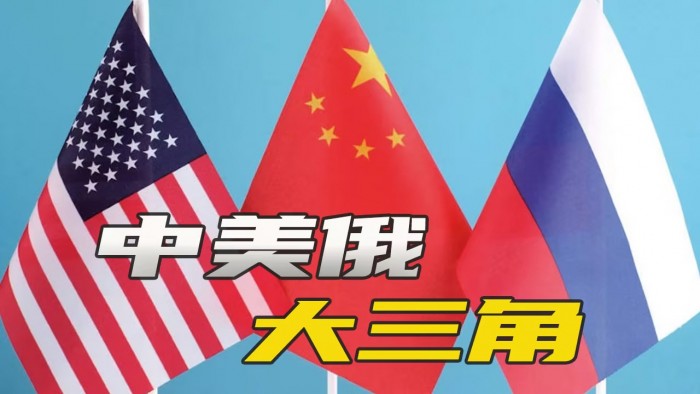 |
| A report by a Chinese media outlet suggesting that a trilateral summit among the leaders of the United States, China and Russia will take place. / The Beijing News |
According to Beijing-based diplomatic sources familiar with global affairs on Oct. 22, it would not be much of an exaggeration to say that a trilateral summit among the United States, China and Russia is now almost certain. Above all, Russia, which still possesses the influence to move China and the United States, is actively pushing for the meeting, suggesting that such an assessment is not excessive. Yuri Ushakov, a senior Kremlin official and foreign policy aide, had already raised the possibility twice in interviews with Russia's state-run Vesti broadcaster on Sept. 1 and 29.
Furthermore, The Wall Street Journal reported on Oct. 18 (U.S. local time) that Russian President Vladimir Putin had personally proposed to U.S. President Donald Trump a trilateral meeting at the APEC summit to discuss ending the war in Ukraine. It would be reasonable to conclude that Putin is firmly determined to make the trilateral meeting happen one way or another.
Trump's positive signals also suggest that it would now be surprising if the trilateral meeting did not take place. On Oct. 19 (local time), the day after The Wall Street Journal report, Trump told reporters at the White House, seemingly indicating his willingness to accept Putin's proposal, "If he [Chinese President and Communist Party General Secretary Xi Jinping] wants it, I will have the meeting. I will do everything I can to end the war in Ukraine."
Under these circumstances, it would make little sense for Xi to express opposition. As the leader of the host country, Xi is in a position where he must enhance China's standing as much as possible at the Shenzhen summit. Given this, he would have little choice but to regard the meeting as something he would not dare request but sincerely desires. Xi might even have reason to thank Russia and Putin for taking the initiative in pushing for the trilateral meeting.
According to sources, there is also a strong possibility that Xi has already conveyed such sentiments. This inference appears reasonable given that Chinese Premier Li Qiang, the second-ranking figure in China's party-state leadership, met Putin in St. Petersburg, Russia, on Oct. 21. Qin Qiwei, a Beijing-based international political commentator, said, "There is a considerable possibility that Premier Li expressed China's position on the trilateral meeting, the most important issue between the two countries. Naturally, he would have said that China fully supports it." His assessment therefore appears far from groundless.
The concern is what might happen if the Ukraine issue is discussed at the trilateral meeting and a decision is reached to impose an end to the war. In that case, Ukraine and President Volodymyr Zelenskyy could suddenly find themselves like a dog left staring at the roof after chasing a chicken. Such a possibility cannot be ruled out, considering that Trump not only strongly desires an end to the war, unlike in the past, but also continues to maintain that Zelenskyy should step down.
The international community and foreign media are also expressing concerns about this possibility. Indeed, it could be said that they almost regard it as a foregone conclusion. Even diplomatic circles in Beijing have described Zelenskyy as no longer merely being like a dog staring at the roof after chasing a chicken, but as a gujia guaren (孤家寡人), a person left completely isolated, or, in colloquial Korean terms, like a duck egg stranded on the Nakdong River. Such an assessment can be seen as hitting the mark. The same could be said of international concerns that the increasingly likely trilateral summit in Shenzhen could become a second Yalta Conference.
Hong Soon-do
Most Read
-
1
Celltrion nears additional contract with major U.S..

-
2
Putin proposes trilateral U.S.-China-Russia summit..

-
3
U.S. weighs dropping MOAB, world's most powerful n..

-
4
"Aren't those foreigners on welfare?": M..

-
5
Attention centers on APEC for possible Trump-Xi-Pu..

-
6
Saudi Arabia, Iran hold first diplomatic talks to..

-
7
China tightens grip on boosting domestic demand an..

PEOPLE







-
Address : In-Young Bldg., 34, Uisadang-daero 1-gil, Yeongdeungpo-gu, Seoul
Copyright by ASIATODAY CO., LTD. All rights resereved