



Three Japanese parties agree to cut 31 Lower House PR seats
Oct 30, 2026, 09:56 am


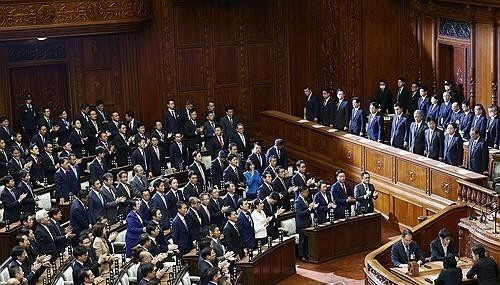 |
| Japan's House of Representatives. / Yonhap News Agency |
Japan's Liberal Democratic Party (LDP), Japan Innovation Party (JIP) and Democratic Party for the People (DPP) have formally agreed on an electoral reform proposal to reduce the number of proportional representation seats in the House of Representatives by 31. The proposal would leave single-member constituency seats unchanged while reducing proportional representation seats and tightening eligibility requirements for candidates who lose constituency races but secure seats through proportional representation.
The Yomiuri Shimbun reported that the secretaries-general of the three parties signed an agreement at the Diet on the morning of Oct. 29 and agreed to expedite the joint submission of related legislation during the current parliamentary session. The agreement was signed by LDP Secretary-General Shunichi Suzuki, JIP Secretary-General Takumi Shibata and DPP Secretary-General Kazuya Shinba.
If enacted, the proposal would reduce the number of seats in the House of Representatives from 465 to 434. The number of single-member constituency seats would remain unchanged at 289, while proportional representation seats would fall from 176 to 145. Although the reform would reduce the chamber's overall membership by approximately 6.7%, the cuts would be concentrated entirely in proportional representation, resulting in a reduction of about 17.6% in those seats.
The three parties based the proposed 31-seat reduction on projections that Japan's population will decline by 6.7% between 2015 and 2030. The LDP and JIP had initially sought to eliminate 45 seats, while the DPP had advocated a 19-seat reduction. The parties reached a compromise by combining the seat cuts with changes to the seat allocation formula and the introduction of joint candidate lists among political parties.
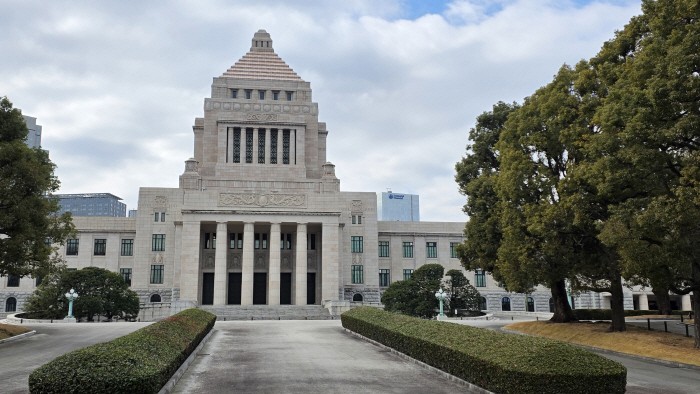 |
| Japan's National Diet Building. / Photo by Choi Young-jae, Tokyo Correspondent |
Following the meeting, DPP Secretary-General Kazuya Shinba explained that reducing constituency seats would make it even harder for the voices of rural areas experiencing rapid population decline to be heard in the Diet. He indicated that his party had accepted cuts to proportional representation seats in order to preserve existing constituencies in rural areas.
Minimum constituency vote threshold raised from 10% to about 16.7%, tightening proportional representation eligibility
In addition to reducing the number of seats, the agreement includes changes to the rules governing proportional representation elections. The minimum share of valid votes required for candidates running simultaneously in a single-member constituency and on a proportional representation list to secure a seat through proportional representation after losing their constituency race — a practice known as "resurrection" — would rise from one-tenth to one-sixth. This would raise the threshold from 10% to approximately 16.7%. Candidates falling below the threshold would no longer be eligible for proportional representation seats, even if their parties secured such seats.
The formula used to convert party votes into seats would also change from the current D'Hondt method to the modified Sainte-Laguë method. The change is intended to make it easier for small and medium-sized parties to win seats while discouraging the proliferation of parties with extremely limited support. The proposal also calls for merging the Chugoku and Shikoku proportional representation electoral blocs. Chugoku refers to the western part of Japan's main island of Honshu.
The agreement also introduces a joint-list system, allowing multiple parties to contest proportional representation elections using a single shared candidate list instead of submitting separate lists for each party.
The parties also agreed to revise the rules for cases in which a party lists fewer candidates than the number of seats allocated to it. Under the proposal, any unfilled seats would remain vacant rather than being transferred to other parties. Measures are also being prepared to reduce the burden of election deposits that may be forfeited depending on the results, making it easier for parties to field enough candidates.
However, the agreement does not mean that the seat reductions have been finalized. The three parties must still draft and submit the legislation and secure its passage through the Diet.
Meanwhile, other opposition parties, excluding the DPP, reportedly oppose the proposal, arguing that the justification for reducing seats is unclear and that the changes could make it more difficult for diverse voter preferences to be represented in the Diet.
Debate over the decision to cut only proportional representation seats and the agreement-making process led by the three parties is expected to continue during legislative deliberations.
Choi Young-jae
Most Read
-
1
Putin proposes trilateral U.S.-China-Russia summit..

-
2
Attention centers on APEC for possible Trump-Xi-Pu..

-
3
U.S., Israel plan to resume strikes on Iran after..

-
4
Ukraine halts strikes on Russian oil refineries un..

-
5
China tightens grip on boosting domestic demand an..

-
6
China's fifth plenum to conclude amid expectations..

-
7
Amid health rumors, Chinese President Xi Jinping i..

PEOPLE






-
Address : In-Young Bldg., 34, Uisadang-daero 1-gil, Yeongdeungpo-gu, Seoul
Copyright by ASIATODAY CO., LTD. All rights resereved