



Canada, EU agree to closer ties, but associate membership plan falls through
Oct 29, 2026, 03:45 pm


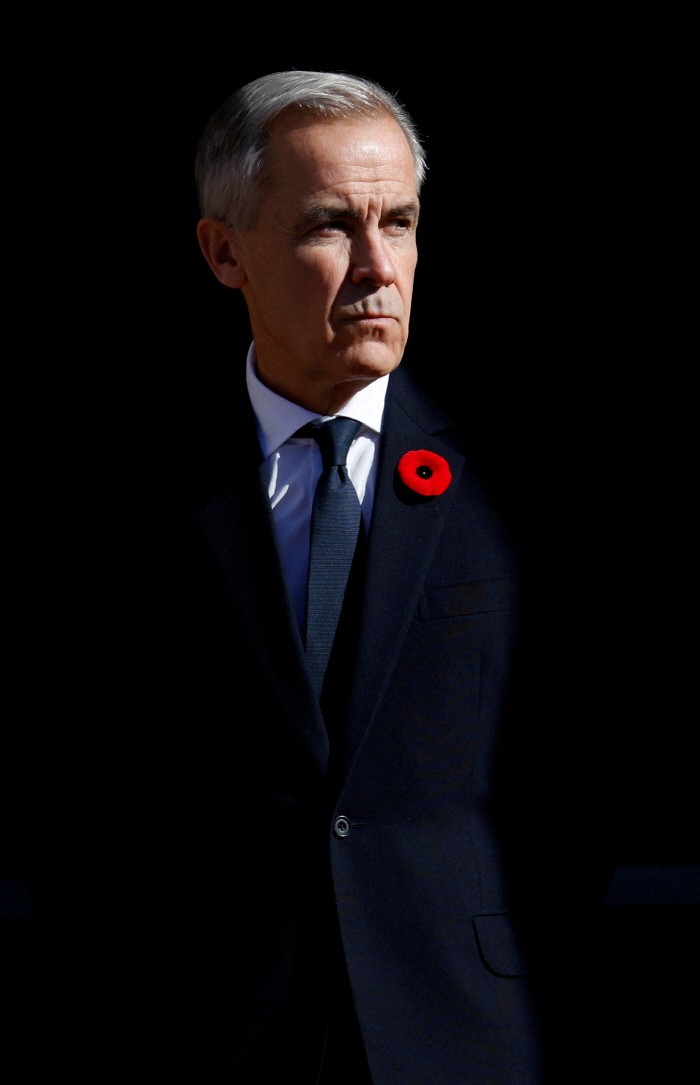 |
| Canadian Prime Minister Mark Carney. / Reuters-Yonhap |
Canada and the European Union (EU) have agreed to strengthen ties amid tariff pressure from the administration of U.S. President Donald Trump, but have dropped a controversial proposal to grant Canada associate membership in the bloc.
According to a joint declaration obtained by Reuters, the two sides agreed to pursue an "ever closer association" while removing references to associate membership. They also agreed to continue discussions on defining the precise nature of their relationship until their next summit in 2027.
The declaration is expected to be officially unveiled during a summit beginning Oct. 29 (local time) in Montreal, hosted by Canadian Prime Minister Mark Carney.
The proposal to grant Canada associate membership, put forward six weeks ago by European Commission President Ursula von der Leyen, sparked deep divisions among EU member states. According to diplomatic sources, several countries led by Germany maintained that they could not formally endorse a concept that had neither legal standing nor a clearly defined framework.
There is currently no legal definition or precedent for associate membership within the EU.
Trump dismissed the proposal as "laughable" and previously warned that the United States could suspend significant trade with Europe if he considered the arrangement a "hostile act."
Speaking to reporters on Oct. 27, Carney said, "The specific names or terminology do not matter. What matters is making a tangible difference in the lives of Canadians." He also described the summit as the starting point for a year of formal negotiations.
EU officials described the summit as "a historic milestone opening a new chapter in the partnership between the two sides," emphasizing that all member states supported building closer relations with Canada.
The joint declaration includes several measures to expand practical cooperation. Key initiatives include developing new subsea cable infrastructure connecting Europe, Canada and Asia, conducting a feasibility study on exporting Canadian liquefied natural gas (LNG) to Europe, and expanding opportunities for young people to work in each other's markets.
The two sides also agreed to reaffirm their commitment to a rules-based international order and express "deep regret" over U.S. sanctions imposed on the International Criminal Court (ICC). The declaration also includes plans to align Canadian artificial intelligence (AI) and digital regulatory standards more closely with those of Europe and strengthen economic security cooperation.
However, concerns have emerged that the closer partnership between Canada and the EU could unnecessarily provoke the United States.
Barry Appleton, an international trade lawyer affiliated with the Balsillie School of International Affairs, said emphasizing support for multilateralism and international law was effectively "poking Trump in the eye."
He also warned that Canada's decision to adopt European-style regulations, which Washington regards as trade barriers, was "highly provocative."
Julian Karaguesian, a former adviser to Canada's Department of Finance, dismissed the summit as "something of a show."
"With approximately 70% of Canadian exports going to the United States and the EU accounting for just 9%, it will be difficult to diversify trade simply by expanding cooperation with the EU under a vaguely defined framework," he said.
Lee Jeong-eun
Most Read
-
1
Putin proposes trilateral U.S.-China-Russia summit..

-
2
U.S. weighs dropping MOAB, world's most powerful n..

-
3
Attention centers on APEC for possible Trump-Xi-Pu..

-
4
U.S., Israel plan to resume strikes on Iran after..

-
5
China tightens grip on boosting domestic demand an..

-
6
Amid health rumors, Chinese President Xi Jinping i..

-
7
ASEAN to discuss Myanmar's return next month

PEOPLE







-
Address : In-Young Bldg., 34, Uisadang-daero 1-gil, Yeongdeungpo-gu, Seoul
Copyright by ASIATODAY CO., LTD. All rights resereved