



Argentina mired in tourism deficit
Oct 29, 2026, 01:37 pm


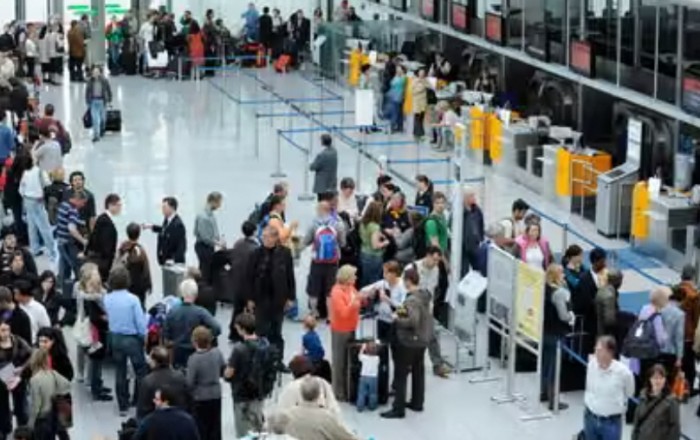 |
| Passengers go through departure procedures at Jorge Newbery Airport in Argentina. / AFP-Yonhap |
Argentina continues to run a tourism deficit as the peso's depreciation against the dollar has lagged behind inflation, making the country more expensive for foreign visitors while encouraging more Argentines to travel abroad.
Local broadcaster América TV reported on Oct. 28 (local time), citing the National Institute of Statistics and Censuses (INDEC), that Argentina recorded a tourism deficit of approximately $918.4 million in the third quarter of this year.
The deficit increased 3.3% from approximately $809.3 million in the same period last year, according to the report. It marked the third consecutive quarterly deficit this year, following shortfalls of approximately $3.184 billion in the first quarter and $750 million in the second. Argentina has recorded a tourism deficit every month so far this year.
Approximately 689,300 foreign tourists visited Argentina in the third quarter, while about 1.0262 million Argentines traveled abroad. Foreign visitors spent approximately $677.1 million in Argentina, compared with about $1.5955 billion spent overseas by Argentine travelers.
Analysts attribute the trend to the peso's relatively strong value against the dollar, which has driven up prices in dollar terms. As a result, Argentina has become more expensive for foreign tourists, while overseas travel has become more affordable for Argentines.
The official exchange rate stood at 1,560 pesos per dollar on Oct. 27. Consumer prices rose 23.6% from January through September, while the peso-dollar exchange rate increased just 5.4%. With the exchange rate rising much more slowly than consumer prices, goods and services in Argentina have become increasingly expensive in dollar terms.
For example, a tall Americano at Starbucks in Argentina costs 7,600 pesos, equivalent to approximately $4.95 (about 6,700 won), among the highest prices in South America.
The prevailing view is that Argentina's rising prices in dollar terms are largely attributable to President Javier Milei's policies aimed at limiting increases in the peso-dollar exchange rate.
Argentine Economy Minister Luis Caputo recently said, "The value of a currency is the value of a country," adding that Argentina would not become a country that sells goods to foreigners at bargain prices in dollar terms.
Former Economy Minister Domingo Cavallo, who brought inflation under control through a peso-dollar currency peg in the 1990s, criticized the Milei administration for distorting the exchange rate by restricting businesses' access to foreign currency despite its professed commitment to a market economy. He argued that the foreign exchange market should be fully liberalized.
Most economists agree that the peso-dollar exchange rate is excessively low relative to domestic prices. They estimate that an appropriate exchange rate would be between 1,700 and 2,200 pesos per dollar.
Analysts warn that if the peso-dollar exchange rate continues to rise more slowly than inflation, Argentina's tourism deficit could widen further during the peak summer travel season from December this year through March next year.
Son Young-sik
Most Read
-
1
Putin proposes trilateral U.S.-China-Russia summit..

-
2
U.S. weighs dropping MOAB, world's most powerful n..

-
3
Attention centers on APEC for possible Trump-Xi-Pu..

-
4
U.S., Israel plan to resume strikes on Iran after..

-
5
China tightens grip on boosting domestic demand an..

-
6
Amid health rumors, Chinese President Xi Jinping i..

-
7
ASEAN to discuss Myanmar's return next month

PEOPLE







-
Address : In-Young Bldg., 34, Uisadang-daero 1-gil, Yeongdeungpo-gu, Seoul
Copyright by ASIATODAY CO., LTD. All rights resereved