



Diesel outpaces crude amid global shortage, boosting Korean refiners’ export margins
Sep 11, 2026, 09:49 am


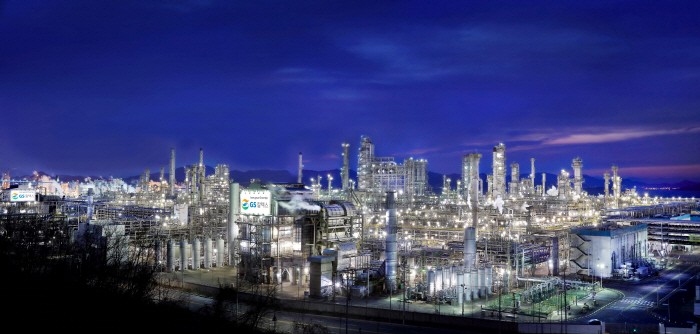 |
| A view of GS Caltex’s Yeosu refinery. / GS Caltex |
International oil prices have climbed back above $100 a barrel, but diesel prices are rising even faster. Growing concerns over Middle East oil supplies amid the US-Iran conflict, combined with disruptions to Russian diesel exports following Ukrainian attacks on refineries, are tightening global supply. Refining margins are also surging, a trend expected to improve export profitability for South Korean refiners, which derive more than 40% of their petroleum product exports from diesel.
According to the Financial Times on Sept. 10, Brent crude rose as high as $101.55 a barrel during trading on Sept. 9 local time, breaking above the $100 mark. It closed at $101.21, up 3.4% from the previous session. Concerns over Middle Eastern crude supplies intensified again after escalating clashes between the United States and Iran and Houthi attacks on Saudi oil facilities.
Refiners, however, are paying even closer attention to diesel prices. The Wall Street Journal reported that diesel futures on the New York Mercantile Exchange rose 5.1% to close at $4.8010 a gallon, the highest level since April 2022. The rise reflects Russia’s suspension of diesel exports following Ukrainian attacks as well as reduced petroleum product supplies from the Middle East.
The diesel shortage is also driving up refining margins. US diesel refining margins recently surged to as high as $108.02 a barrel intraday, according to Reuters, while Asian 10 ppm diesel margins climbed to about $102 a barrel, according to DBS, reaching triple digits for the first time on record. US middle distillate inventories are 10.1% lower than a year earlier, while Singapore inventories are down 19.6%, leaving little supply cushion in the market.
South Korean refiners are particularly sensitive to these developments because of their heavy reliance on diesel exports. According to the Korea Petroleum Association, the country’s four major refiners exported 485.35 million barrels of petroleum products last year. Diesel accounted for 202.37 million barrels, or 42% of the total, the largest share, with export volume also hitting a record high. Gasoline and jet fuel accounted for 22% and 18%, respectively.
If the global diesel shortage persists, it could further improve export margins for South Korean refiners. Analysts say the current shortage stems not only from reduced crude production but also from disruptions at refining facilities, meaning supplies of diesel and other petroleum products may not stabilize immediately even if crude oil supply partially recovers.
Third-quarter earnings are also expected to rise sharply. According to FnGuide, SK Innovation’s consolidated operating profit for the third quarter is estimated at 1.7066 trillion won, up 197.6% from a year earlier. S-Oil’s operating profit is projected at 1.0641 trillion won, up 364.2%.
However, Brent crude’s rise above $100 is not entirely positive for refiners. A rapid increase in crude prices raises feedstock costs and working-capital burdens, while a sharp price decline after a surge could result in inventory valuation losses.
Jeon Yu-jin, an analyst at iM Securities, said US refinery utilization rates have climbed to a historical high of 98%, but that is still insufficient to offset supply shortfalls from Russia and the Middle East.
“Petroleum product inventories in both the United States and Asia remain well below normal levels, so refining margins are unlikely to correct easily,” Jeon said.
Son Kang-hoon
Most Read
-
1
Kia Sportage outperforms Mazda CX-5 in German auto..

-
2
Houthis launch successive attacks on Saudi airport..

-
3
Saudi Arabia, Iran hold first diplomatic talks to..

-
4
U.S. deploys carrier, 10,000 more troops to Middle..

-
5
Saudi airport in Riyadh struck again, leaving at l..

-
6
Japan tracks Ukraine fiber-optic drones, bolsters..

-
7
Putin's ally visits China on the 8th ahead of APEC..

PEOPLE






HEADLINE NEWS
- Trump slams Nobel Peace Prize snub, claiming he is 'preventing war' between the two Koreas
- China makes tactical retreat following fierce pushback from EU
- Japan openly opposes U.S. sanctions on ICC, fueling tensions with Washingto..
- Military service exemptions for artists and athletes under scrutiny at parl..

-
Address : In-Young Bldg., 34, Uisadang-daero 1-gil, Yeongdeungpo-gu, Seoul
Copyright by ASIATODAY CO., LTD. All rights resereved