



Next growth engine becomes reality as JY's challenging spirit pays off
Aug 27, 2026, 09:58 am


 |
Samsung's biopharmaceutical business, which the group nurtured with its future on the line following semiconductors, has grown into a central pillar of the global contract development and manufacturing organization (CDMO) market 15 years after its launch. Starting in 2011 with Plant 1 in Songdo, Incheon with a capacity of 30,000 liters (L), Samsung Biologics has secured a total production capacity of 845,000 L across Plants 1 through 5 in South Korea and its U.S. manufacturing base. Its annual revenue has also surpassed 4.5 trillion won, turning the vision of a "second semiconductor" into reality.
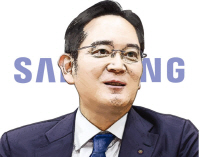
Samsung's biopharmaceutical challenge began with a decisive move by the late Chairman Lee Kun-hee. In 2010, the late chairman selected pharmaceuticals and biotechnology as one of Samsung's five new growth engine businesses and ordered bold investments. Taking over the baton, Executive Chairman Lee Jae-yong designated biopharmaceuticals as a future growth pillar on par with semiconductors and has sustained investments. The company is currently pursuing a long-term plan to invest 7.5 trillion won in its Second Bio Campus by 2032.
The formula of "preemptive investment leading to market dominance" accumulated in semiconductors worked effectively in biotechnology as well. Samsung Biologics has pursued a strategy of securing large-scale manufacturing facilities first, leveraging them to secure orders from global pharmaceutical companies, and then expanding capacity further. Driven by this strategy, revenue, which stood at 464.6 billion won right after its Kospi listing in 2017, surged roughly tenfold to 4.557 trillion won in 2025.
However, growth over the past 15 years does not guarantee future growth. Competition is intensifying amid capacity expansions by global rivals, price offensives by Chinese CDMOs, and the chase by domestic latecomers. A competitive landscape is emerging where maintaining a gap solely through production capacity is difficult. The competitive arena is also shifting from antibody-centered businesses to new high-value-added areas such as ADCs and peptides.
To mark the 15th anniversary of Samsung Biologics' founding, Asia Today will examine its past, present, and future across four installments, covering Executive Chairman Lee Jae-yong's strategic bio bet, the people who made it a reality, new growth drivers, and latecomers aiming to become the "next Samsung Biologics." Through this series, the publication plans to revisit Samsung's bio growth formula and examine the conditions and challenges needed to maintain a super-gap over the next 15 years amidst a shifting competitive landscape.
Bae Da-hyun
#Samsung #Biotechnology #Lee Jae-yong #Investment
Copyright by Asiatoday
Most Read
-
1
Kia Sportage outperforms Mazda CX-5 in German auto..

-
2
Houthis launch successive attacks on Saudi airport..

-
3
Saudi Arabia, Iran hold first diplomatic talks to..

-
4
U.S. deploys carrier, 10,000 more troops to Middle..

-
5
Saudi airport in Riyadh struck again, leaving at l..

-
6
Japan tracks Ukraine fiber-optic drones, bolsters..

-
7
Putin's ally visits China on the 8th ahead of APEC..

PEOPLE






HEADLINE NEWS
- Trump slams Nobel Peace Prize snub, claiming he is 'preventing war' between the two Koreas
- China makes tactical retreat following fierce pushback from EU
- Japan openly opposes U.S. sanctions on ICC, fueling tensions with Washingto..
- Military service exemptions for artists and athletes under scrutiny at parl..

-
Address : In-Young Bldg., 34, Uisadang-daero 1-gil, Yeongdeungpo-gu, Seoul
Copyright by ASIATODAY CO., LTD. All rights resereved