



Spain lifts World Cup trophy for first time in 16 years
Jul 20, 2026, 10:01 am


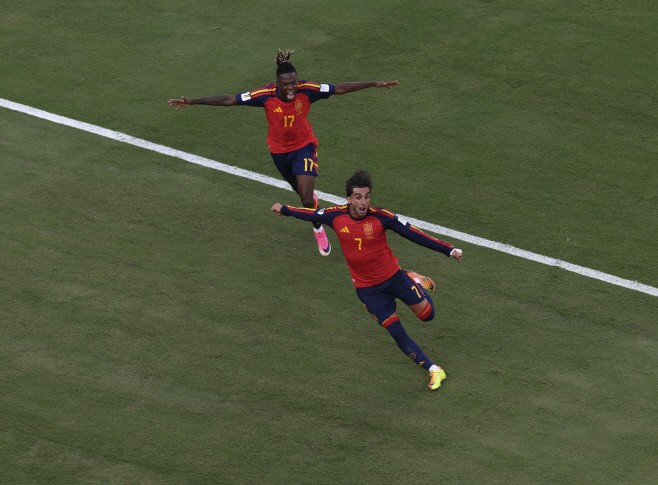 |
| Spain's Ferran Torres celebrates after scoring the decisive goal in extra time during the 2026 FIFA World Cup final held at New York New Jersey Stadium on July 19 (local time). / Xinhua, Yonhap News. |
Spain has returned to the top of the footballing world for the first time in 16 years, leaving Lionel Messi’s final World Cup stage to end in a runner-up finish.
In the 2026 FIFA World Cup final held at New York New Jersey Stadium on July 19 (local time), Spain defeated defending champions Argentina 1-0, powered by a decisive extra-time goal from Ferran Torres right after the start of the second half of extra time. Reclaiming the world title for the first time since the 2010 South Africa tournament, Spain captured their second World Cup trophy in history.
On the other hand, Argentina, aiming for back-to-back World Cup titles and their fourth championship overall, ultimately failed to breach Spain's wall. Messi, who bows out of the World Cup stage after this tournament, also concluded his final campaign with a runner-up finish, bringing a poignant end to his "Last Dance."
From the opening whistle, Spain dominated Argentina in possession, pressing, and attacking build-up. Argentina looked to counterattack with Messi leading the charge, but they were completely neutralized by Spain's organized pressing. The flow remained entirely one-sided to the point where Argentina struggled to even muster proper shots during regular time, and Spain dictated the final with a commanding performance worthy of champions.
With this victory, Spain extended their unbeaten streak to 38 consecutive international matches (29 wins, 9 draws) since a 0-1 defeat to Colombia in March 2024. The "system football" championed by manager Luis de la Fuente, who rose through the ranks of the youth national teams to take the helm of the senior squad, shone brilliantly once again. Following triumphs at the UEFA Nations League and Euro 2024, Spain cemented their position at the pinnacle of world football by conquering the World Cup.
The driving force behind this championship was an impeccable balance between attack and defense. Spain showcased fierce firepower by netting 14 goals across eight matches in the tournament, while simultaneously anchoring an ironclad defense that kept seven clean sheets and conceded just one goal. A stable midfield centered around Rodri, rapid attacking transitions spearheaded by Lamine Yamal, and tactical substitutions by de la Fuente all clicked together to overwhelm opponents throughout the competition. Spain proved their world-class sophistication in the final as well, refusing to relinquish the attacking initiative until they finally turned their 20th shot into the match-winning goal.
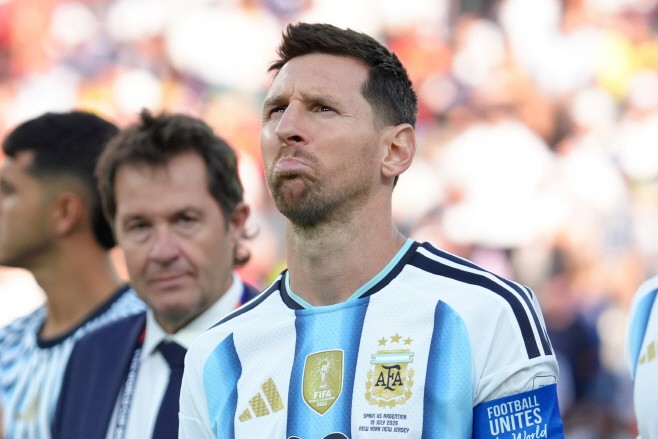 |
| Argentina's Lionel Messi looks dejected after suffering a defeat against Spain and finishing as runner-up in the 2026 FIFA World Cup final held at New York New Jersey Stadium on July 19 (local time). / AP, Yonhap News. |
The two nations' top superstars, Lionel Messi and Lamine Yamal, both started the match, signaling their absolute determination to win. Argentina deployed a 4-4-2 formation with Julián Álvarez and Messi forming the strike partnership. Lisandro Martínez, Cristian Romero, Nicolás Tagliafico, and Gonzalo Montiel made up the back four, while Alexis Mac Allister and Enzo Fernández anchored the midfield. Nicolás González and Rodrigo De Paul were stationed on the left and right wings, respectively.
Spain also fielded their strongest lineup. Unai Simón started in goal, with Pau Cubarsí, Aymeric Laporte, Pedro Porro, and Marc Cucurella forming the defensive line. Rodri anchored the midfield alongside Dani Olmo and Fabián Ruiz, while Lamine Yamal centered the front three, flanked by Álex Baena and Mikel Oyarzabal.
Spain seized control of the match from the opening whistle. They mounted a fierce offensive, starting with a shot from Yamal in the 5th minute. Conversely, Argentina struggled to create any notable attacking chances as Messi was completely neutralized. To make matters worse for Argentina, Lisandro Martínez was forced off with an injury late in the first half.
The dynamic of the match remained largely unchanged in the second half. Spain continued to pile on the pressure, while Argentina held on thanks to a series of brilliant saves by goalkeeper Emiliano Martínez. Martínez denied consecutive efforts from Yamal and Olmo in the 16th and 19th minutes of the second half.
Spain further intensified their attack, bringing on Ferran Torres and Pedri simultaneously in the 62nd minute, followed by Mikel Merino and Nico Williams in the 75th minute.
Ultimately, the deadlock was broken in extra time. Right at the start of the second half of extra time, Pedro Porro delivered a cross that Nico Williams headed down, and Ferran Torres, waiting in front of the goal, fired a powerful left-footed shot into the back of the net. It was the moment Spain's 20th shot of the day finally turned into the match-winning goal.
Argentina launched an all-out offensive in the dying minutes of the game but failed to breach Spain's ironclad defense. Spain held onto their lead until the final whistle to secure their first World Cup title in 16 years, while Messi concluded his final World Cup journey, hanging a bittersweet runner-up medal around his neck.
Cheon Hyun-bin
Most Read
-
1
Trump demands rates fall below 1% as Fed hikes for..

-
2
Chinese e-commerce giants AliExpress, Temu and She..

-
3
Trump warns countries not helping U.S. must pay re..

-
4
Celltrion seeks rheumatoid arthritis indication ex..

-
5
Turkish Airlines named main club partner of Liverp..

-
6
China expels No. 2 military official Zhang Youxia..

-
7
Houthi rebels release video claiming downing of Sa..

PEOPLE







-
Address : In-Young Bldg., 34, Uisadang-daero 1-gil, Yeongdeungpo-gu, Seoul
Copyright by ASIATODAY CO., LTD. All rights resereved