



US envoy nominee stresses stronger Korea-US alliance
May 21, 2026, 08:26 am


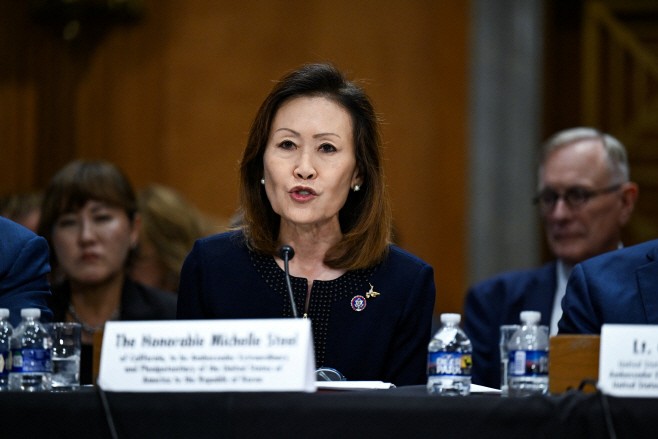 |
| Michelle Steel, nominee for U.S. ambassador to South Korea, testifies during a Senate Foreign Relations Committee confirmation hearing at the U.S. Capitol in Washington, D.C., on May 20. /Reuters-Yonhap |
Michelle Steel said American companies operating in South Korea should receive equal market treatment alongside Korean firms, pledging to address concerns over alleged discrimination against U.S. technology companies including Coupang.
Speaking during her Senate Foreign Relations Committee confirmation hearing on May 20 in Washington, Steel also emphasized the need to strengthen the Korea-U.S. alliance and trilateral cooperation with Japan in response to North Korea’s weapons programs, cyber activities and expanding military ties with Russia.
Steel, nominated by Donald Trump last month, must still receive confirmation from both the Senate Foreign Relations Committee and the full Senate before formally assuming the post. The U.S. ambassador position in Seoul has remained vacant for more than a year since former ambassador Philip Goldberg left office in January last year.
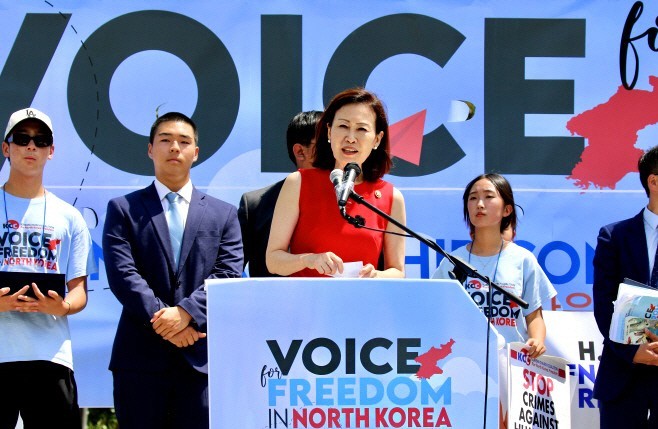 |
| Michelle Steel, then a Republican U.S. congresswoman who was nominated on April 13 as U.S. ambassador to South Korea, speaks during a “North Korea Freedom Week” event in front of the U.S. Capitol in Washington, D.C., on July 10, 2024. / Washington correspondent Ha Man-joo |
During the hearing, Republican Senator Bill Hagerty raised concerns over what he described as discriminatory treatment toward some American technology firms operating in Korea, including Coupang.
In response, Steel cited the Korea-U.S. joint fact sheet issued following an agreement between President Lee Jae-myung and Trump in late October last year, saying the document clearly states that U.S. companies “should not face discrimination or unnecessary barriers.”
“If confirmed, I will make sure that commitment is upheld,” Steel said.
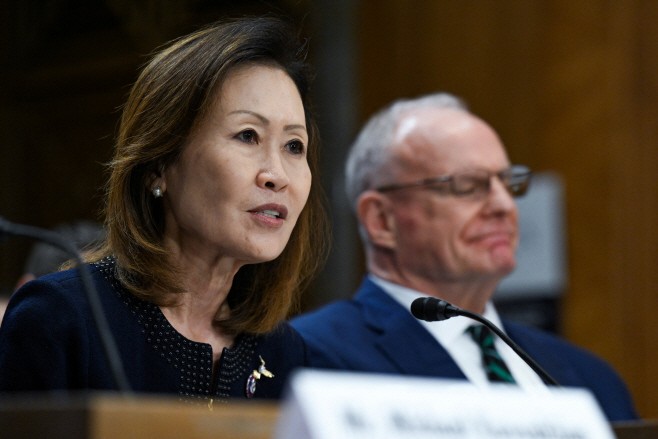 |
| Michelle Steel testifies during a Senate Foreign Relations Committee confirmation hearing at the U.S. Capitol in Washington, D.C., on May 20. /Reuters-Yonhap |
She added that just as Korean companies in the United States receive equal treatment, American firms in Korea should be treated equally alongside Korean businesses.
In her opening remarks, Steel also said U.S. companies doing business in Korea “deserve the same market access that Korean companies enjoy in the United States.”
Hagerty additionally asked Steel to support Korea Zinc’s planned multibillion-dollar investment in critical minerals projects in Tennessee, his home state. Steel responded that she would support the initiative if confirmed.
Steel also signaled that she plans to closely examine South Korea’s pledged $350 billion investment plan in the United States, saying she wants to verify “exactly where the funding is coming from” and how the investments will be implemented.
Democratic Senator Jeanne Shaheen similarly questioned the lack of detailed information surrounding the investment plan and requested transparency with the Senate Foreign Relations Committee. Steel agreed to provide updates.
The nominee also noted that South Korea currently maintains a trade surplus of more than $50 billion with the United States and pledged to explore ways to expand American exports to Korea.
Republican Senator Pete Ricketts raised concerns over Korea’s non-tariff barriers on American agricultural products and reductions in tariff-rate quotas for U.S. soybeans. Steel said she would directly discuss those issues with Korean government officials and trade representatives if confirmed.
Addressing security issues, Steel spoke about her family’s background as refugees from North Korea.
“Both of my parents escaped communism in North Korea and lost everything there,” she said, adding that many people continue to suffer under the regime.
She also highlighted the sacrifices of more than 36,000 American troops during the Korean War, saying their efforts allowed South Korea to rebuild after the devastation of war.
Steel described Trump’s 2025 state visit to Gyeongju as opening a “historic new chapter” in the Korea-U.S. alliance and said the 2025 Korea-U.S. joint fact sheet represented a “once-in-a-generation upgrade” in bilateral security cooperation.
She stressed that Seoul and Washington must continue working closely together to counter North Korea’s illegal weapons programs, cybercrime operations and military cooperation with Russia.
Steel further emphasized that trilateral cooperation among South Korea, the United States and Japan is essential to maintaining a free and open Indo-Pacific region.
“This is not just about protecting Korea,” she said. “It is about protecting the entire Indo-Pacific.”
#Michelle Steel #US ambassador to South Korea #Korea-US alliance #Coupang #US tech companies
Copyright by Asiatoday
Most Read
-
1
Celltrion’s Omlyclo gains ground in major European..

-
2
Trump demands rates fall below 1% as Fed hikes for..

-
3
Trump makes $1 trillion bet ahead of midterm elect..

-
4
Iran resumes ballistic missile production, assembl..

-
5
Trump warns countries not helping U.S. must pay re..

-
6
Apple launches first foldable, 1 million won prici..

-
7
Turkish Airlines named main club partner of Liverp..

PEOPLE





-
Address : In-Young Bldg., 34, Uisadang-daero 1-gil, Yeongdeungpo-gu, Seoul
Copyright by ASIATODAY CO., LTD. All rights resereved