



Korea producer prices post sharpest rise since IMF crisis
May 21, 2026, 08:04 am


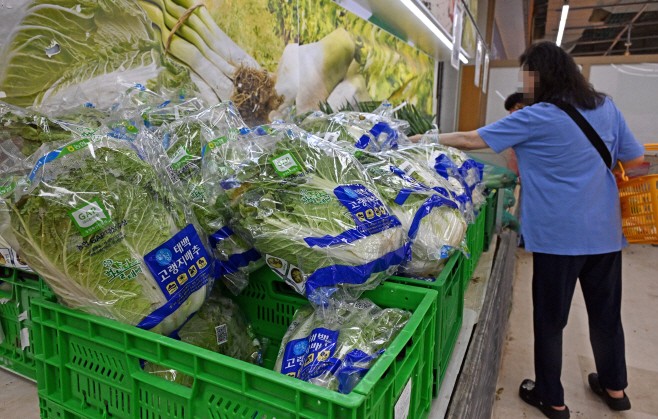 |
| Cabbages are displayed at a supermarket in Seoul as Korea’s producer prices surged in April amid rising energy and raw material costs. /Song Eui-joo |
South Korea’s producer prices surged in April at the fastest monthly pace since the 1998 Asian financial crisis, as soaring oil and petrochemical costs linked to the Middle East conflict intensified inflationary pressure across the economy.
According to preliminary data released by the Bank of Korea on May 21, the country’s producer price index (PPI) for April rose 2.5% from the previous month to 128.43, based on 2020 prices equaling 100.
The monthly increase accelerated from 0.7% in January, 0.6% in February and 1.7% in March, marking the steepest monthly gain since the IMF-era financial crisis in 1998. On a yearly basis, producer prices climbed 6.9%, the highest increase since October 2022, when the figure reached 7.3%.
Industrial goods led the surge, with producer prices for manufactured products rising 4.4% month-on-month. Coal and petroleum products jumped 31.9%, while chemical products gained 6.3%.
Among individual items, solvent prices soared 94.8% from a month earlier and diesel prices climbed 20.7%. In the chemical sector, polyethylene resin and polypropylene resin prices rose 33.3% and 32.0%, respectively.
The data suggest that higher global crude oil prices and supply disruptions caused by the U.S.-Iran conflict are beginning to feed into domestic prices with a time lag.
Service-sector prices also increased. Producer prices for services rose 0.8% from March, driven by a 1.6% increase in transportation services and a 3.0% rise in financial and insurance services.
International air passenger fares rose 12.2%, while air cargo charges jumped 22.7%. Brokerage commissions also increased 8.1%.
In contrast, prices for agricultural, forestry and fishery products fell 1.0% from the previous month. Agricultural products dropped 4.0% and fishery products declined 3.2%, though livestock prices rose 3.5%.
The energy index climbed 7.9% in April, while food prices fell 0.4% and fresh food prices dropped 5.7%. Excluding food and energy, the core producer price index still rose 2.2%.
The domestic supply price index, which measures price changes for goods supplied to the domestic market, rose 5.2% from a month earlier and 9.9% from a year earlier. Imported raw material prices surged 36.5%, pushing overall raw material costs up 28.5%.
The total output price index, which reflects both domestic shipments and export prices of locally produced goods, increased 3.9% during the same period.
Lee Moon-hee, head of the Bank of Korea’s price statistics team, said rising prices for diesel, gasoline and jet fuel continued to fuel inflationary pressure despite slower increases in naphtha prices.
“As instability in the Middle East persists, supply disruptions and rising raw material costs are spreading across various sectors with a time lag, adding upward pressure to producer prices,” Lee said. “These factors are also expected to exert upward pressure on consumer inflation.”
#producer prices #inflation #Middle East war #oil prices #Bank of Korea
Copyright by Asiatoday
Most Read
-
1
Celltrion’s Omlyclo gains ground in major European..

-
2
Trump demands rates fall below 1% as Fed hikes for..

-
3
Trump makes $1 trillion bet ahead of midterm elect..

-
4
Iran resumes ballistic missile production, assembl..

-
5
Trump warns countries not helping U.S. must pay re..

-
6
Apple launches first foldable, 1 million won prici..

-
7
Turkish Airlines named main club partner of Liverp..

PEOPLE






HEADLINE NEWS
- Trump to roll out ‘unprecedented welcome’ for Xi with B-2 bombers, F-22 fighters
- S. Korea, U.S., and Japan form united front on Taiwan and economic coercion..
- Trump administration moves to impose sweeping sanctions on International Cr..
- Xi to make state visit to U.S. Sept. 23-25, dispelling rumors over his heal..

-
Address : In-Young Bldg., 34, Uisadang-daero 1-gil, Yeongdeungpo-gu, Seoul
Copyright by ASIATODAY CO., LTD. All rights resereved