



K-steel faces dual blow from EU’s 50% tariff and rising costs
May 20, 2026, 05:06 pm


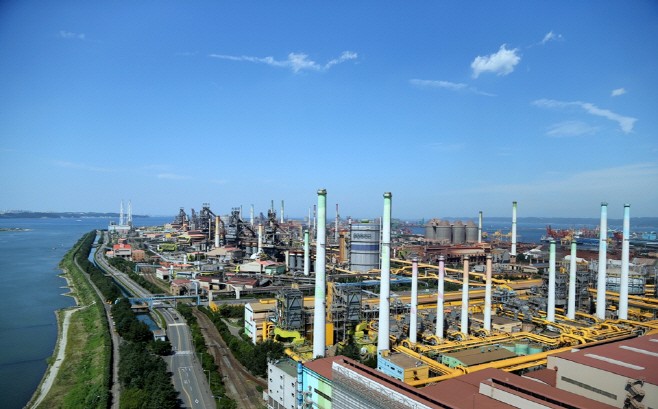 |
| An aerial view of the POSCO Pohang Steelworks. / POSCO |
Domestic steelmakers are facing mounting internal and external business pressures as global tariff barriers and production costs rise simultaneously. This crunch comes as the European Union announced a steep 50% tariff on steel products starting this July, while domestic production expenses, including electricity rates, continue to climb.
According to foreign media and industry sources on May 20, the European Parliament delivered a final vote on May 19 (local time) to drastically raise steel tariffs from the current 25% to 50%, while slashing tariff-free import quotas by half. The measure is set to take effect this July. Although the move is aimed at blocking the influx of cheap Chinese steel, analysts say South Korean steelmakers will inevitably be caught in the crossfire.
Industry insiders predict that the tariff hikes and quota reductions under the new regulations will compound the management burden on the steel sector. Projections suggest South Korea's quota will be cut by around 30%, which could pull European export volumes for domestic companies down by roughly 70 to 80 tons.
With the onslaught of low-priced Chinese products showing no signs of abating, South Korean steel firms are reportedly facing a triple whammy of combating global tariffs and rising production costs.
Trade barriers, in particular, are rising at a rapid pace. The United States, which already imposes a heavy 50% tariff on foreign steel products, recently finalized a 3.7% countervailing duty on carbon and alloy steel cut-to-length plates exported by POSCO in 2023. Washington reportedly interpreted South Korea's electricity tariff system and emissions trading scheme as implicit government subsidies.
At home, escalating production expenses, such as electricity rates, are adding to the strain. According to regulatory filings with the Financial Supervisory Service, Dongkuk Steel’s electricity costs in the first quarter reached 79.5 billion won, up 13.5% year-on-year. While Hyundai Steel’s electricity and energy expenditures rose by a marginal 0.5% to 664.4 billion won, that figure was nearly 40 times its operating profit (15.7 billion won) over the same period. Raw material prices are also on an upward trajectory. POSCO's business report showed that iron ore prices averaged 122,000 won per ton in the first quarter, a roughly 7% increase year-on-year. Prices for other primary raw materials, including coking coal, steel scrap, and nickel, all rose in unison.
Experts point out that the South Korean government must tread carefully when drafting support measures. Seoul previously designated Pohang—a major steel production hub—as an "industrial crisis preemptive response zone," and is set to implement the Special Act on Strengthening Steel Industry Competitiveness and Supporting Carbon-Neutral Transition, dubbed the "K-Steel Act," on June 17.
"Steelmakers are feeling the pinch and hoping for subsidies like electricity bill discounts, but major economies are broadly interpreting industrial support as subsidies to justify imposing tariffs, making it difficult for our government to act hastily," explained Lee Jae-yoon, director at the Korea Institute for Industrial Economics and Trade (KIET). "Rather than unconditional aid, any support needs to be linked to business restructuring so that it does not take on the character of an illegal subsidy."
"In fact, Europe also provides electricity subsidies," Lee added. "They run systems that offer partial caps or rebates on already paid electricity bills, specifically linking them to decarbonization investments."
Most Read
-
1
Celltrion’s Omlyclo gains ground in major European..

-
2
Trump demands rates fall below 1% as Fed hikes for..

-
3
Trump makes $1 trillion bet ahead of midterm elect..

-
4
Iran resumes ballistic missile production, assembl..

-
5
Samsung Electronics, Mistral AI to jointly develop..

-
6
Trump warns countries not helping U.S. must pay re..

-
7
Apple launches first foldable, 1 million won prici..

PEOPLE





HEADLINE NEWS
- Trump to roll out ‘unprecedented welcome’ for Xi with B-2 bombers, F-22 fighters
- S. Korea, U.S., and Japan form united front on Taiwan and economic coercion..
- Trump administration moves to impose sweeping sanctions on International Cr..
- Xi to make state visit to U.S. Sept. 23-25, dispelling rumors over his heal..

-
Address : In-Young Bldg., 34, Uisadang-daero 1-gil, Yeongdeungpo-gu, Seoul
Copyright by ASIATODAY CO., LTD. All rights resereved