



Palaces become uniquely Korean hotspots
May 20, 2026, 03:34 pm


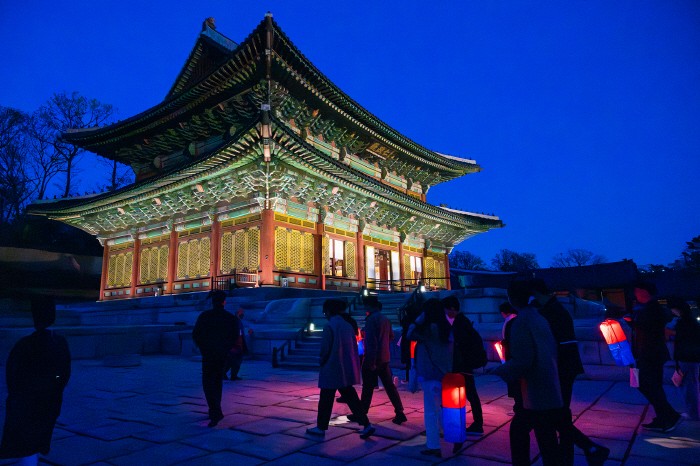 |
| Participants gather at the "Changdeokgung Palace Moonlight Tour" event. / Korea Heritage Service |
Royal palace and royal tomb utilization programs, including the K-Royal Culture Festival, are consistently selling out, with these historic sites rapidly emerging as premier cultural hotspots drawing younger generations and foreign tourists alike. Once perceived merely as quiet historical spaces for a stroll, royal palaces have now evolved into multifaceted cultural platforms integrating performances, exhibitions, gastronomy, night viewings, and even worcations (workcations). These palace programs have solidified their status as highly sought-after content, triggering ticketing battles as fierce as those for K-pop idol concerts.
According to the Royal Palaces and Tombs Center under the Korea Heritage Service and the Korea Heritage Agency on May 18, the spring edition of this year's K-Royal Culture Festival drew a total of 725,281 visitors. This marks an increase of approximately 26000 from last year and represents the highest attendance since the spring festival's inception. Foreign visitors to the four major palaces (excluding Gyeonghuigung) and Jongmyo Shrine totaled 183427, a roughly 33% surge year-on-year.
In addition to the K-Royal Culture Festival, routine palace utilization programs continue to enjoy explosive popularity. Programs such as the "Changdeokgung Palace Moonlight Tour," "Gyeongbokgung Palace Saenggwabang (Royal Refreshments)," and the "Night at Deoksugung Palace Seokjojeon" see immediate traffic surges as soon as reservations open, resulting in what is essentially an all-out ticketing war.
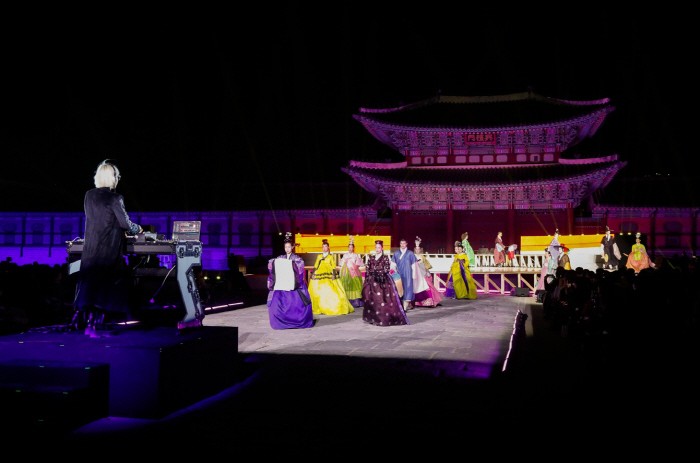 |
| The opening ceremony of this year's spring "K-Royal Culture Festival." / Korea Heritage Agency |
This phenomenon demonstrates that royal palaces are transitioning from passive viewing spaces into immersive experience hubs. Immersive content that allows visitors to experience court life took center stage at this year's K-Royal Culture Festival. "Crown Prince Hyomyung and the Dance of the Moon" at Changdeokgung Palace reinterpreted court dances and poems created by the prince through media art, live performances, and night tours. Meanwhile, Gyeongbokgung Palace's "Time Travel" program allowed visitors to walk directly through reenactments of daily court routines.
Changgyeonggung Palace's "Yeongchunheon, Spring Study" sparked significant interest among the youth by merging reading in a palace setting with a worcation. The novelty of independent bookstore curation combined with relaxation in an ancient palace spread rapidly across social media.
"The younger generation views the palace grounds as an incredibly hip cultural space," said Jin Mi-kyeong, head of the K-Royal Culture Festival team. "The scarcity value of 'content you can only experience right now' has grown, as we increase programs utilizing pavilions and special spaces that are exclusively opened during the festival."
"The Hallyu wave is expanding beyond K-pop into palace culture," Jin added. "We sold 300 foreigner-exclusive tickets for the K-Royal Culture Festival's opening ceremony for the first time this year, and the response was incredibly fast."
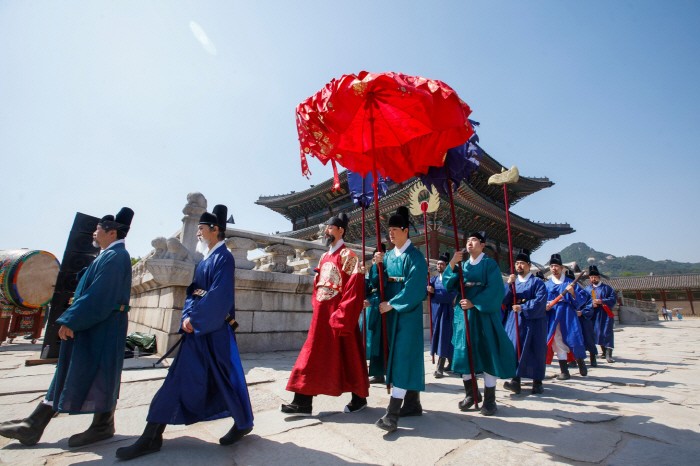 |
| A reenactment of daily court life during the "Gyeongbokgung Palace Time Travel" program at this year's spring "K-Royal Culture Festival." / Korea Heritage Agency |
Among the programs geared toward international visitors, "The Emperor's Dining Table," held at Deoksugung Palace's Jungmyeongjeon Hall, received the most enthusiastic response. Based on historical records of diplomatic banquets hosted by Emperor Gojong during the Korean Empire period, the program was conducted as a gastronomic talk show combining royal culinary tastings, historical commentary, and live performances.
"While European palace content takes a static approach centered around exhibitions and viewing, South Korea is rapidly evolving toward forms where visitors actively participate and become immersed," said Yoo Kyeong-sook, director of the World Festival Research Institute. "The inherent beauty of the palaces, their excellent accessibility within downtown Seoul, and Korea's distinctive content planning have converged to create globally competitive cultural tourism offerings."
"Palace content has now moved beyond the simple experience stage, with its potential as a viable cultural tourism product fully demonstrated," Director Yoo emphasized. "Moving forward, we need regional tourism strategies that link the tourist traffic currently concentrated in Seoul's palaces with cultural heritage sites in areas like Suwon, Gyeongju, and Jeonju."
"Connecting Seoul's palace content with regional historical heritage can extend the stay of foreign tourists and revitalize local tourism," she added. "The way forward is to develop distinct types of content by capitalising on the unique history and spatial identity of each region."ony for the first time this year, and the response was incredibly fast."
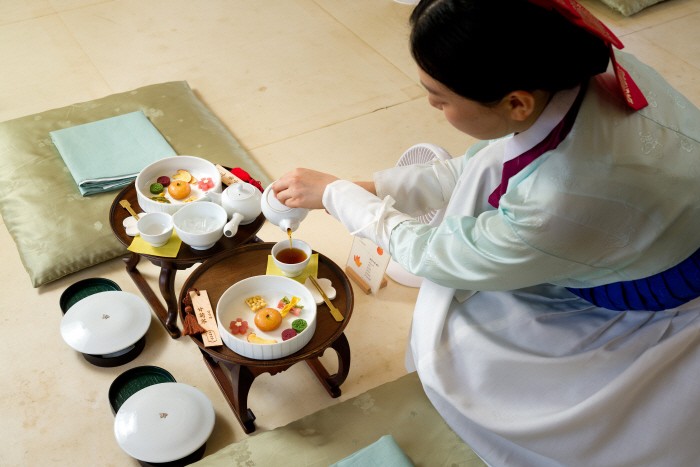 |
| The "Gyeongbokgung Palace Saenggwabang" program. / Korea Heritage Service |
Programs leveraging cultural heritage have grown highly sophisticated over the past few years. According to the Korea Heritage Service, visitors to royal palaces, tombs, and the Jongmyo Shrine hit a record high of over 17.81 million last year, with international tourists accounting for approximately 25% of the total. Gyeongbokgung Palace has also significantly expanded its usable space following extensive restoration projects.
However, concerns over overcrowding and the potential degradation of cultural heritage due to the surge in visitors remain a challenge. Experts point out that policies must evolve toward striking a balance between heritage preservation and tourism utilization, rather than simply focusing on increasing visitor numbers.
"While the focus so far has been on demonstrating the potential of utilizing these palaces, we have now reached a point where we must consider both content quality and sustainability," Director Yoo said. "It is crucial to systematically foster premium content and permanent programming while strictly adhering to heritage preservation principles."
Most Read
-
1
U.S. Treasury Secretary Bessent publicly warns ove..

-
2
Celltrion’s Omlyclo gains ground in major European..

-
3
Hyundai Motor Group breaks ground on integrated st..

-
4
Russia faces warning signs over prolonged war econ..

-
5
Anti-Western solidarity strengthens amid Trump's e..

-
6
U.S. strikes 3 Iranian oil tankers, Iran vows reta..

-
7
S. Korea seeks redemption from World Cup setback w..

PEOPLE





-
Address : In-Young Bldg., 34, Uisadang-daero 1-gil, Yeongdeungpo-gu, Seoul
Copyright by ASIATODAY CO., LTD. All rights resereved