



Trump delays Iran strike after Gulf allies urge restraint
May 19, 2026, 10:17 am


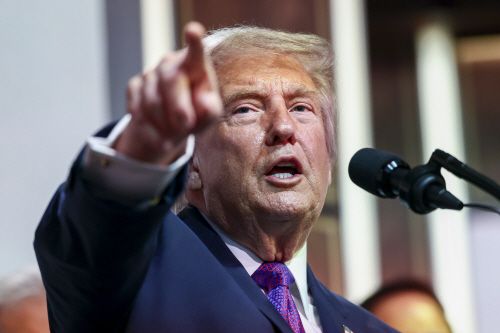 |
| US President Donald Trump speaks during a healthcare cost reduction event at the Eisenhower Executive Office Building at the White House in Washington, D.C., on May 18, 2026. /UPI-Yonhap |
US President Donald Trump said Sunday he ordered the postponement of a planned military strike against Iran after key Middle Eastern allies urged Washington to allow more time for negotiations, while warning Tehran that a “full, large scale assault” would follow if diplomacy collapses.
According to Axios, the White House considers Iran’s newly proposed 14-point negotiation package insufficient because it does not include concrete commitments to halt uranium enrichment or surrender existing highly enriched uranium stockpiles.
Leaders of Qatar, Saudi Arabia and the United Arab Emirates reportedly asked Trump to delay military action, citing fears that Iranian retaliation could target energy infrastructure across the Gulf region.
Trump wrote on Truth Social that Qatari Emir Sheikh Tamim bin Hamad Al Thani, Saudi Crown Prince Mohammed bin Salman and UAE President Mohammed bin Zayed Al Nahyan told him ongoing negotiations could still produce a broadly acceptable agreement.
“The deal will include, above all else, no nuclear weapons for Iran,” Trump wrote.
Axios reported that Trump held phone calls with the three Gulf leaders roughly 24 hours before announcing the delay. One U.S. official said the message from Doha, Abu Dhabi and Riyadh was unified: “Give negotiations a chance. If Iran is struck, we will all pay the price.”
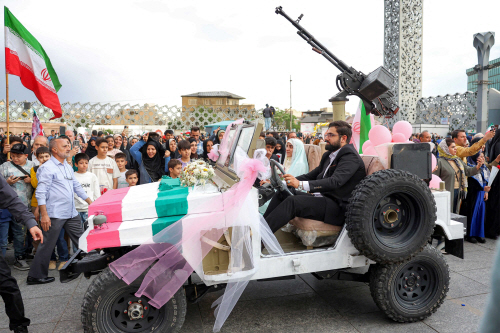 |
| An Iranian couple arrives in a military jeep to attend a public mass wedding ceremony at Imam Hossein Square in Tehran on May 18, 2026. /AFP-Yonhap |
Another source said Gulf leaders warned Trump they feared Iranian retaliation against oil and energy facilities if conflict escalates.
Trump also told the New York Post he was disappointed with Iran’s latest proposal and currently had “no intention of accepting anything.”
“I can tell you Iran wants a deal now more than ever,” Trump said. “They know what’s going to happen soon.”
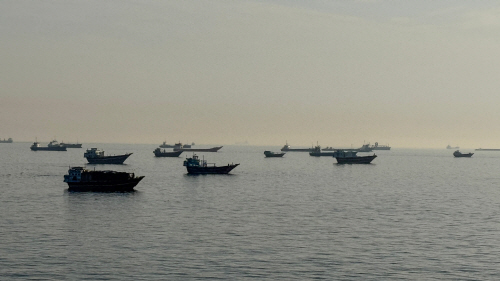 |
| Ships are anchored in the Strait of Hormuz off the port city of Khasab on Oman’s northern Musandam Peninsula on May 17, 2026. /AFP-Yonhap |
Iran, meanwhile, reportedly submitted a revised 14-point proposal through Pakistan, focusing on ending hostilities, reopening the Strait of Hormuz and lifting U.S. maritime restrictions.
According to Reuters, the proposal postponed discussion of the most contentious issue — uranium enrichment — to future negotiations.
Iranian sources said Washington had shown some flexibility regarding limited peaceful nuclear activity under International Atomic Energy Agency inspections, though U.S. officials have not confirmed such details.
The White House remains unconvinced. A senior U.S. official told Axios that Iran’s latest counterproposal showed only “cosmetic progress” and failed to address Washington’s core demands.
“We are not really making substantial progress,” the official said. “Otherwise, we will negotiate through bombs, and that would be unfortunate.”
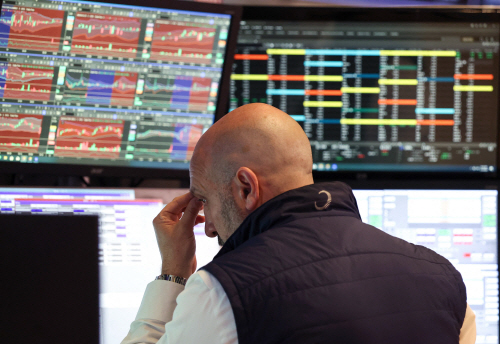 |
| A view of the trading floor inside the New York Stock Exchange in New York on May 14, 2026. /AFP-Yonhap |
The prolonged standoff has continued to rattle global markets. International oil prices rose for a third consecutive trading session amid concerns over disruption in the Strait of Hormuz, a critical global energy shipping route.
Brent crude futures climbed 2.6% to settle at $112.10 per barrel, while U.S. West Texas Intermediate crude rose 3.07% to $108.66 per barrel, both reaching their highest closing levels in weeks.
U.S. stock markets ended mixed as investors weighed the risk of renewed conflict against hopes for a diplomatic breakthrough. Gold prices also edged higher, while yields on 10-year U.S. Treasury bonds briefly touched their highest level since February 2025.
#Donald Trump #Iran #US-Iran talks #Saudi Arabia #Qatar
Copyright by Asiatoday
Most Read
-
1
Celltrion’s Omlyclo gains ground in major European..

-
2
Trump demands rates fall below 1% as Fed hikes for..

-
3
Trump makes $1 trillion bet ahead of midterm elect..

-
4
Iran resumes ballistic missile production, assembl..

-
5
Samsung Electronics, Mistral AI to jointly develop..

-
6
Trump warns countries not helping U.S. must pay re..

-
7
Apple launches first foldable, 1 million won prici..

PEOPLE






HEADLINE NEWS
- Trump to roll out ‘unprecedented welcome’ for Xi with B-2 bombers, F-22 fighters
- S. Korea, U.S., and Japan form united front on Taiwan and economic coercion..
- Trump administration moves to impose sweeping sanctions on International Cr..
- Xi to make state visit to U.S. Sept. 23-25, dispelling rumors over his heal..

-
Address : In-Young Bldg., 34, Uisadang-daero 1-gil, Yeongdeungpo-gu, Seoul
Copyright by ASIATODAY CO., LTD. All rights resereved