



Hyundai targets family car market with Staria EV, limousine
Apr 27, 2026, 08:41 am


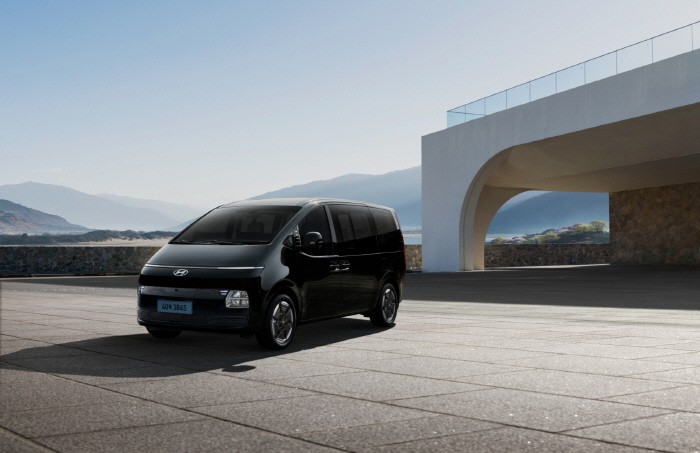 |
| The New Staria Electric Tourer exterior. / Hyundai Motor Company |
Hyundai Motor Company has launched a full-scale push into the domestic family car market by introducing both the Staria Electric and Staria Limousine, aiming to break the long-standing dominance of Kia Corporation models such as the Carnival and Sorento.
According to industry sources on April 23, Hyundai significantly strengthened its multi-purpose vehicle (MPV) lineup with the release of the “New Staria Electric” and “Staria Limousine.” The move signals a shift away from its traditional commercial vehicle image toward a dual-track strategy targeting both family and premium demand.
At the center of the strategy is electrification. The Staria Electric is equipped with an 84kWh battery, offering a maximum driving range of up to 395 km per charge for the van model. The 11-seater and 7- and 6-seater variants provide ranges of 379 km and 370 km, respectively.
To improve usability for a large vehicle, Hyundai introduced a dual charging system with ports located at both the front and rear, enhancing convenience in tight parking environments and logistics settings.
Hyundai is also targeting the premium MPV segment, long dominated by the Kia Carnival Hi-Limousine.
The 6-seater Staria Limousine features executive seats with semi-aniline leather and massage functions, creating a “mobile lounge” experience. It also includes a 17.3-inch rear-seat entertainment system and a panoramic roof to enhance overall comfort and appeal.
Ride quality and cabin quietness have also been improved through lightweight suspension components and laminated acoustic glass, achieving a sedan-like driving experience.
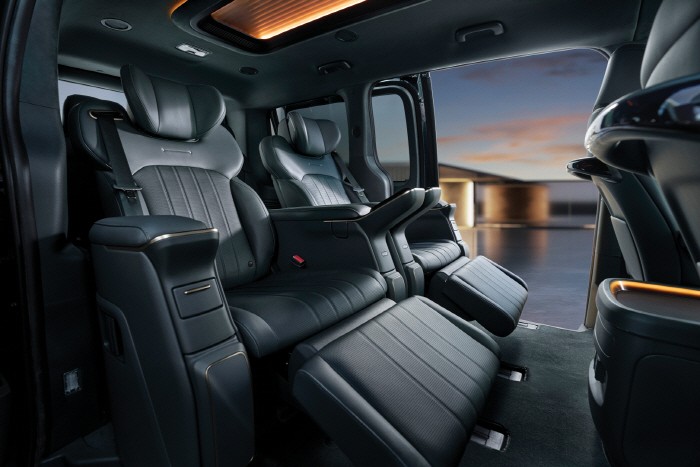 |
| Interior view of the second row in the 6-seater New Staria Limousine. / Hyundai Motor Company |
The domestic family car market has been largely controlled by Kia. Last year, the Sorento recorded 100,002 units in sales, maintaining its position as the top-selling car in Korea for two consecutive years, while the Carnival sold 78,218 units, reinforcing its dominance in the minivan segment.
In comparison, the Staria sold 37,030 units, highlighting a significant gap with its competitors.
Hyundai aims to narrow this gap through its expanded lineup, leveraging EV pricing competitiveness and premium limousine offerings to target both ends of the market.
The Staria Electric is priced between 57.92 million won and 65.75 million won depending on the trim. With EV subsidies applied in Seoul, the effective purchase price drops to the 40 million won range.
The Staria Limousine is priced between 59.8 million won and 69.09 million won for the 1.6 turbo hybrid model, while the electric version reaches 87.87 million won. Hyundai has positioned it at a lower price point than the Kia Carnival Limousine.
Industry observers note that Hyundai is transforming the Staria from a simple passenger van into a versatile platform covering family, commercial, and executive transport needs.
“By strengthening both EV and limousine offerings, the Staria now has a portfolio that spans from school transport to corporate executive demand,” an industry official said. “It could become a key variable in reshaping the family car market.”
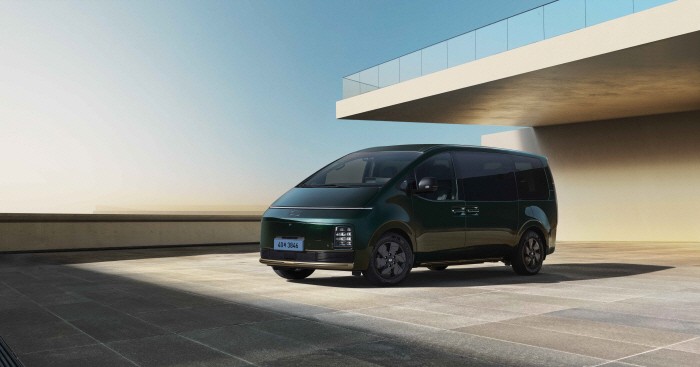 |
| The New Staria Limousine Electric exterior. / Hyundai Motor Company |
#Hyundai Motor #Staria #electric vehicle #limousine #MPV
Copyright by Asiatoday
Most Read
-
1
Kia Sportage outperforms Mazda CX-5 in German auto..

-
2
Houthis launch successive attacks on Saudi airport..

-
3
Saudi Arabia, Iran hold first diplomatic talks to..

-
4
U.S. deploys carrier, 10,000 more troops to Middle..

-
5
Saudi airport in Riyadh struck again, leaving at l..

-
6
Putin's ally visits China on the 8th ahead of APEC..

-
7
Chinese military support and training center opens..

PEOPLE






HEADLINE NEWS

-
Address : In-Young Bldg., 34, Uisadang-daero 1-gil, Yeongdeungpo-gu, Seoul
Copyright by ASIATODAY CO., LTD. All rights resereved