



June vote seen as key referendum on Lee administration
Apr 13, 2026, 08:23 am


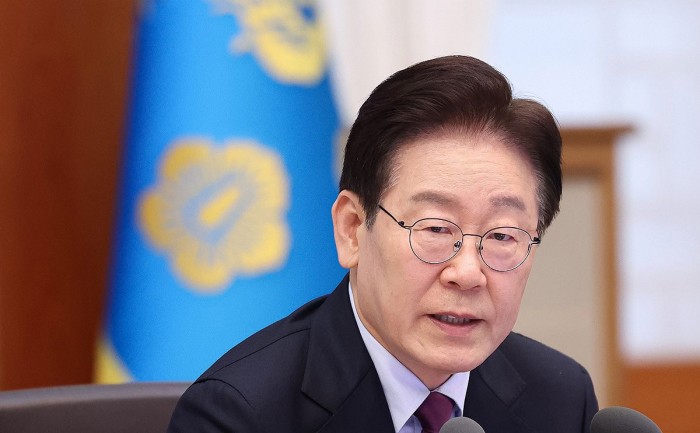 |
| President Lee Jae-myung. /Yonhap News |
South Korea’s June 3 local elections are shaping up to be a crucial test of public sentiment toward the administration of Lee Jae-myung, marking its first nationwide political evaluation since taking office.
According to political sources on April 12, the elections will not only determine local leaders but also function as a midterm-style assessment of the central government. As the vote comes early in the administration’s term, presidential approval ratings and party dynamics are expected to play a significant role.
So far, the ruling Democratic Party of Korea appears to have the upper hand. Recent polls show the party maintaining support in the 40% range, while President Lee’s approval rating has climbed to the high 60% level.
In contrast, the opposition People Power Party remains in the 20% range, widening the gap. The party is expected to rally its base by emphasizing the need to “check the dominance” of the Lee administration.
Within the presidential office, expectations are reportedly rising ahead of the elections, particularly as signs of shifting sentiment have emerged even in traditional conservative strongholds such as Daegu and North Gyeongsang Province. However, some caution that the results could also increase the burden on governance if outcomes fall short of expectations.
The key variable identified by political observers is the economy. Rising energy prices linked to Middle East instability, concerns over economic slowdown, and ongoing housing issues—including supply shortages and rental pressures—are likely to influence voter sentiment.
By-elections for National Assembly seats, held alongside the local elections, are also expected to add another layer of uncertainty. With incumbent lawmakers running for local government positions, the number of vacant seats to be contested has grown to around ten.
Political analyst Park Sang-byeong said that if partisan conflict continues without bipartisan cooperation, the ruling party could also face challenges. “If agreements are reached on livelihood-related issues, that could directly translate into achievements for the Lee administration,” he said.
#local elections #Lee Jae-myung #Democratic Party #People Power Party #public sentiment
Copyright by Asiatoday
Most Read
-
1
Trump demands rates fall below 1% as Fed hikes for..

-
2
Celltrion seeks rheumatoid arthritis indication ex..

-
3
Chinese e-commerce giants AliExpress, Temu and She..

-
4
Trump warns countries not helping U.S. must pay re..

-
5
Turkish Airlines named main club partner of Liverp..

-
6
China expels No. 2 military official Zhang Youxia..

-
7
Houthi rebels release video claiming downing of Sa..

PEOPLE






-
Address : In-Young Bldg., 34, Uisadang-daero 1-gil, Yeongdeungpo-gu, Seoul
Copyright by ASIATODAY CO., LTD. All rights resereved