



Korea keeps emergency measures amid uncertain Middle East truce
Apr 13, 2026, 08:21 am


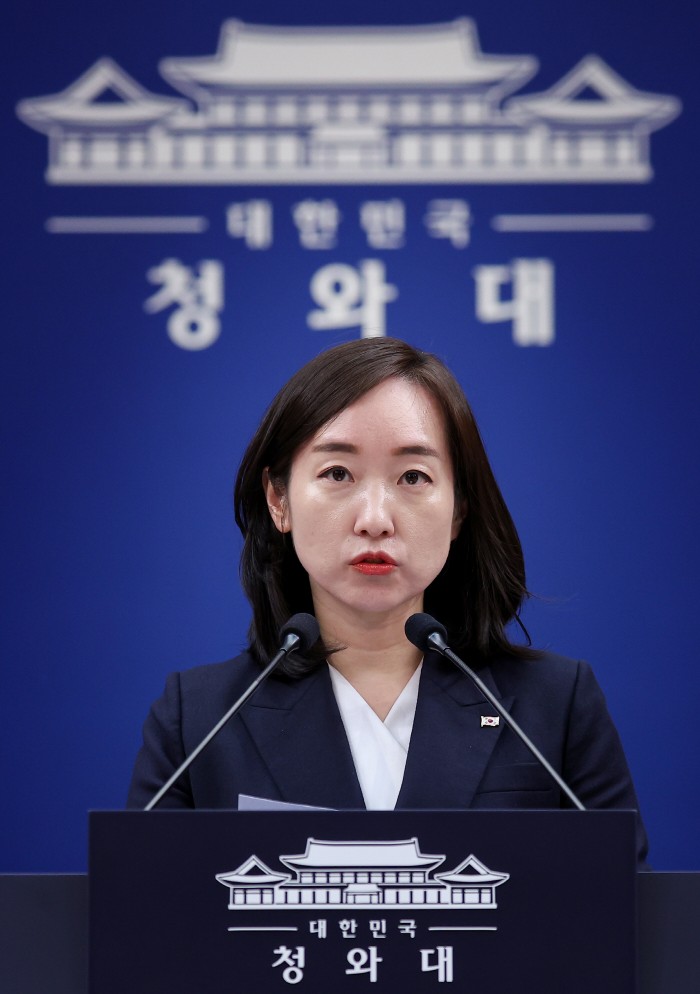 |
| Spokesperson Jeon Eun-soo briefs at the Blue House on emergency economic measures related to the Middle East conflict. |
The presidential office of Blue House said it will maintain its emergency response system until a formal declaration ending the Middle East conflict is confirmed, citing continued uncertainty surrounding the ceasefire between United States and Iran.
Speaking at a briefing on April 12, spokesperson Jeon Eun-soo said an emergency economic review meeting was held earlier in the day under the leadership of policy chief Kim Yong-beom, with vice ministers from relevant ministries in attendance.
“Although a ceasefire agreement was reached 40 days after the outbreak of the conflict, it was not properly implemented from the first day,” Jeon said. “As follow-up negotiations remain possible, we will continue to manage the situation with utmost caution.”
The government plans to keep its emergency economic response system in place, including high-level meetings chaired by the president, prime minister, and deputy prime minister.
Authorities will also continue operating a daily monitoring system for key items to manage supply chains and inflation, while considering additional measures such as banning hoarding and implementing emergency supply stabilization if necessary.
Energy supply measures will be further strengthened. The government expects crude oil prices to remain elevated for some time due to lingering supply chain disruptions even after the conflict ends.
“We will make every effort to secure supply volumes and stabilize prices,” Jeon said.
In line with the “alert” level of the national resource security warning system, the government will maintain measures such as vehicle rationing systems for public institutions and public parking facilities, along with voluntary participation from the private sector.
To manage transportation demand, the government will also move up the implementation of incentives under the “Everyone’s Card” program, aimed at encouraging public transportation use. The Ministry of Land, Infrastructure and Transport plans to improve the system by increasing refund rates and lowering eligibility thresholds, with benefits applied retroactively.
Additionally, the government will focus on restoring supply levels to pre-war conditions based on a supplementary budget program worth 678.3 billion won to support the price gap in naphtha imports.
#Blue House #Middle East conflict #ceasefire #emergency system #energy supply
Copyright by Asiatoday
Most Read
-
1
Trump demands rates fall below 1% as Fed hikes for..

-
2
Celltrion seeks rheumatoid arthritis indication ex..

-
3
Chinese e-commerce giants AliExpress, Temu and She..

-
4
Trump warns countries not helping U.S. must pay re..

-
5
Turkish Airlines named main club partner of Liverp..

-
6
China expels No. 2 military official Zhang Youxia..

-
7
Houthi rebels release video claiming downing of Sa..

PEOPLE







-
Address : In-Young Bldg., 34, Uisadang-daero 1-gil, Yeongdeungpo-gu, Seoul
Copyright by ASIATODAY CO., LTD. All rights resereved